About this artwork
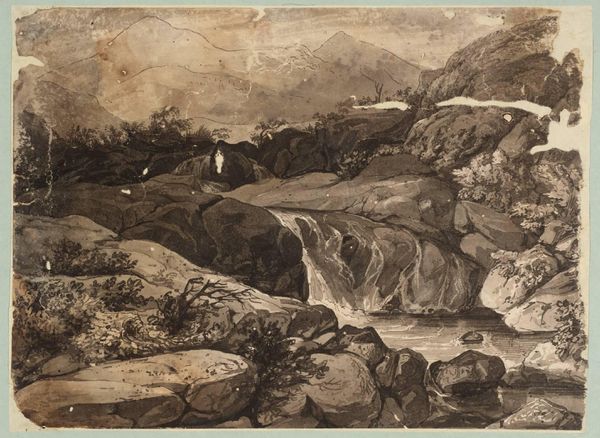
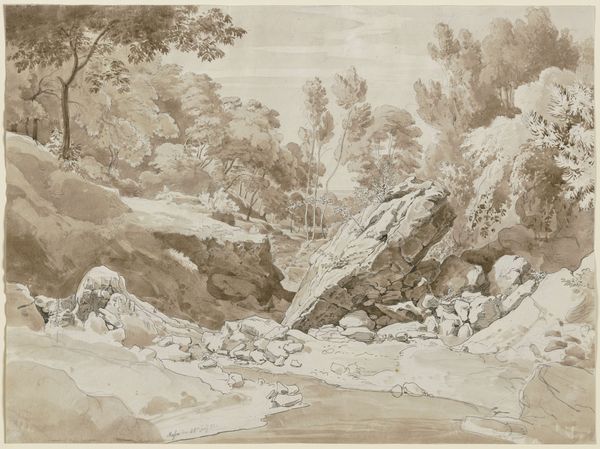
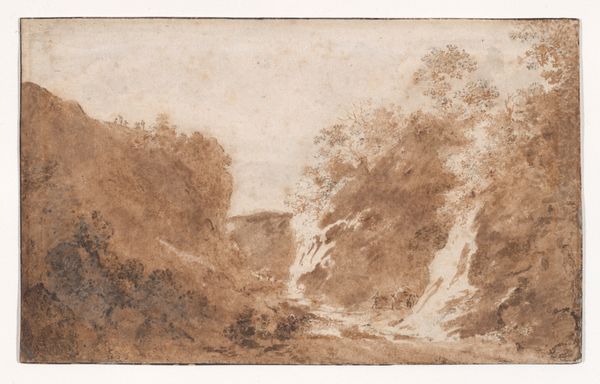
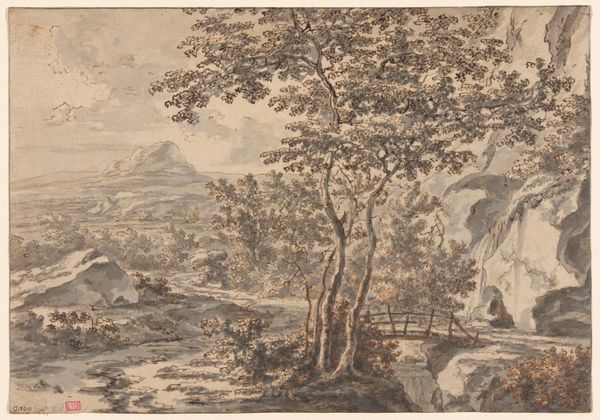
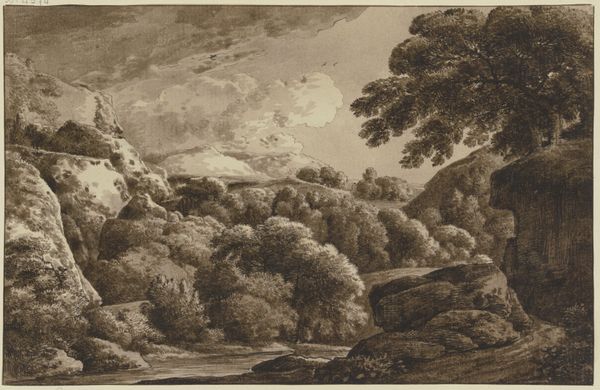
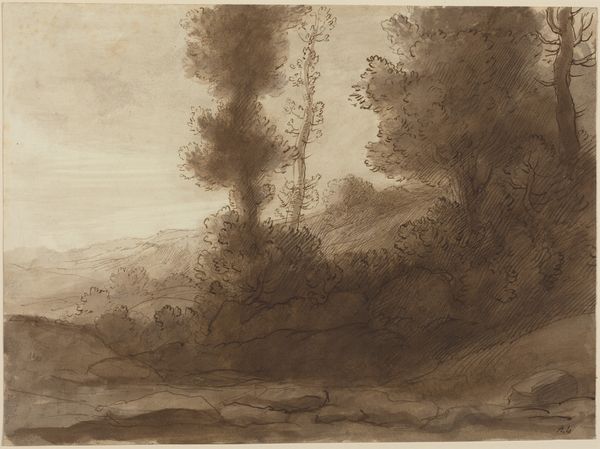
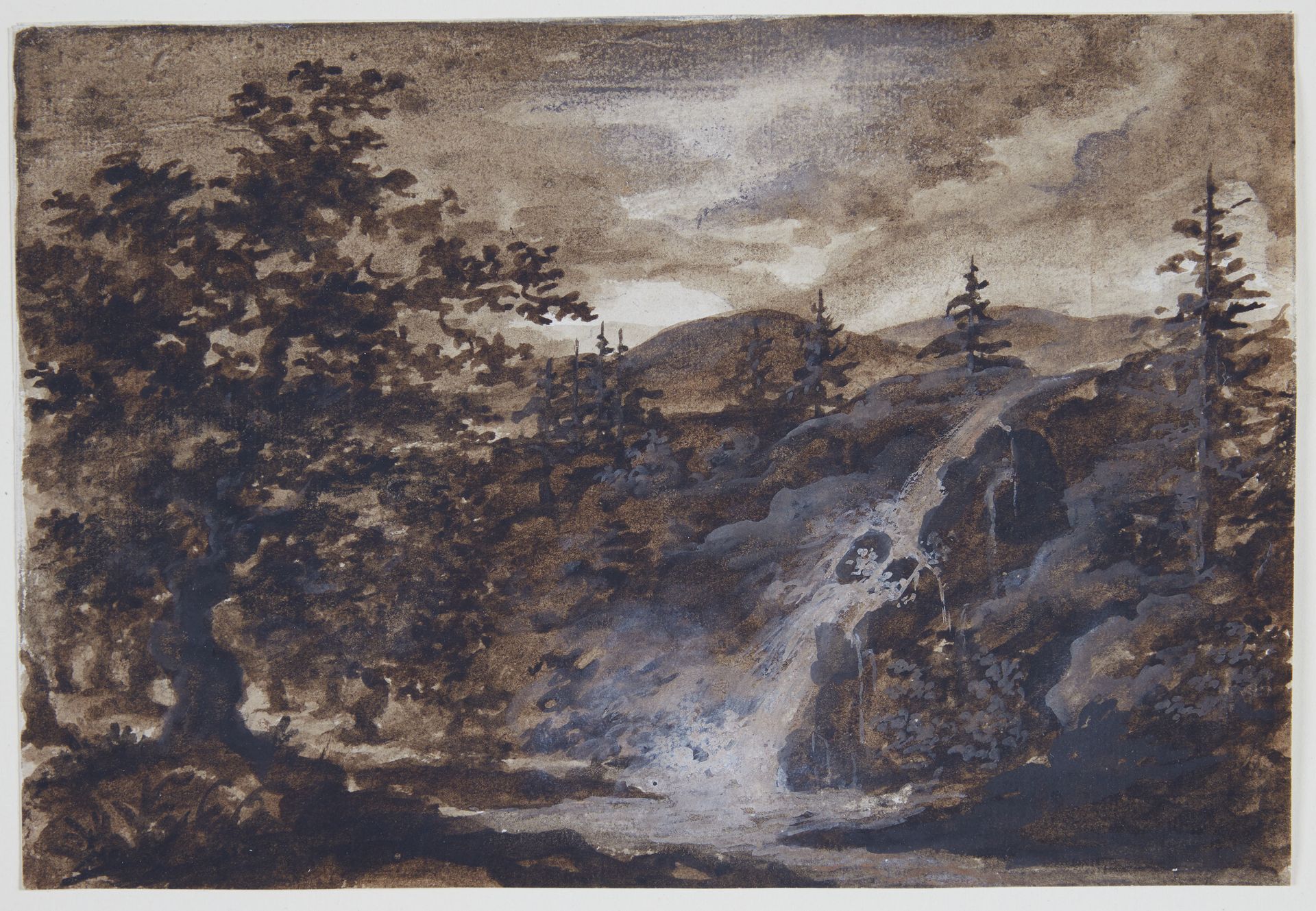
Editor: This is "Landscape with Rocks, Trees and a River" by Thomas Fearnley, made sometime between 1800 and 1849, using ink and watercolor. The subdued color palette creates a rather somber mood. What do you see in this piece? Curator: The landscape speaks of memory, doesn't it? Notice the way Fearnley uses the flowing water, it’s not just water, but perhaps a symbol of time, eroding and shaping the rocks just as memory reshapes our past. The lone tree on the left… What does it evoke for you? Editor: Perhaps resilience, standing firm against the elements? Curator: Exactly. Think of the tree as representing endurance, perhaps even national identity during a period of great upheaval. Water, rock, and tree - are these not the fundamental symbols that construct identity in landscape paintings across cultures? Each element holds meaning. How does this resonate, given Norway's search for national identity in the early 19th century? Editor: I hadn’t considered it in that light. So the landscape is not just a scene, but a representation of something deeper? Curator: Precisely. It reflects the cultural memory embedded within the landscape, a visual language speaking to the spirit of the nation and continuity through its natural forms. We can ask ourselves how we engage with landscape now? Are we as tuned into the deeper meanings layered within our daily environment? Editor: It's fascinating how much meaning can be packed into a seemingly simple landscape. I'll definitely look at art with fresh eyes now. Curator: And remember, art continues to resonate with the present because of the past made manifest.
Landskab med klipper, træer og en flod
1800 - 1849


Artwork details
- Medium
- drawing, plein-air, watercolor, ink
- Dimensions
- 150 mm (height) x 220 mm (width) (bladmaal)
- Location
- SMK - Statens Museum for Kunst
Tags
Comments
Share your thoughts
About this artwork
Editor: This is "Landscape with Rocks, Trees and a River" by Thomas Fearnley, made sometime between 1800 and 1849, using ink and watercolor. The subdued color palette creates a rather somber mood. What do you see in this piece? Curator: The landscape speaks of memory, doesn't it? Notice the way Fearnley uses the flowing water, it’s not just water, but perhaps a symbol of time, eroding and shaping the rocks just as memory reshapes our past. The lone tree on the left… What does it evoke for you? Editor: Perhaps resilience, standing firm against the elements? Curator: Exactly. Think of the tree as representing endurance, perhaps even national identity during a period of great upheaval. Water, rock, and tree - are these not the fundamental symbols that construct identity in landscape paintings across cultures? Each element holds meaning. How does this resonate, given Norway's search for national identity in the early 19th century? Editor: I hadn’t considered it in that light. So the landscape is not just a scene, but a representation of something deeper? Curator: Precisely. It reflects the cultural memory embedded within the landscape, a visual language speaking to the spirit of the nation and continuity through its natural forms. We can ask ourselves how we engage with landscape now? Are we as tuned into the deeper meanings layered within our daily environment? Editor: It's fascinating how much meaning can be packed into a seemingly simple landscape. I'll definitely look at art with fresh eyes now. Curator: And remember, art continues to resonate with the present because of the past made manifest.
Comments
Share your thoughts