About this artwork
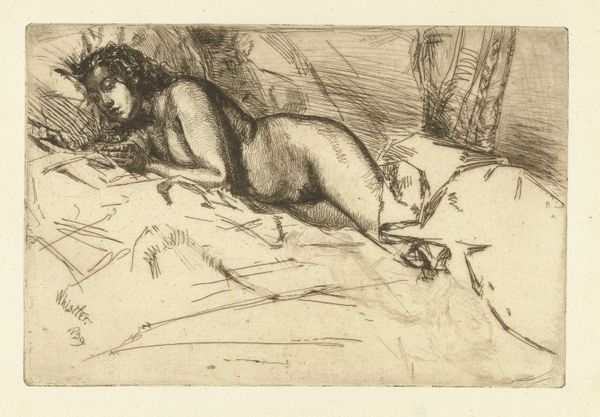
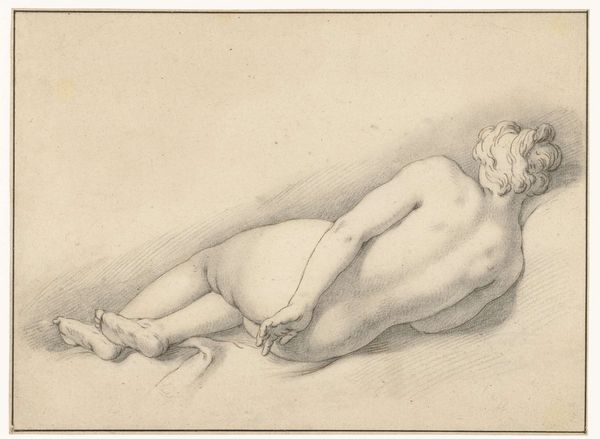
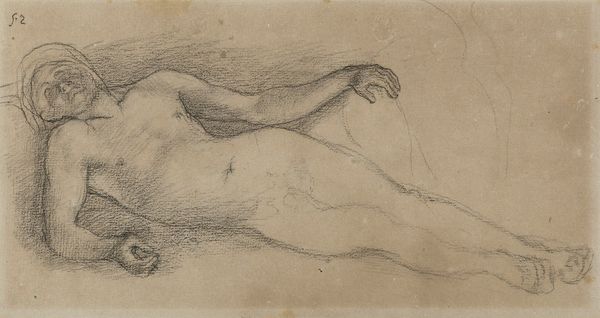
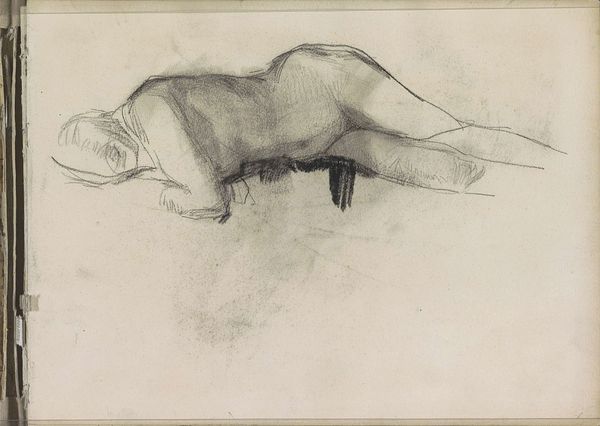
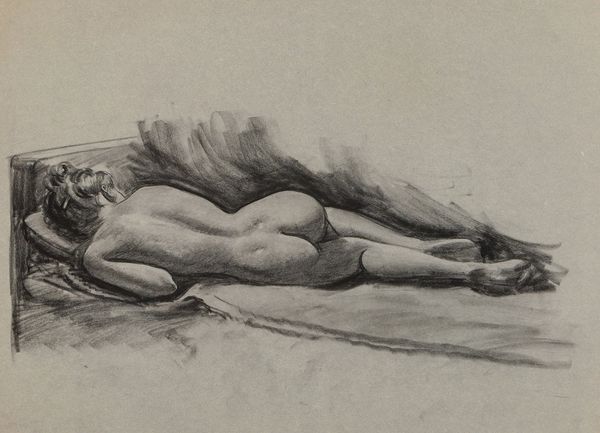
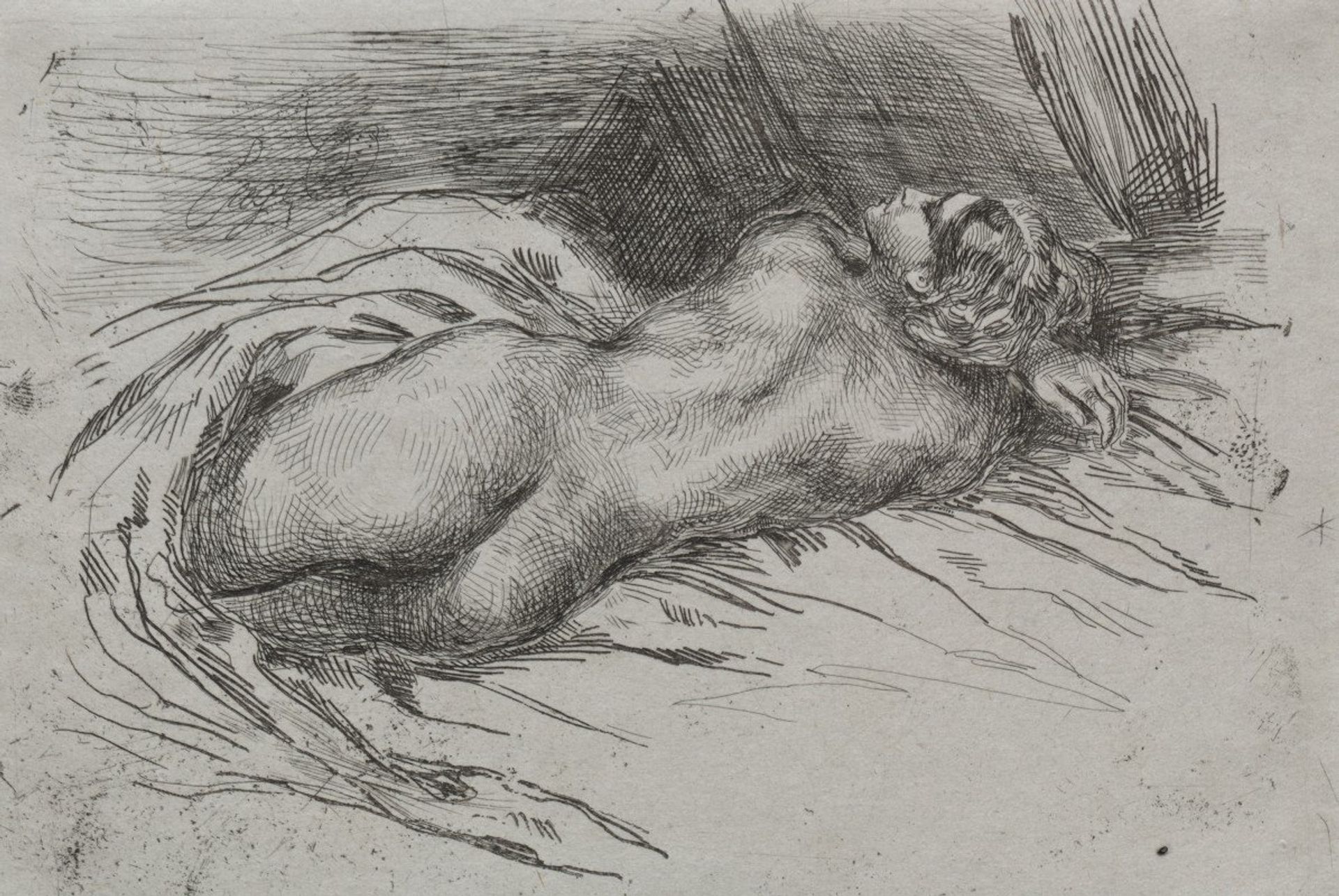
Eugène Delacroix created this intimate study of a woman seen from the back using etching techniques. The reclining nude is a motif that has permeated art history, symbolizing vulnerability, sensuality, and introspection. Consider Titian's Venus of Urbino, where the goddess reclines in opulent splendor. Here, Delacroix strips away the divine pretense, presenting a figure in a more human, contemplative state. This echoes in later works like Gustave Courbet’s depictions of nudes, focusing on the body's natural form. The act of reclining itself is a powerful symbol. In ancient Roman art, reclining figures often represented feasts and celebrations, a symbol of leisure. In Delacroix's work, however, the posture suggests a deeper psychological state—a moment of repose, perhaps tinged with melancholy. It's a pose that allows the viewer to project their own emotions and experiences onto the figure. This is not merely a study of form; it is an exploration of the human condition, reflecting how symbols evolve and persist, carrying echoes of past meanings into new contexts.

Artwork details
- Medium
- drawing, pencil
- Copyright
- Public Domain: Artvee
Tags
portrait
drawing
pencil sketch
charcoal drawing
figuration
pencil drawing
romanticism
pencil
portrait drawing
nude
Comments
Be the first to share your thoughts about this work.
About this artwork
Eugène Delacroix created this intimate study of a woman seen from the back using etching techniques. The reclining nude is a motif that has permeated art history, symbolizing vulnerability, sensuality, and introspection. Consider Titian's Venus of Urbino, where the goddess reclines in opulent splendor. Here, Delacroix strips away the divine pretense, presenting a figure in a more human, contemplative state. This echoes in later works like Gustave Courbet’s depictions of nudes, focusing on the body's natural form. The act of reclining itself is a powerful symbol. In ancient Roman art, reclining figures often represented feasts and celebrations, a symbol of leisure. In Delacroix's work, however, the posture suggests a deeper psychological state—a moment of repose, perhaps tinged with melancholy. It's a pose that allows the viewer to project their own emotions and experiences onto the figure. This is not merely a study of form; it is an exploration of the human condition, reflecting how symbols evolve and persist, carrying echoes of past meanings into new contexts.
Comments
Be the first to share your thoughts about this work.