About this artwork
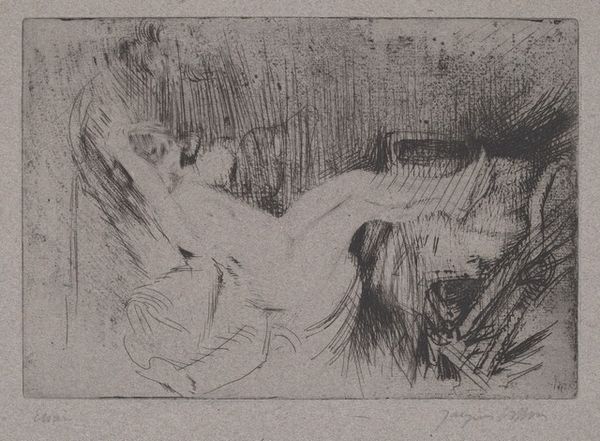
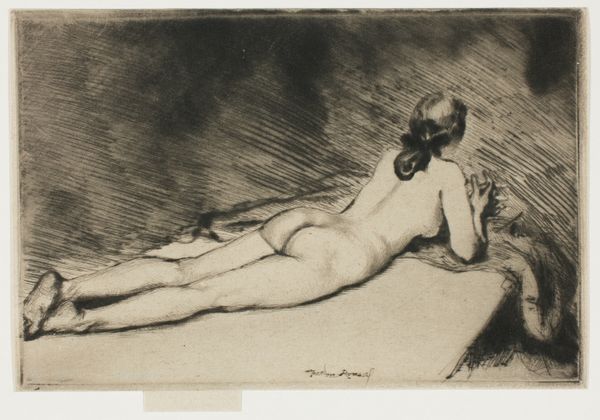
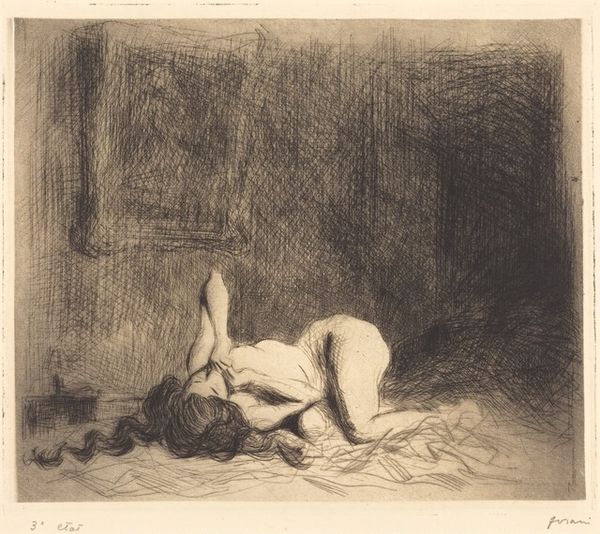
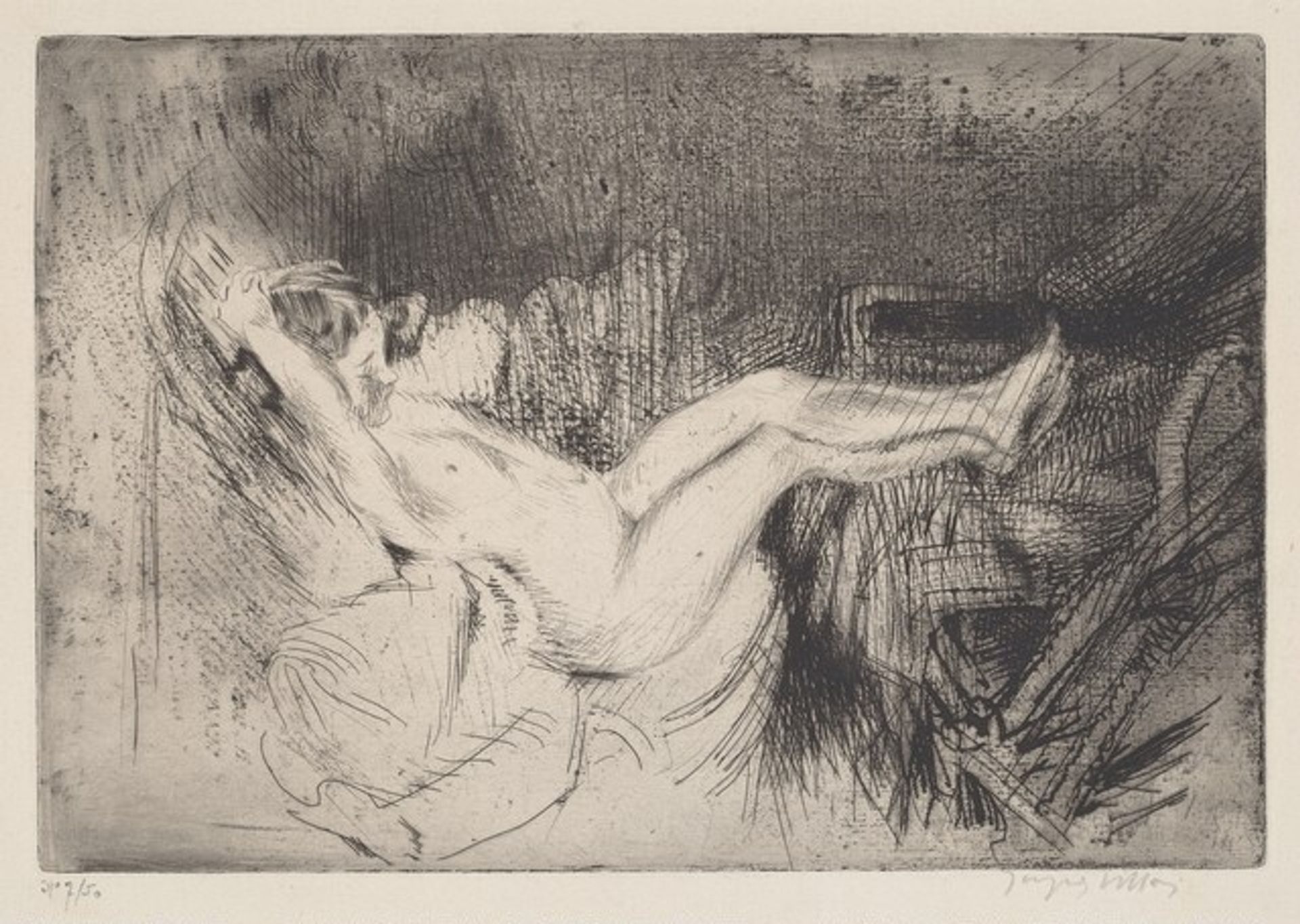
Jacques Villon created this etching, Minne Reclining in a Rocking Chair, using a network of fine lines to define the scene. The way the image is built up from such delicate marks reminds me of the intense, intimate process of artmaking. Look closely at how Villon uses these lines to suggest light and shadow. The contrast is subtle, almost whispered, creating a sense of depth and volume. The texture feels almost tactile; you can almost feel the grain of the paper and the incised marks of the plate. Notice the way the lines around the figure's form create a sense of her presence, while the darker, denser areas around her suggest the surrounding space. This piece makes me think of other printmakers like Whistler, who also used etching to capture fleeting moments with a quiet intensity. Like much great art, it leaves room for interpretation and invites us to bring our own experiences to it.
Minne Reclining in a Rocking Chair
1907


Artwork details
- Medium
- print, etching
- Dimensions
- plate: 16.8 x 24.7 cm (6 5/8 x 9 3/4 in.) sheet: 30.5 x 44.7 cm (12 x 17 5/8 in.)
- Copyright
- National Gallery of Art: CC0 1.0
Tags
portrait
etching
symbolism
nude
Comments
Be the first to share your thoughts about this work.
About this artwork
Jacques Villon created this etching, Minne Reclining in a Rocking Chair, using a network of fine lines to define the scene. The way the image is built up from such delicate marks reminds me of the intense, intimate process of artmaking. Look closely at how Villon uses these lines to suggest light and shadow. The contrast is subtle, almost whispered, creating a sense of depth and volume. The texture feels almost tactile; you can almost feel the grain of the paper and the incised marks of the plate. Notice the way the lines around the figure's form create a sense of her presence, while the darker, denser areas around her suggest the surrounding space. This piece makes me think of other printmakers like Whistler, who also used etching to capture fleeting moments with a quiet intensity. Like much great art, it leaves room for interpretation and invites us to bring our own experiences to it.
Comments
Be the first to share your thoughts about this work.