1616
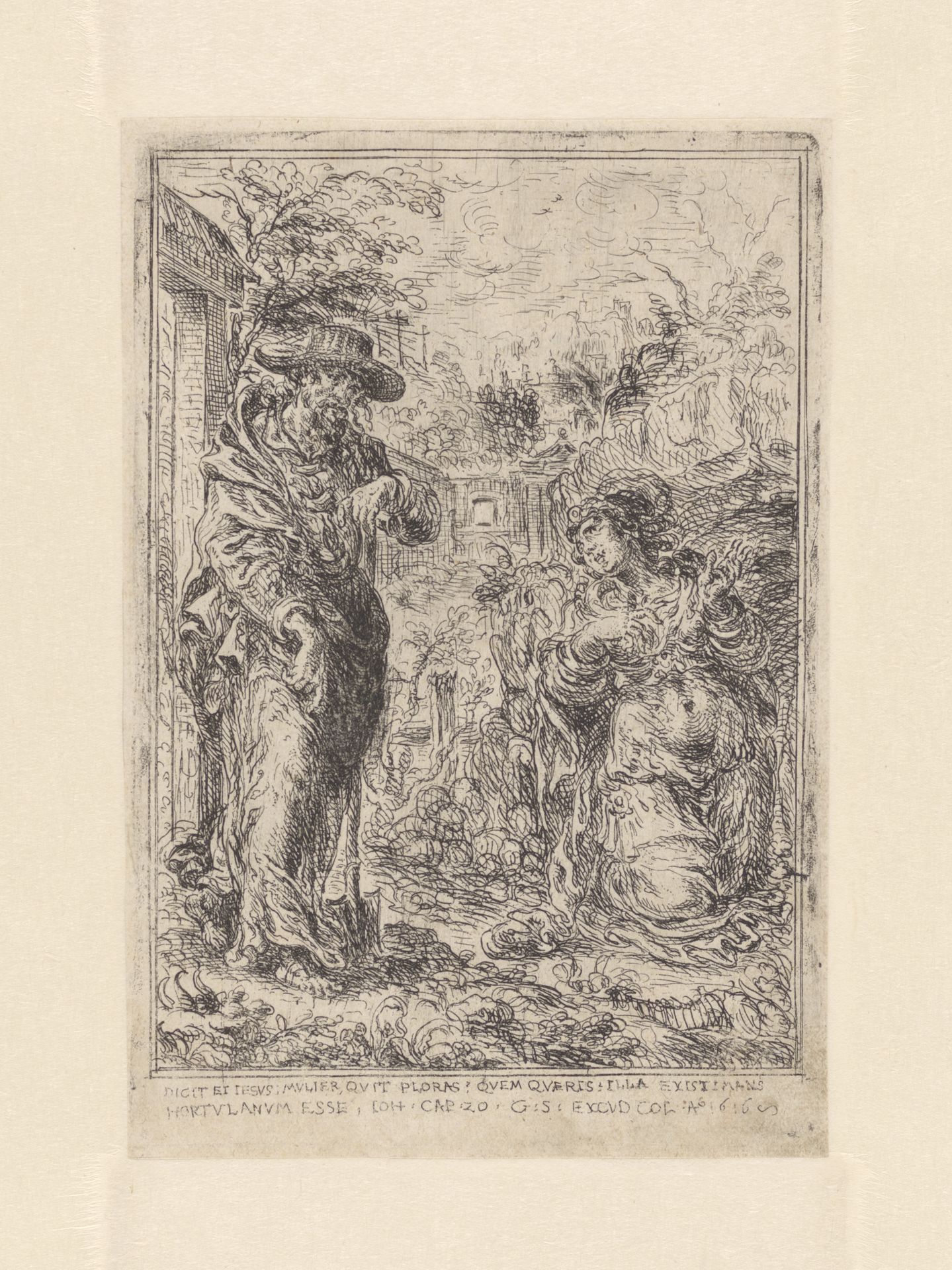
Christus verschijnt als tuinman aan Maria Magdalena (Noli mi tangere)

Listen to curator's interpretation
Curatorial notes
Gabriel Spilberg made this etching, “Christ Appears as a Gardener to Mary Magdalene,” sometime before his death in 1620. It represents a key moment in the Gospels, but it also reflects the socio-religious climate of the artist’s time. Consider the setting: Spilberg depicts Christ not in divine glory, but as an ordinary gardener. This resonates with the Protestant Reformation’s emphasis on a personal, unmediated relationship with God, moving away from the Catholic Church’s grandeur and complex rituals. The figure of Mary Magdalene, often depicted as a repentant sinner, highlights the Reformation’s focus on individual faith and redemption. Spilberg, a German artist, likely produced this work within the context of the Holy Roman Empire, a region undergoing immense religious and political upheaval. We can consult historical records to delve deeper into the artist's biography, his patrons, and the cultural institutions that shaped his artistic production. Understanding this history illuminates how art, even with biblical subjects, can become a reflection of contemporary social and religious tensions.