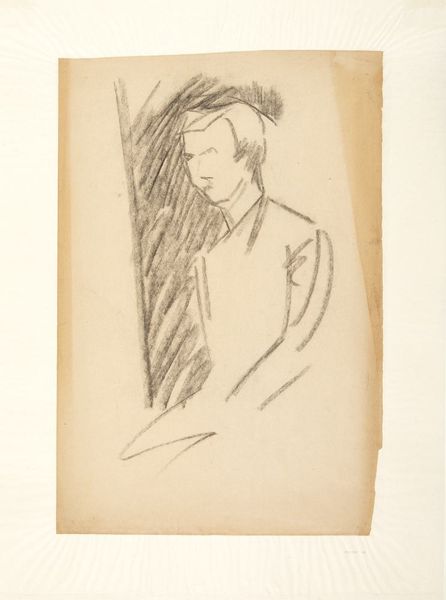
drawing, pencil
#
portrait
#
drawing
#
pencil sketch
#
figuration
#
pencil
#
pencil work
#
modernism
Dimensions: height 80 mm, width 73 mm
Copyright: Rijks Museum: Open Domain
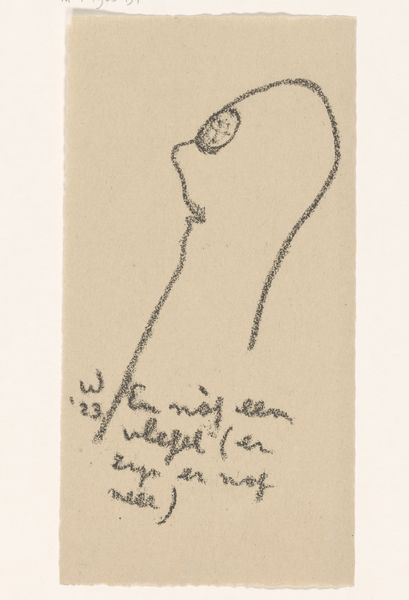
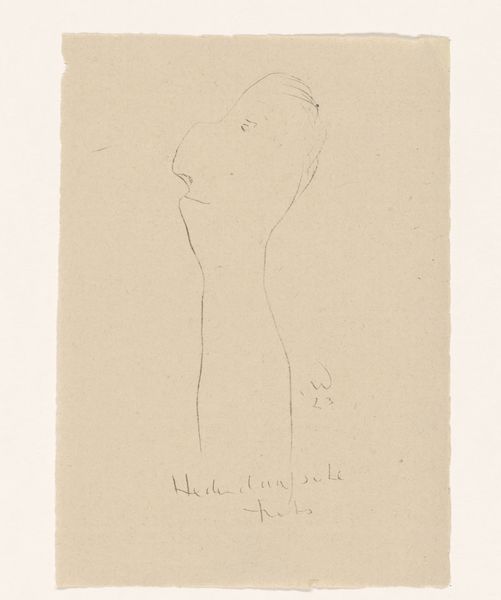
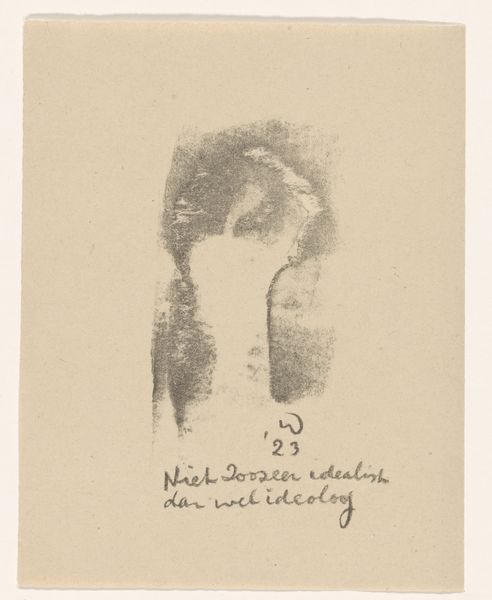
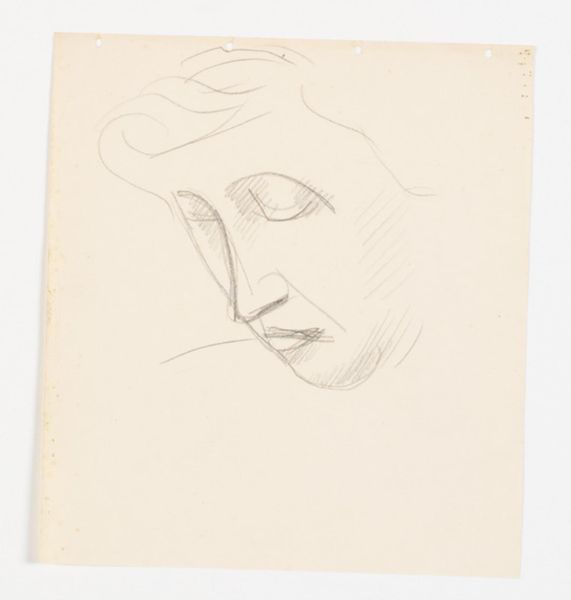
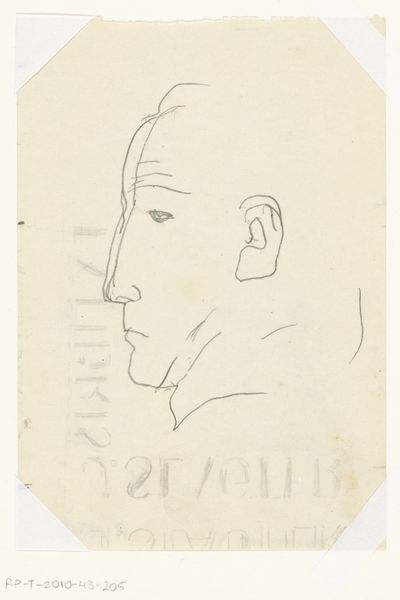
Curator: Welcome. We're looking at Erich Wichmann's 1923 pencil drawing, "Het lieve kind," which translates to "The Dear Child". Editor: Immediately, I'm struck by the fragile lines and the overall mood—it’s quite somber, isn’t it? There's a simplicity that borders on melancholy. Curator: Indeed. Wichmann’s choice of pencil as his medium emphasizes the accessibility of art making and aligns with Modernism’s break from traditional modes of production. It underscores the process – just pencil, paper, and the artist’s hand. Editor: And the figure itself! The child’s face, almost skeletal, evokes the vulnerability often associated with the post-World War I era. The drawing hints at larger societal narratives—the lost innocence, perhaps, or the anxieties surrounding childhood in times of upheaval. I read it as a critique, even. Curator: The raw material aspect also speaks to a critique—Wichmann sidesteps elaborate presentation. What we have here is the artist's intimate interaction with a common material; that directness is really what communicates the tenderness. No complex layering, just direct marks. Editor: But consider the inscription – "Het lieve kind." Is it genuine affection, or a commentary? Is it ironic? This, I think, hints at the construction of idealized childhood, something consistently interrogated even now across different cultures and socio-economic backgrounds. It seems that Wichmann pushes against it. Curator: That's a key question. I tend to focus on the labor involved and how the stark aesthetic defies expectations for formal portraiture of that time. There's something democratic, almost defiant, in his stripped-down approach. Editor: For me it triggers dialogue with the work of artists grappling with the legacy of violence. It’s about childhood but also about broader discussions around power, representation, and our responsibility to protect the most vulnerable. Curator: That tension makes it truly engaging. It opens a dialogue about intent versus reception that continues to resonate today. Editor: Agreed. A work to keep asking questions about.
Comments
No comments
Be the first to comment and join the conversation on the ultimate creative platform.
 Collect
 React
React Comment
More like this