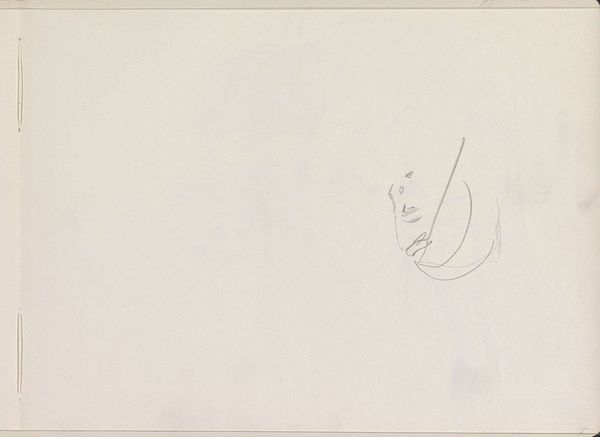
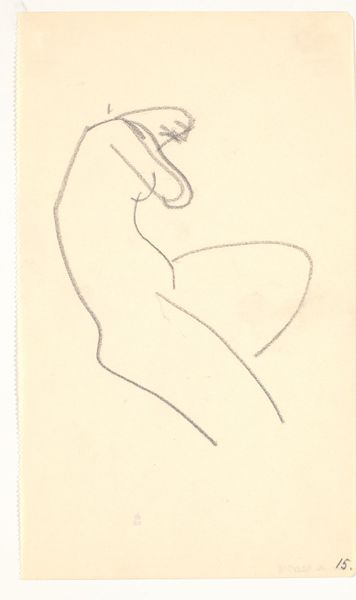
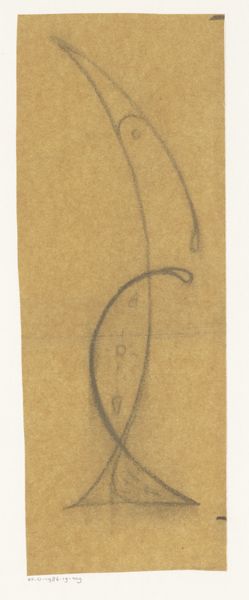
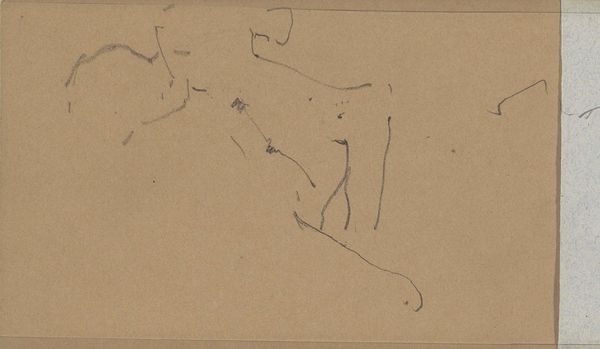
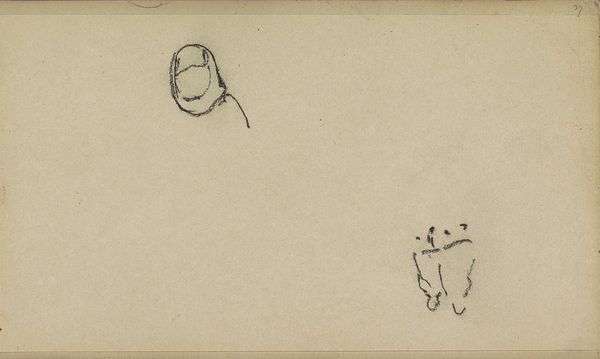
drawing, paper, ink
#
drawing
#
figuration
#
paper
#
ink
#
abstraction
#
line
#
modernism
Dimensions: height 80 mm, width 84 mm
Copyright: Rijks Museum: Open Domain
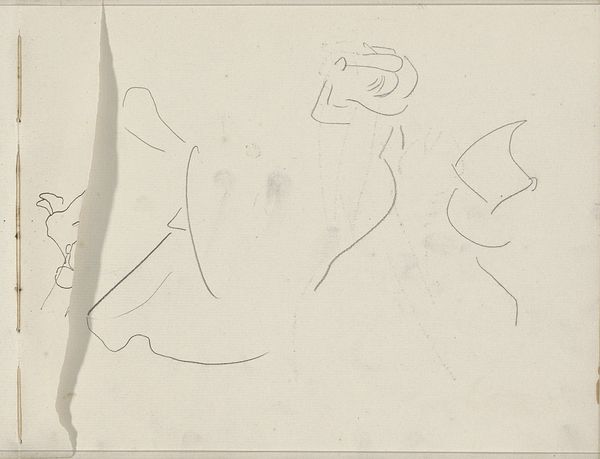
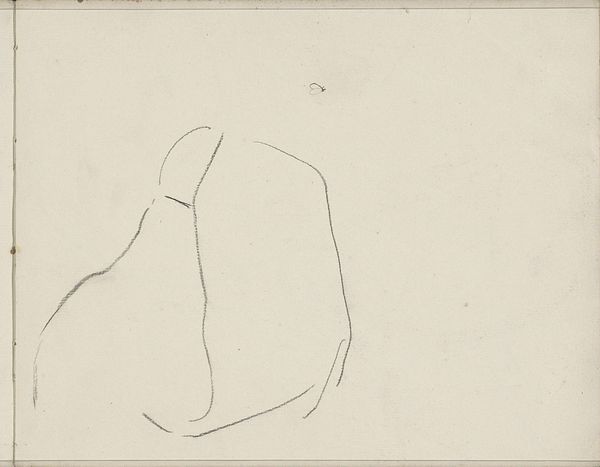
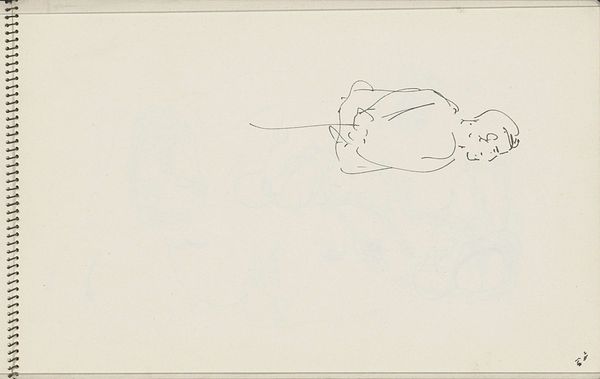
Curator: Well, this drawing strikes me as refreshingly direct. It's all whispers and implications. Editor: I find myself feeling strangely vulnerable looking at it, as if I'm catching a glimpse of someone deep in thought. Erich Wichmann executed this piece, titled "Geabstraheerde figuur," which translates to "Abstracted Figure," around 1923. It's a drawing rendered in ink on paper. Curator: There's a definite minimalist vibe, like the artist is getting to the essence of form, maybe even poking fun at the seriousness of early 20th-century art. Editor: Indeed. Given the post-war context of the 1920s, artists were grappling with representing the human figure amidst societal upheaval and changing norms. Wichmann seems to distill the figure to its barest components, inviting the viewer to fill in the gaps with their own experiences. Curator: And that single, unbroken line… it almost feels performative, as if the act of drawing becomes more important than the image itself. I wonder what kind of statement Wichmann was trying to make about representation. Editor: Perhaps a commentary on the impossibility of capturing the complete self. This era saw intense focus on individual identity in relation to collective movements like surrealism and expressionism. We see many artists striving to express unseen internal experience through simplification and symbolic figuration. Curator: There's a quiet rebellion humming beneath the surface of its simplicity. I like it. Editor: Absolutely, its minimalist quality allows us to consider larger questions around modernist art, figuration and the individual experience. Curator: Exactly, art isn’t about being bombastic; sometimes it is more of the quiet observation on personhood. Editor: Precisely. A poignant exploration in economy.
Comments
No comments
Be the first to comment and join the conversation on the ultimate creative platform.
 Collect
 React
React Comment
More like this