c. 1855 - 1857
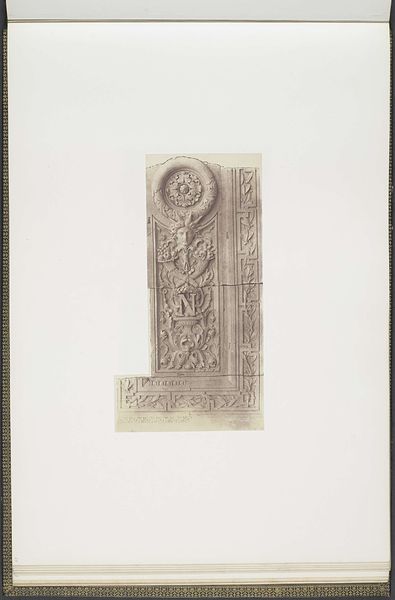
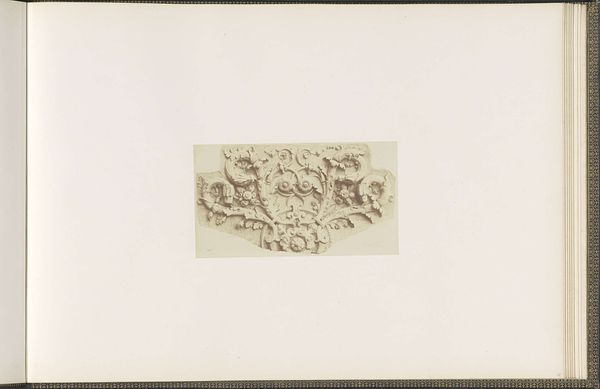
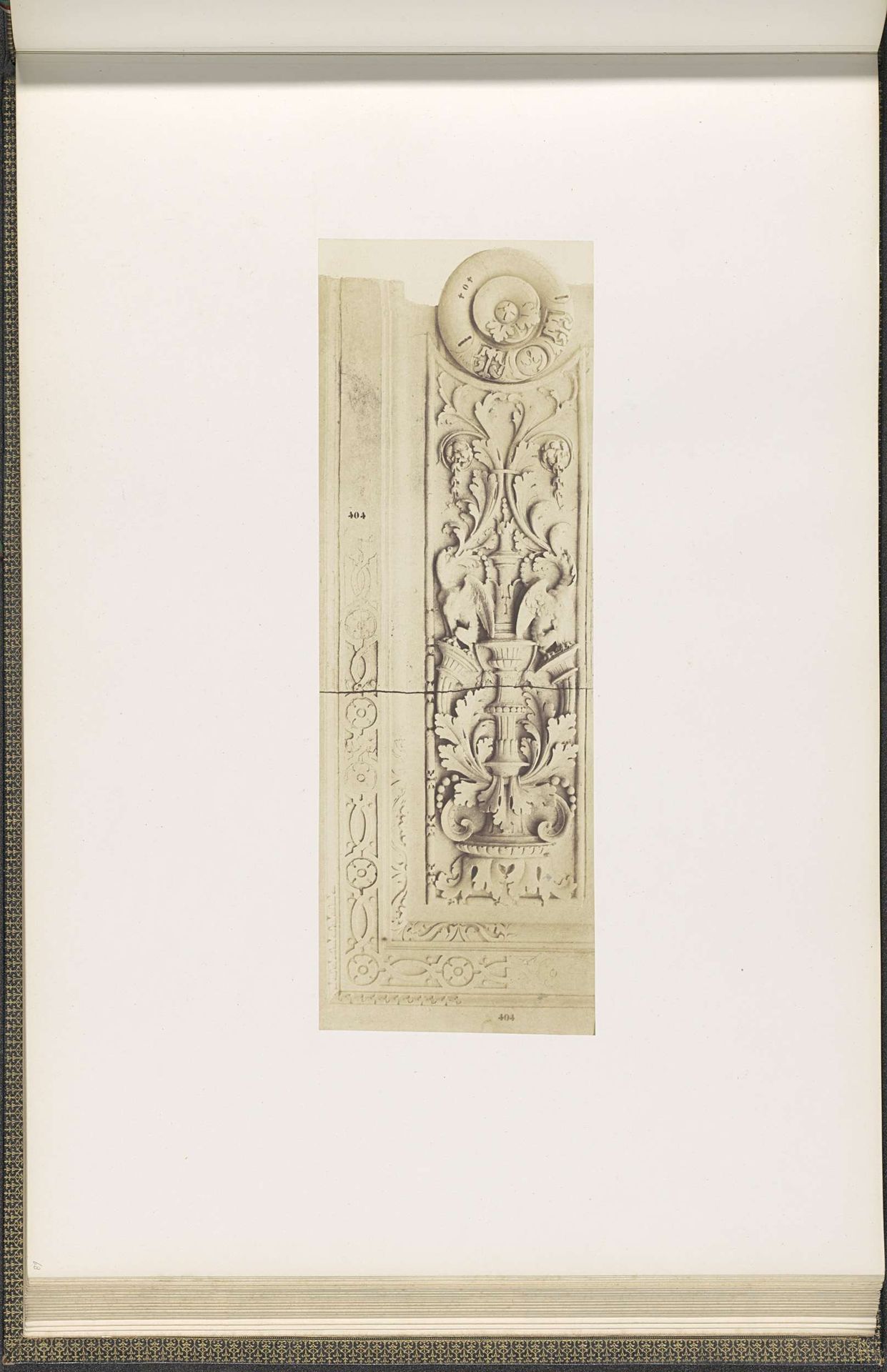
Gipsmodel voor een versiering van het Pavillon Richelieu in het Palais du Louvre

Edouard Baldus
1813 - 1889Location
RijksmuseumListen to curator's interpretation
Curatorial notes
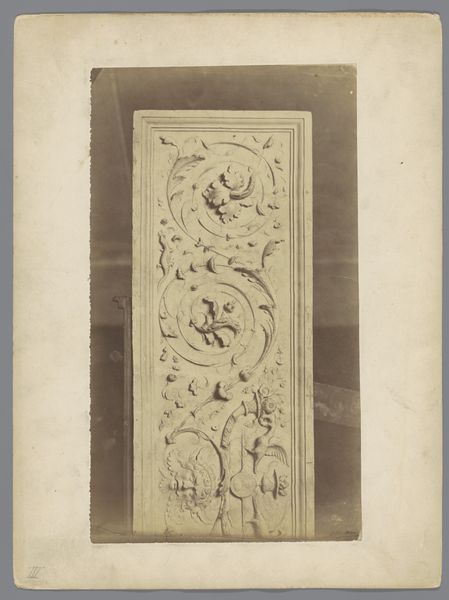
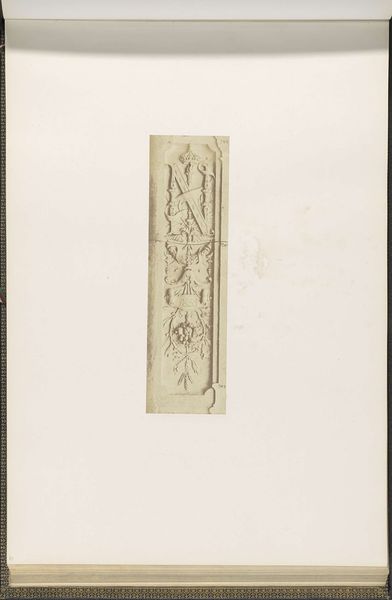
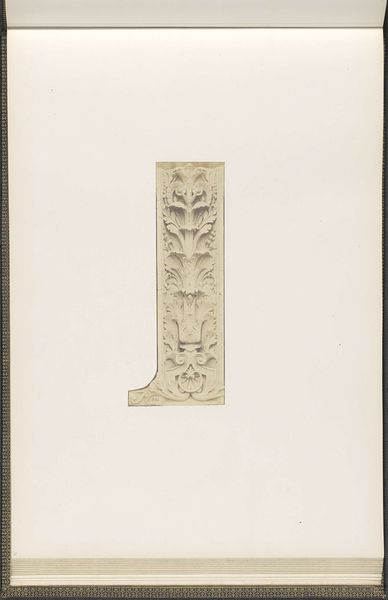
Curator: Right, let's dive into this image from the Rijksmuseum. We are looking at a photograph by Édouard Baldus titled "Gipsmodel voor een versiering van het Pavillon Richelieu in het Palais du Louvre," taken sometime between 1855 and 1857. Editor: Well, my first impression is that it feels incredibly precise, almost ghostly in its stark detail. There's a palpable sense of order, but it's an order holding its breath, like a silent scream etched in plaster. Curator: Exactly! Baldus was commissioned to document the Louvre's expansion under Napoleon III. He captured architectural details, and this one gives us a rare look at a plaster model for a decorative element. Observe how he frames the piece - the geometry, almost a scientific precision to his recording. Editor: And how the light clings to every curve and flourish! There’s that stylized acanthus motif swirling around a vase, capped by these fierce little gargoyle heads... It speaks of controlled exuberance, the tension between nature and imposed order. I love how the photograph pulls those contradictions to the fore. Curator: The Neoclassical movement really reveled in such ornamentation. It's the look! Consider the medium – photography itself at the time, a relatively new, rapidly evolving form mirroring society's impulse to classify, record, and master its surroundings. Editor: Baldus does a phenomenal job of rendering this in sepia tone. Do you think the choice was conscious? Almost romanticising an otherwise functional design piece? Curator: Very astute. Baldus's choice wasn't solely aesthetic; the calotype process he used had its limitations, which he skillfully transformed into atmospheric assets. Editor: Well, thinking of today's perspective, it almost feels as though we're looking at a death mask... Not for a face but for an idea. Something grandiose frozen in a monochromatic stillness, waiting, perpetually. Curator: That’s wonderfully put! There is definitely this aspect that it immortalises the grand scheme and artistic ambition in an otherwise quiet form of visual expression.