1803
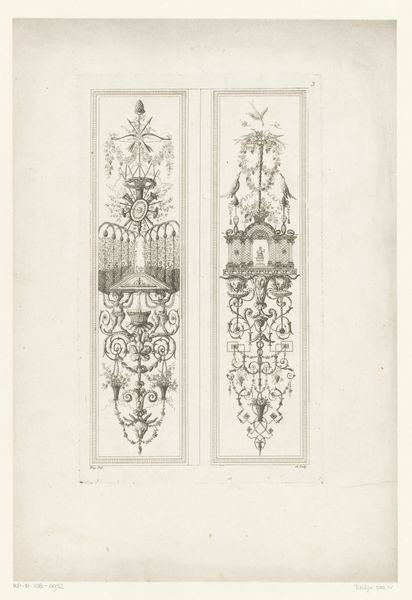
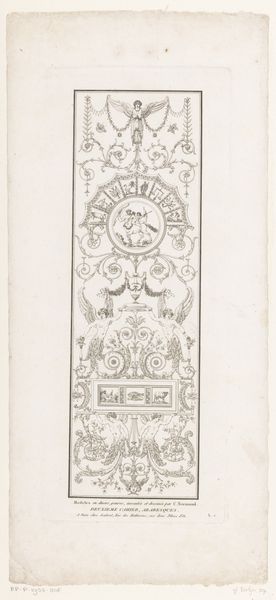
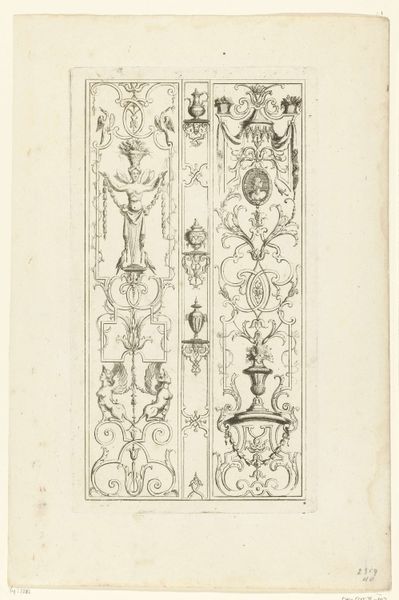
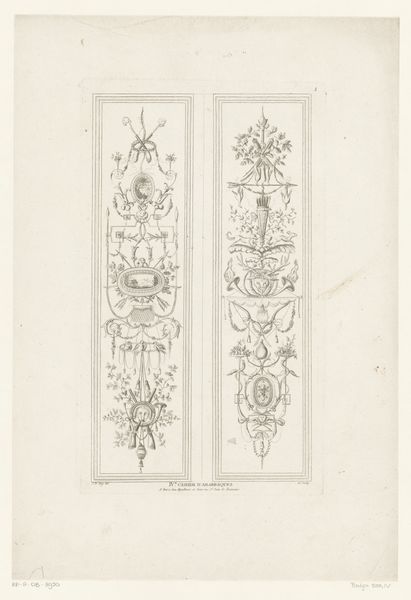
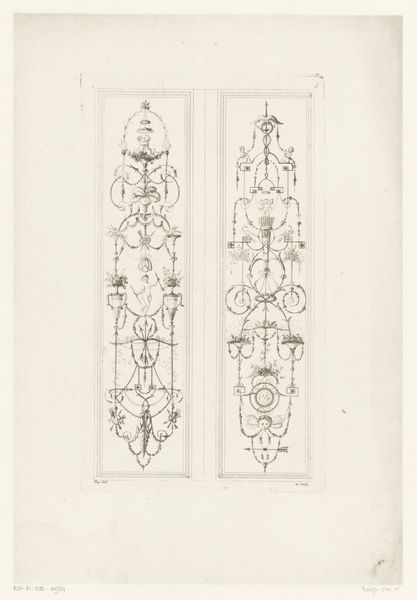
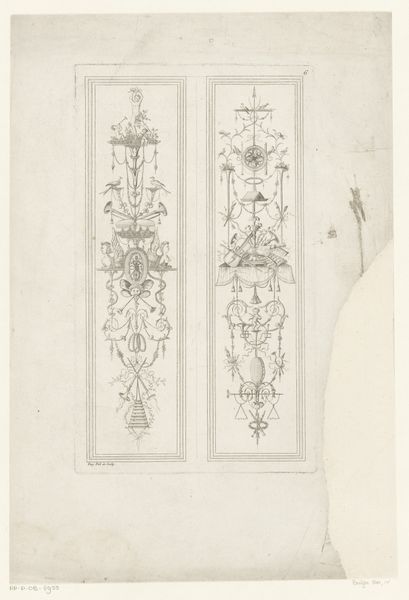
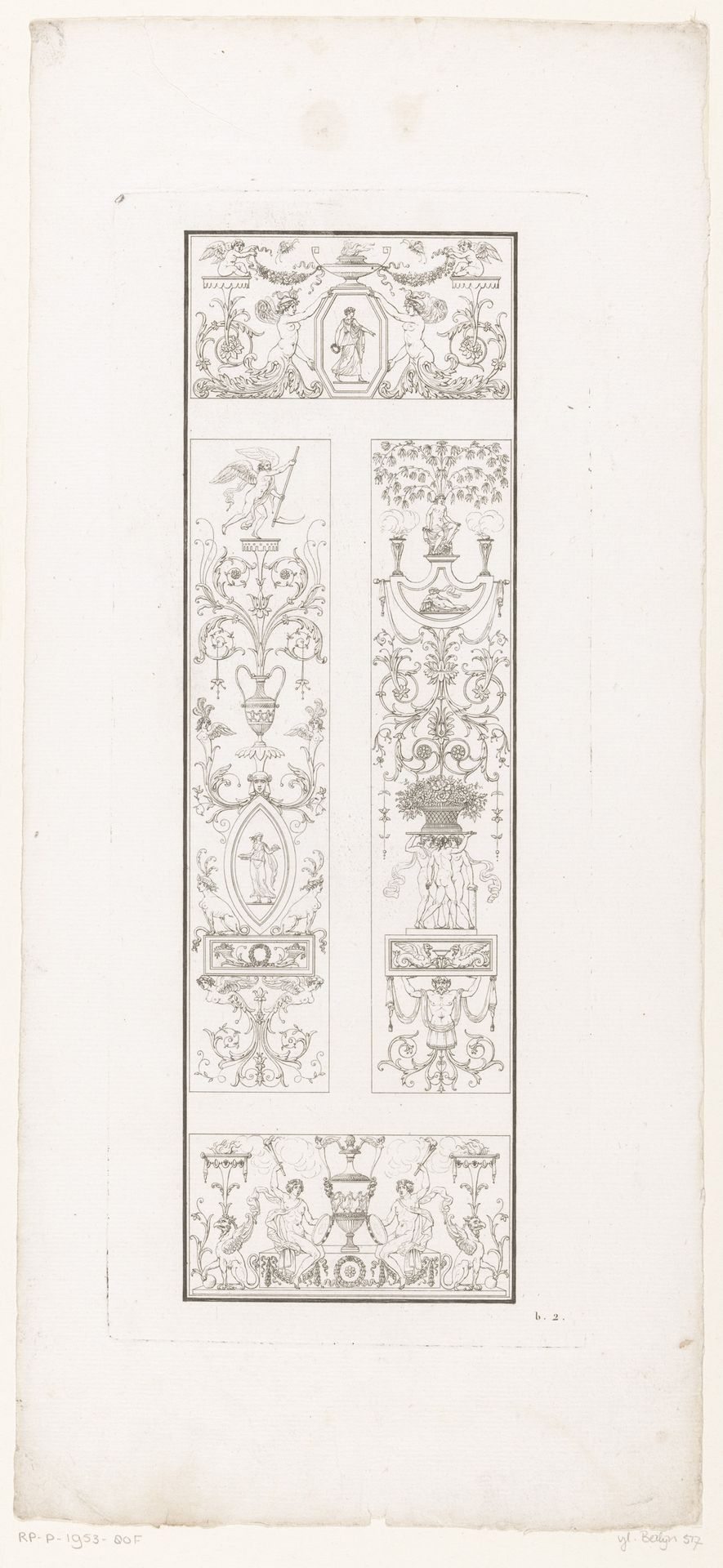
Vier panelen met arabesken

Listen to curator's interpretation
Curatorial notes
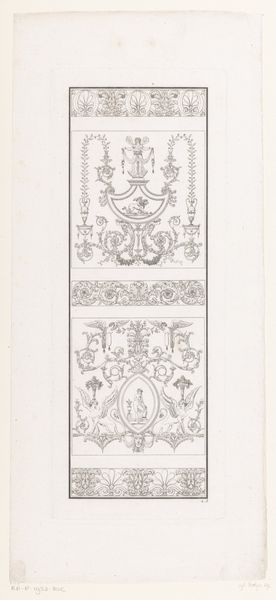
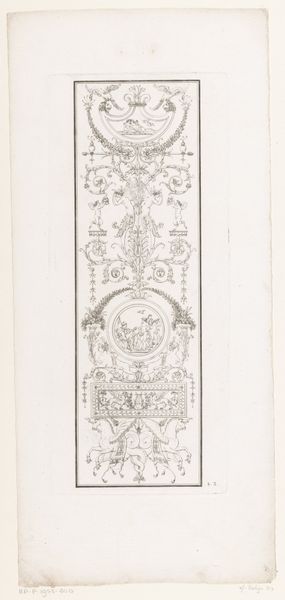
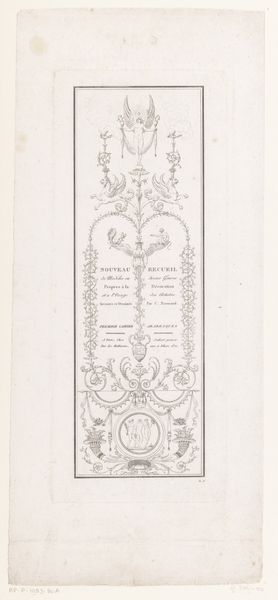
Curator: Here we have "Vier panelen met arabesken," or "Four Panels with Arabesques," a print made by Charles Pierre Joseph Normand in 1803. It's an engraving on paper showcasing Neoclassical designs. Editor: It strikes me as something found within the private chambers of the era, an airy, restrained set of graphic musings meant for higher company and contemplation. What a marvelously reserved, quiet arrangement! Curator: Absolutely. Observe how the composition is strictly organized in a vertical hierarchy. Normand’s careful use of line and geometric form—vases, figures, laurel wreaths—creates a precise, balanced structure within each panel. Note the rhythmic repetition of forms throughout. Editor: Indeed. And those forms! The prevalence of classical imagery – the winged figures, the urns, even the laurel wreaths— speak to a desire for continuity, a visual language that reaches back to antiquity for authority and grandeur. They’re like coded messages for those in the know. Curator: Precisely! The emphasis on idealized forms and the suppression of overt emotion are hallmarks of Neoclassical art. The very limitations in color create an elegant interplay with figure and ground. There’s a delicate dance here between symmetry and subtle asymmetry that guides the eye. Editor: That is where history and culture fuse in fascinating ways: these emblems of power were immediately recognizable visual symbols to the sophisticated court, hinting to mythological grandeur while being subdued in order to signal modern sophistication. The past reworked into a new self-conscious visual culture. Curator: Agreed. One can interpret this print almost as a set of instructions or design prototypes. How to think, how to feel, what to consider… through the formal vocabulary of Neoclassicism. Editor: It’s almost as if Normand has frozen a moment of aesthetic philosophy for us, neatly arranged on a single page, which remains quite accessible centuries later. Curator: It’s a potent demonstration of Neoclassical formalism – all made apparent by Normand’s acute sense for form and its organization within the visual plane. Editor: These carefully rendered symbols echo throughout history, carrying meaning far beyond their immediate aesthetic appeal. Fascinating, isn't it?