1574 - 1651
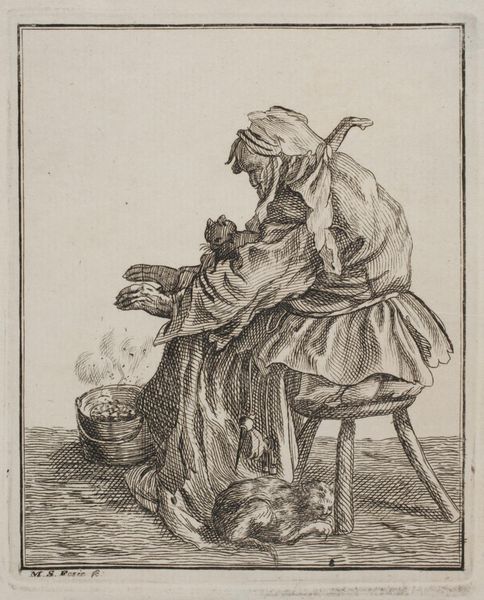
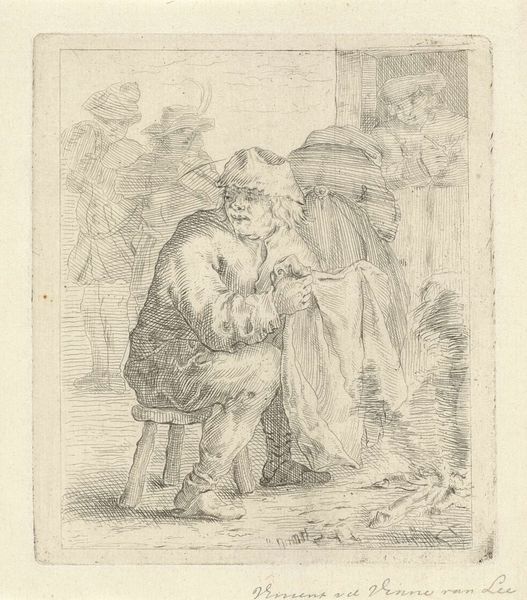
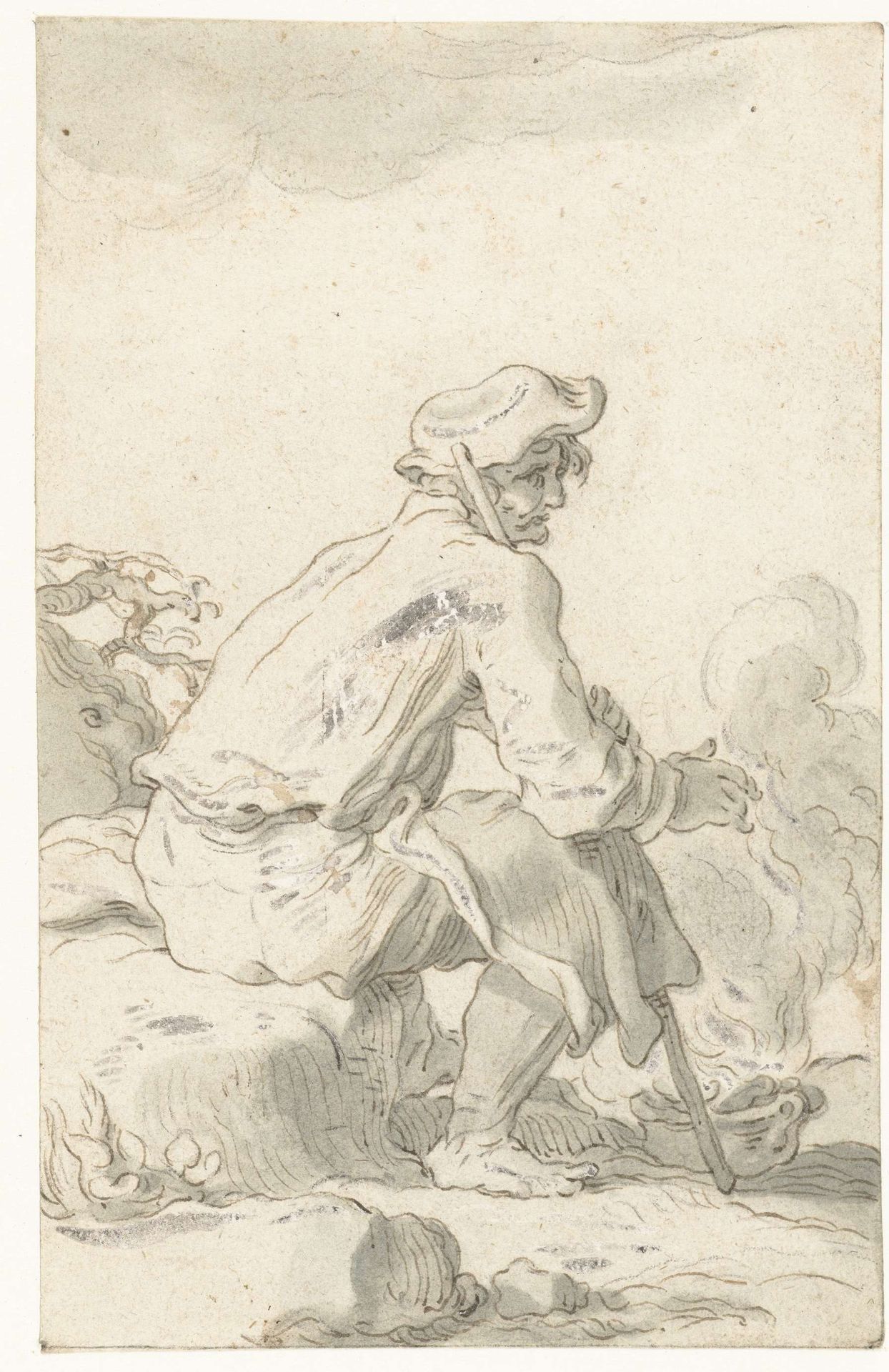
Zittende man bij een vuur

Abraham Bloemaert
1564 - 1651Location
RijksmuseumListen to curator's interpretation
Curatorial notes
Abraham Bloemaert created this drawing of a seated man by a fire with pen in grey-brown ink and brush in grey ink, around the first half of the 17th century in the Netherlands. This seemingly simple scene of a peasant warming himself would have spoken to a very particular cultural moment. In the 17th-century Netherlands, there was a growing interest in genre painting, depicting scenes of everyday life. However, these images weren't always straightforward representations; they often carried moral or social commentary. Bloemaert, influenced by the Italian Caravaggisti movement, brought a new level of realism to his work. This focus on the everyday, including the lives of the lower classes, was new. But it was also influenced by the religious and social climate of the time. To fully understand this drawing, we can research the social conditions of the Dutch Golden Age. We can look at the era's economic structures and religious beliefs. It is through this kind of detailed investigation that we can truly appreciate the depth and complexity of Bloemaert's work.