1927
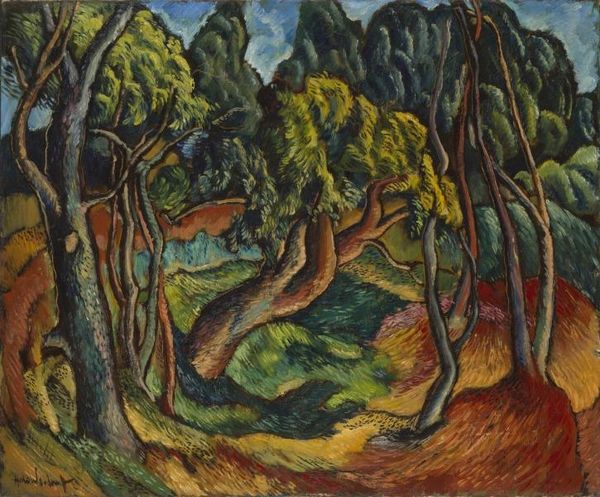
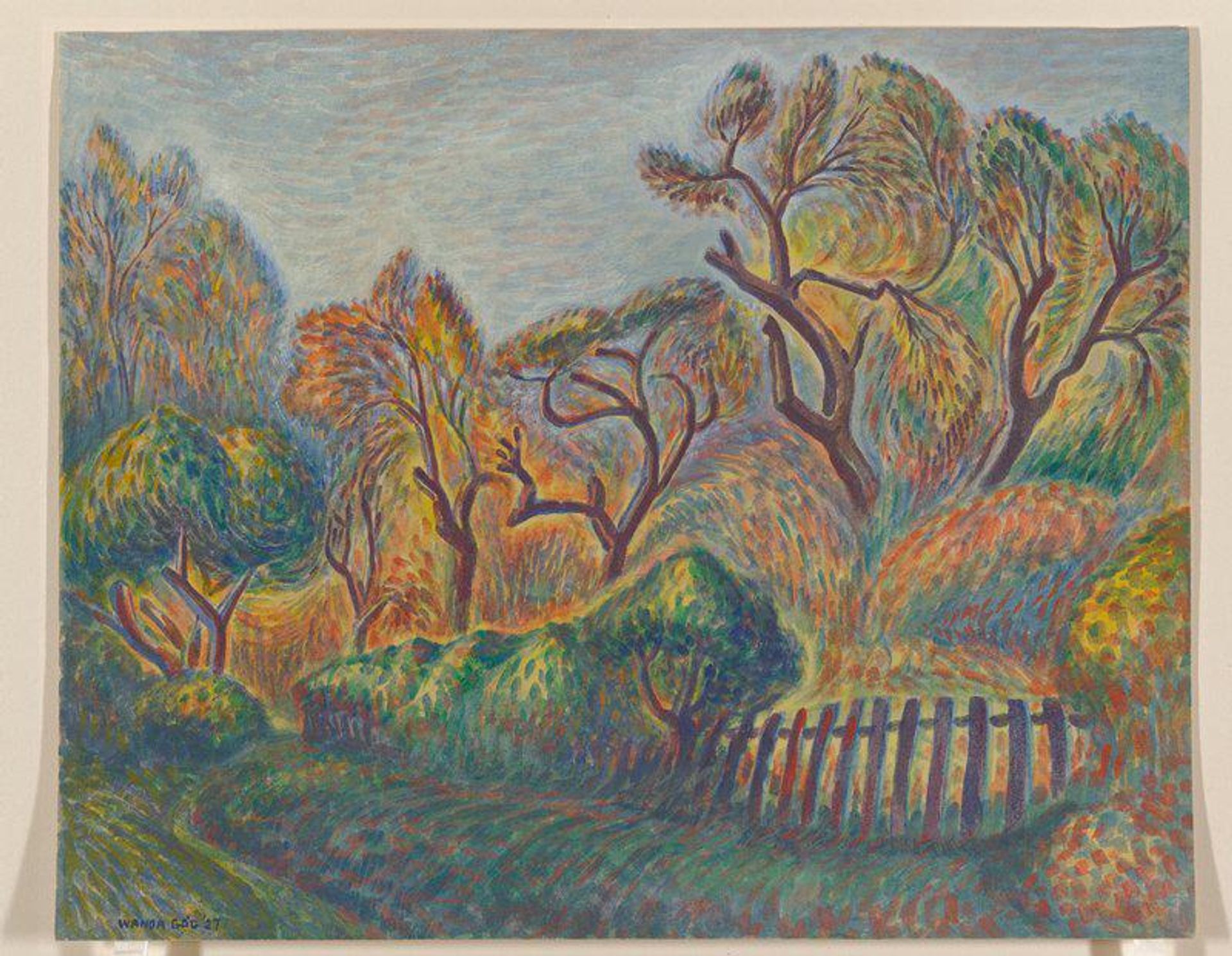
Tree Forms


Listen to curator's interpretation
Curatorial notes
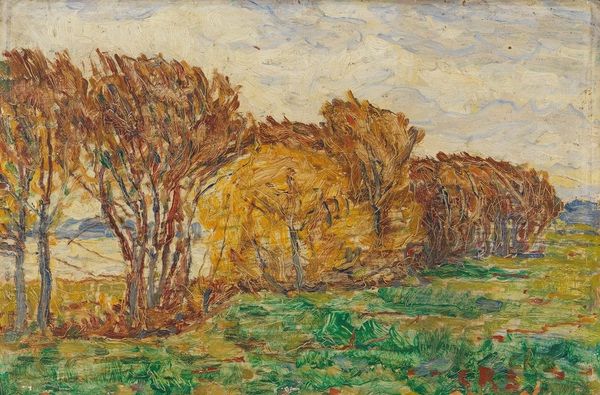
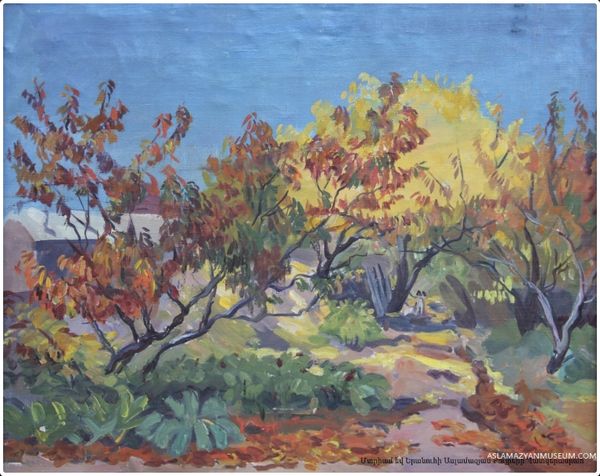
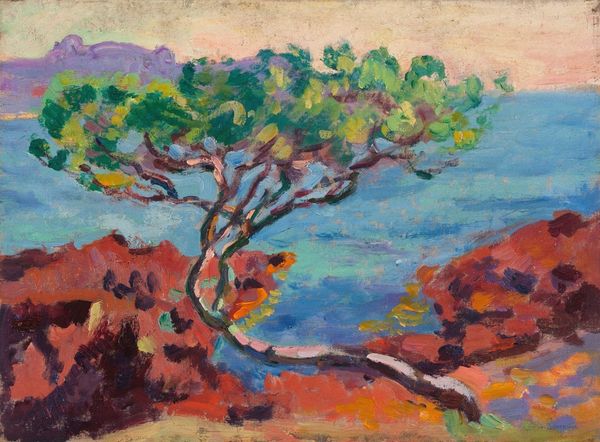
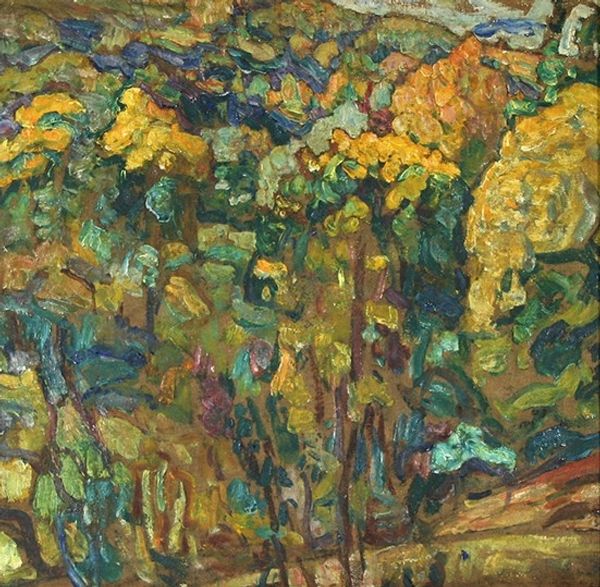
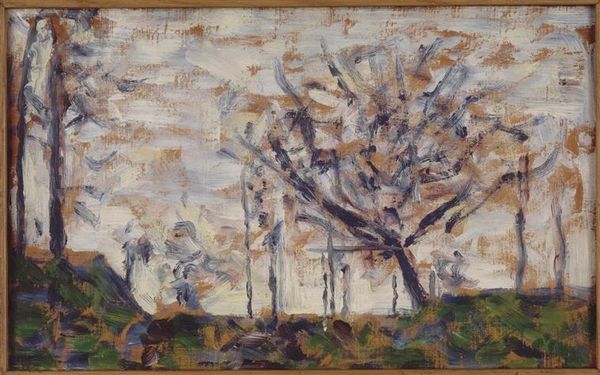
Curator: What a delightful explosion of color. At first glance, this reminds me of a forest in the throes of autumn. Editor: Indeed. What strikes me most about Wanda Gág's "Tree Forms," created in 1927 and held here at the Minneapolis Institute of Art, is the almost hallucinatory intensity of it all. The landscape seems to be breathing. Curator: Precisely. Gág’s position within early American Modernism is critical to consider. Her pieces are important for understanding the progressive social movements and the burgeoning art scene as they reflect European trends adapted for American narratives. Editor: You know, Gág had strong political views. She often explored themes of social injustice and economic hardship, but here in "Tree Forms" one cannot see those. The dreamy quality feels distinct from her other artworks, offering a serene, contemplative space away from political struggles. Or, could the seemingly gentle undulation be a quiet protest? Curator: That's a valid reading, I think. It's vital to consider the broader context in which Gág worked, specifically her role in advocating for women's rights and challenging societal norms through her art. Gág’s style employs elements borrowed from German Expressionism and combines them to portray the American landscape during periods of economic turmoil following the First World War. Editor: I also notice that while her landscapes, like this one, are beautiful, there’s also an inherent fragility suggested by her watercolor. Is that fragility of our surrounding all that we need in order to care for it? Is there a tension between this naive art aesthetic and environmental consciousness? Curator: A good point. This piece does show us the tension present between modernism's industrial ethos and nature, but I believe Gág manages to showcase how both influence the artistic lens with this artwork. This juxtaposition enables complex dialogues with viewers around preservation. Editor: "Tree Forms," with all its shimmering hues and subtle textures, serves as a powerful reminder of nature’s strength but delicacy, and a potential act of political expression. It invites us to look deeply, questioning what narratives lay hidden within those radiant strokes. Curator: It has certainly given me a richer understanding of the cultural, historical, and emotional dimensions embedded in even the most seemingly innocent landscape paintings. Thank you.