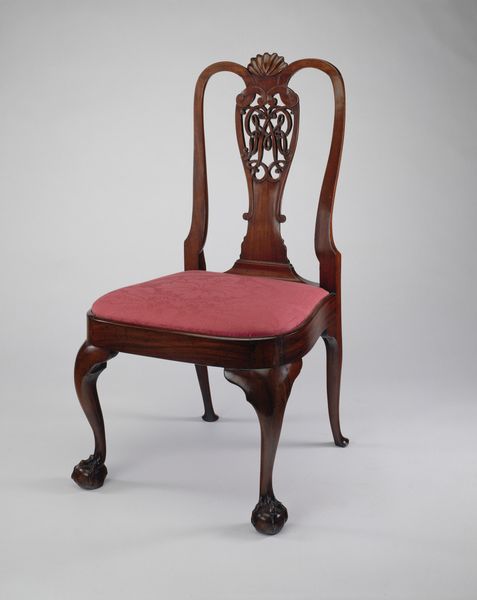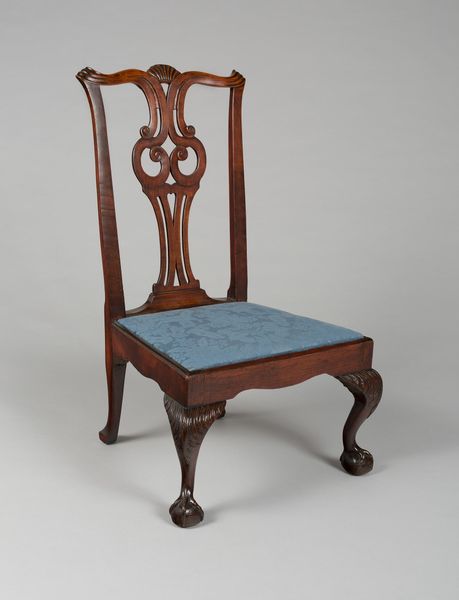
c. 1750 - 1775
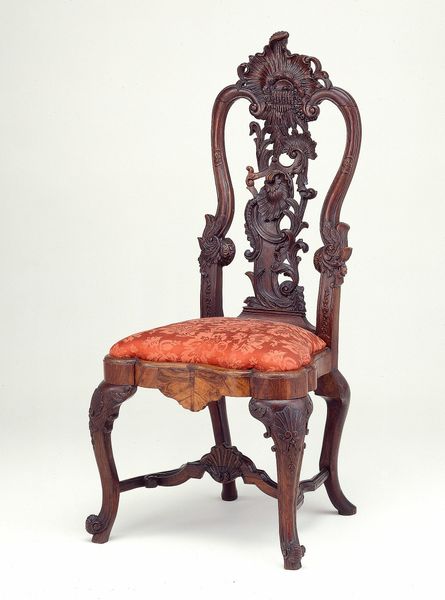
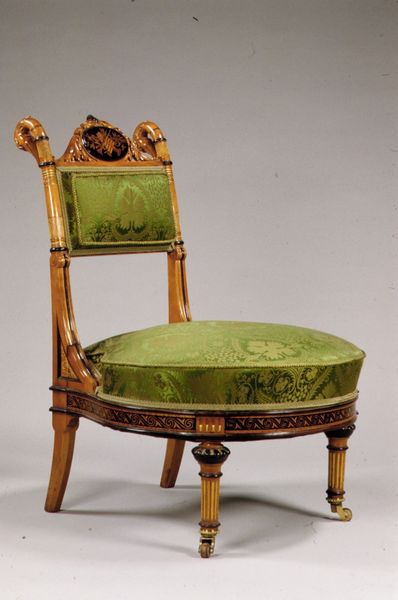
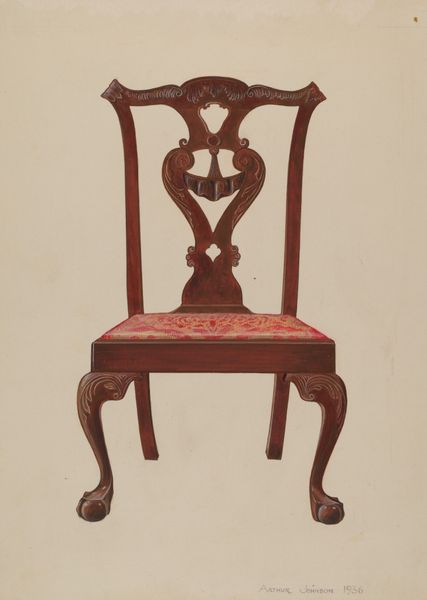
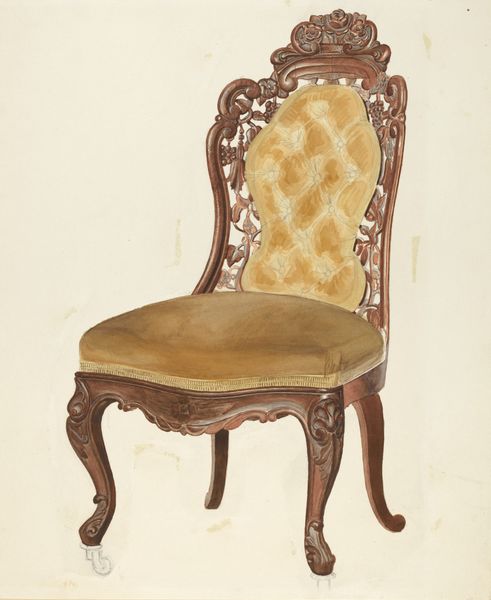
Side chair


Listen to curator's interpretation
Curatorial notes
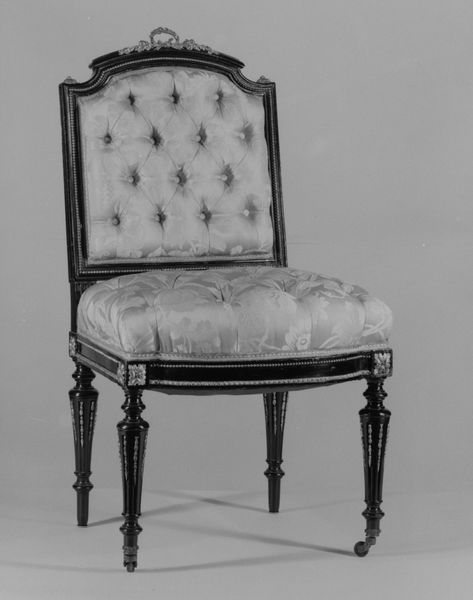
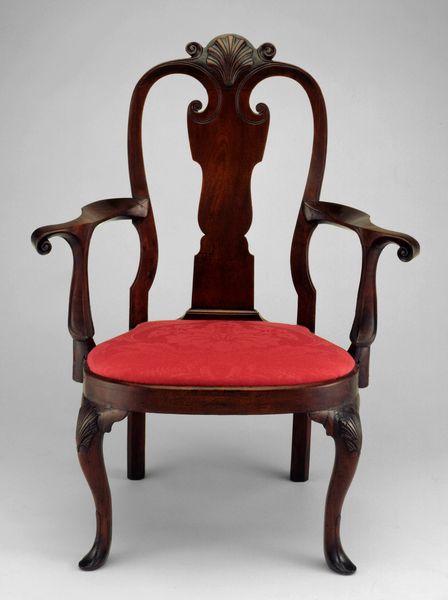
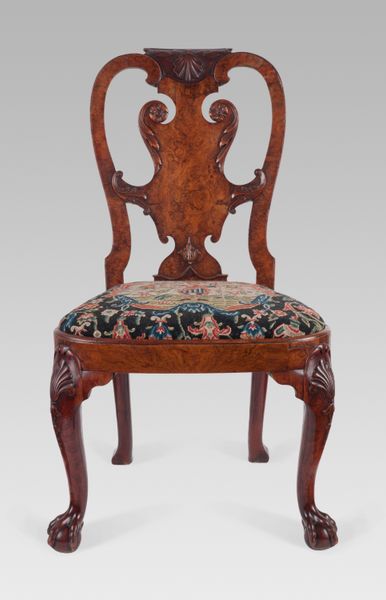
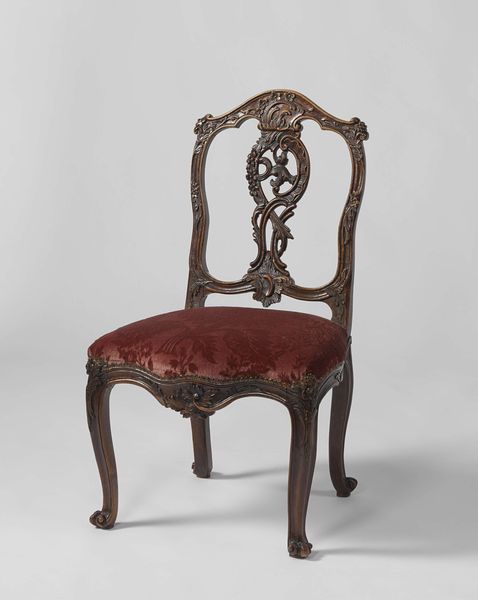
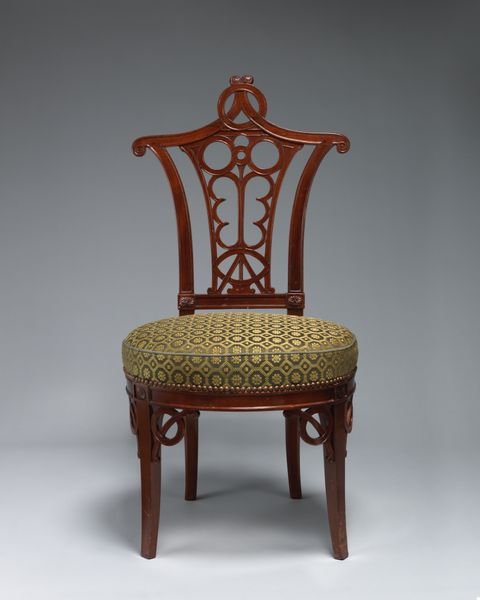
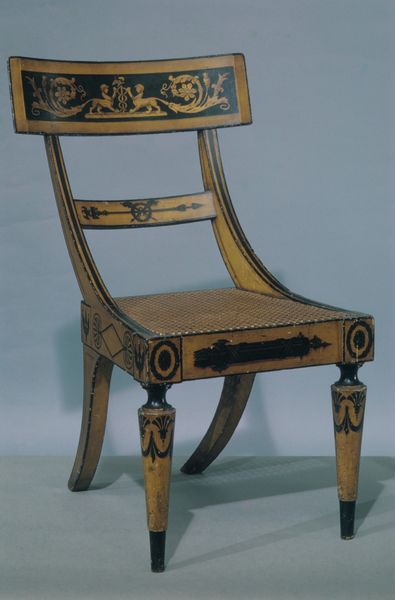
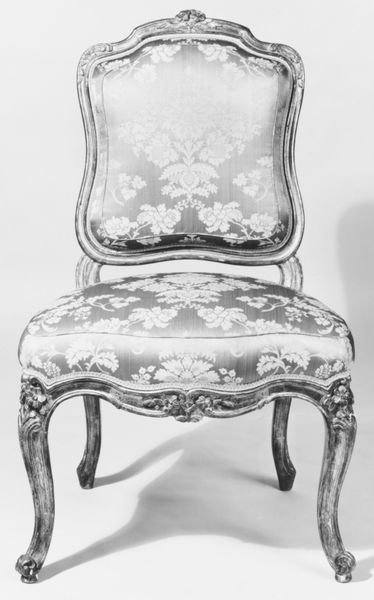
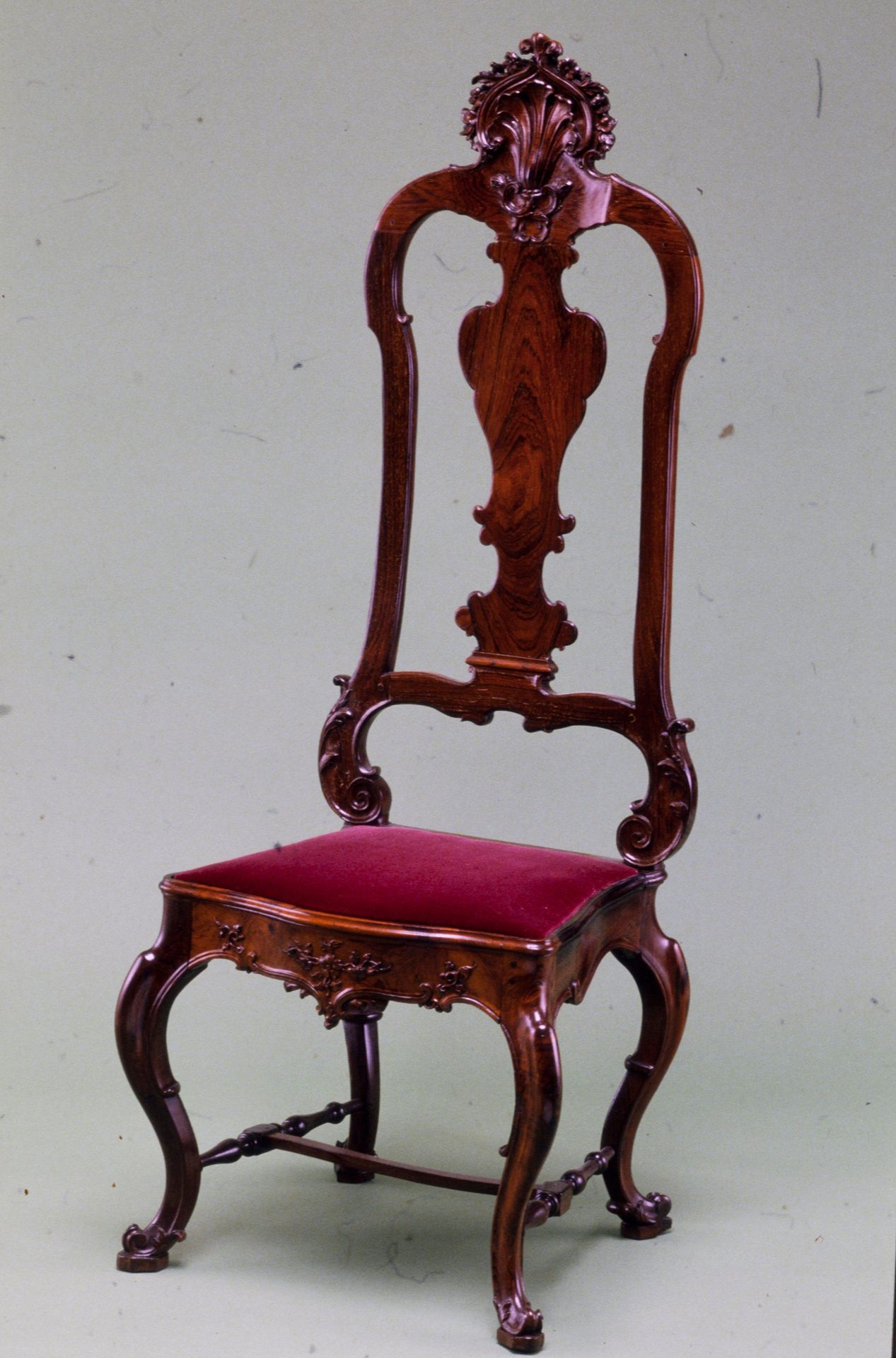
Editor: This wooden side chair, crafted sometime between 1750 and 1775, strikes me as a fascinating blend of elegance and formality. All the ornamentation makes it look almost ceremonial, yet it's still just... a chair. How do you interpret this work? Curator: Indeed. Consider the visual language at play here. The extravagant carving, the cabriole legs ending in claw-and-ball feet - all echo power and status. Does that ornate crest at the top remind you of anything? A stylized fleur-de-lis, perhaps? Think of heraldry and the symbolism it conveys about lineage, about inherited authority. Editor: Yes, I see what you mean! The fleur-de-lis definitely evokes a sense of French royalty. So, this chair isn't just for sitting; it’s a statement? Curator: Precisely. These objects are infused with encoded social information and aspire to visual grandeur. It isn’t about simple function, but aspiration. The patron desired that whomever sat here be symbolically elevated and separated from everyone else. Editor: It's incredible how a single object can carry so much cultural weight, reflecting social structures and aspirations. I will never look at a chair the same way! Curator: It’s those embedded stories and societal echoes that transform mundane items into resonant artifacts. Appreciating these nuances truly enriches our understanding.