About this artwork
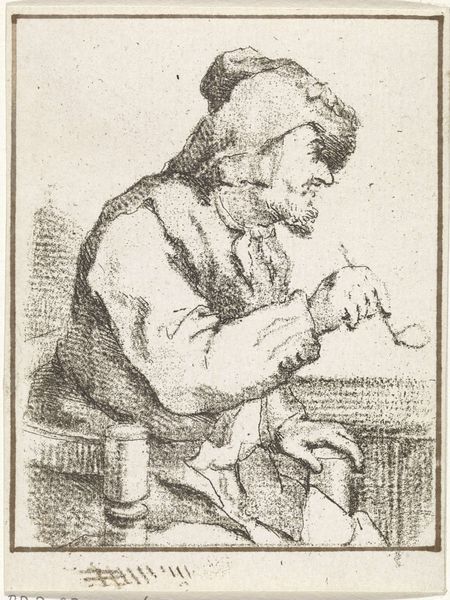
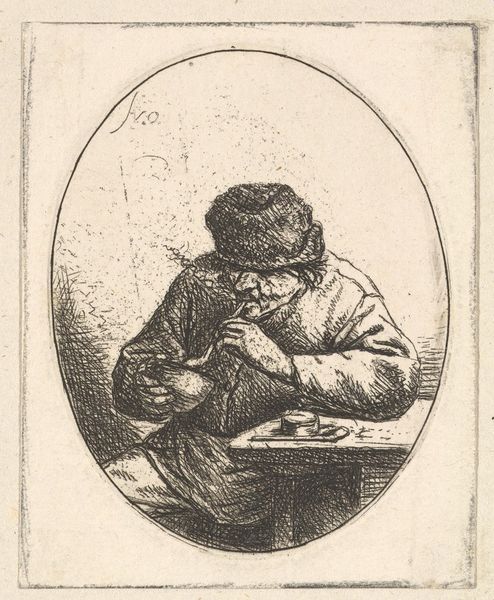
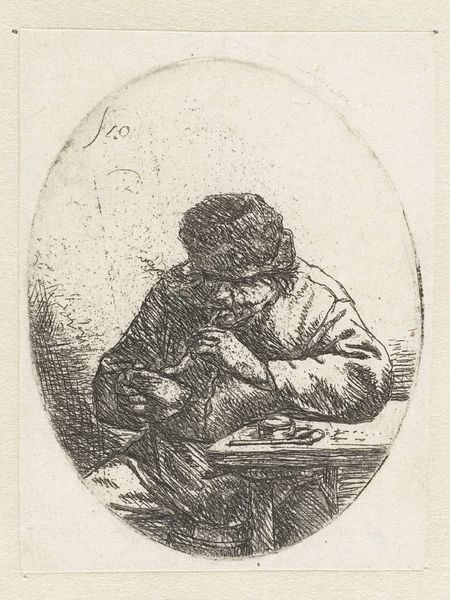
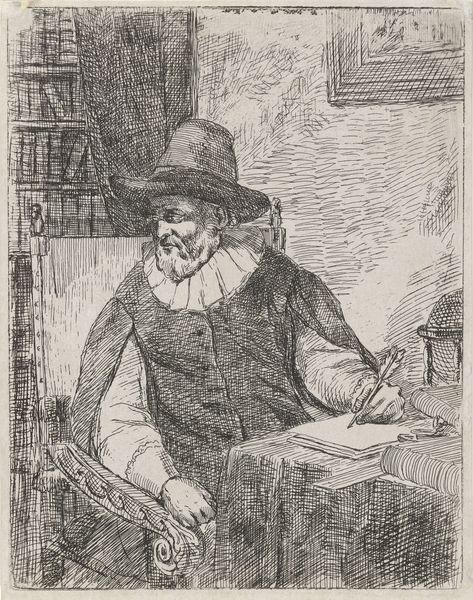
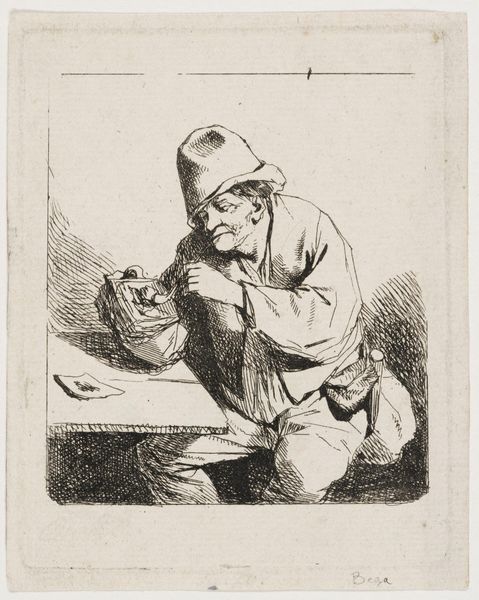
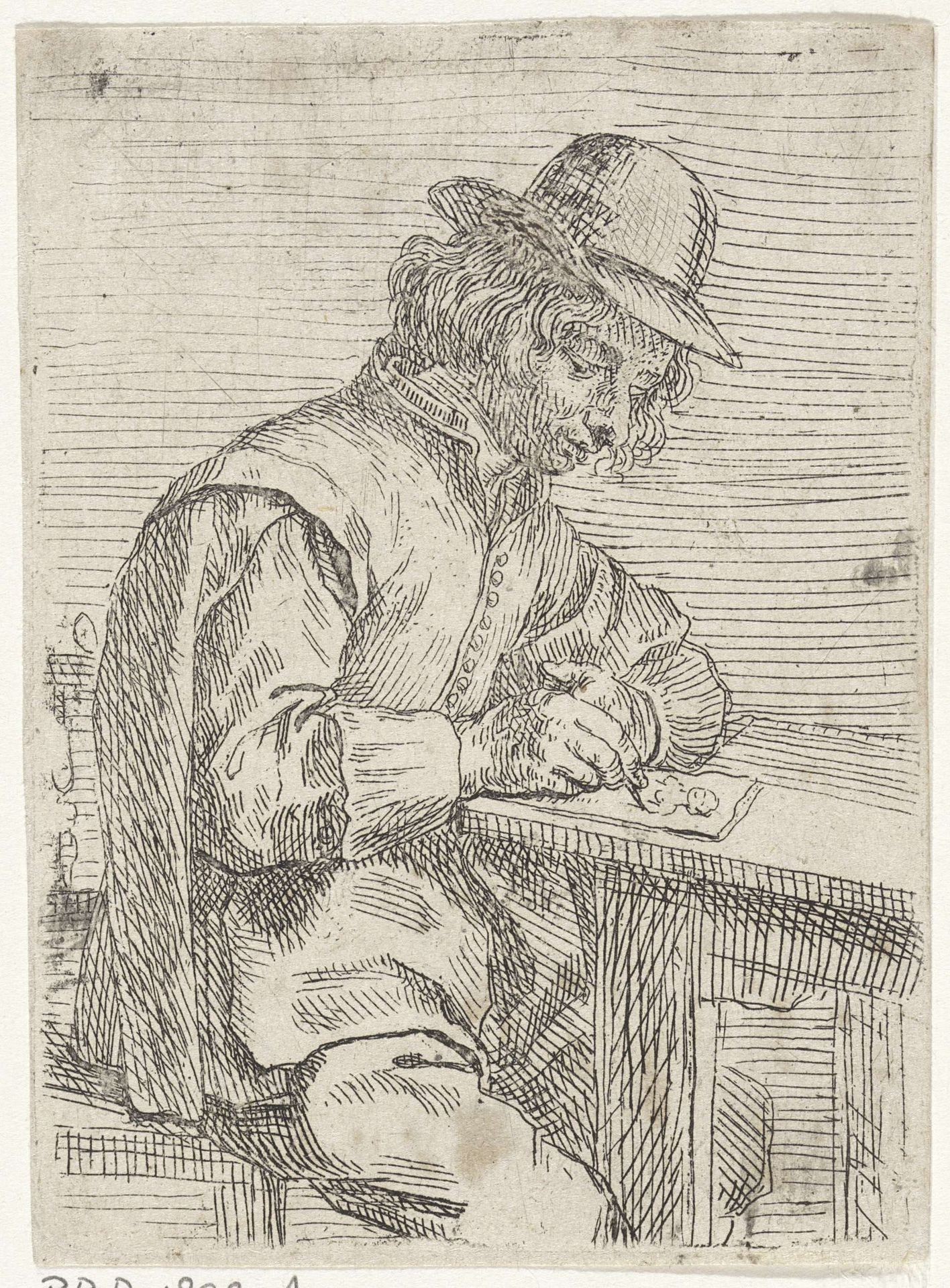
This etching was made by Peeter Snijers, an artist from Antwerp, working in the early 18th century. The image shows a man drawing, hunched over a table in close concentration. The medium of etching is interesting here. It’s an indirect process, where the artist covers a metal plate with wax, scratches away the lines they want to print, and then bathes the plate in acid, which bites into the exposed metal. When the wax is removed, the plate can be inked and printed, transferring the image to paper. Think about this process for a moment. It is labor intensive. It’s not spontaneous but deliberate and takes time, and it is one step removed from the act of drawing itself. It is a reproductive medium, that can easily create multiples, and circulate imagery. In the context of Snijers’s artistic practice, it suggests the rise of the print market, and the increasing commodification of images. And although it is small in scale, it speaks volumes about the changing landscape of art and labor in the 1700s.

Artwork details
- Medium
- drawing, print, etching, ink
- Dimensions
- height 95 mm, width 70 mm
- Copyright
- Rijks Museum: Open Domain
Tags
portrait
drawing
baroque
etching
figuration
ink
genre-painting
Comments
No comments
About this artwork
This etching was made by Peeter Snijers, an artist from Antwerp, working in the early 18th century. The image shows a man drawing, hunched over a table in close concentration. The medium of etching is interesting here. It’s an indirect process, where the artist covers a metal plate with wax, scratches away the lines they want to print, and then bathes the plate in acid, which bites into the exposed metal. When the wax is removed, the plate can be inked and printed, transferring the image to paper. Think about this process for a moment. It is labor intensive. It’s not spontaneous but deliberate and takes time, and it is one step removed from the act of drawing itself. It is a reproductive medium, that can easily create multiples, and circulate imagery. In the context of Snijers’s artistic practice, it suggests the rise of the print market, and the increasing commodification of images. And although it is small in scale, it speaks volumes about the changing landscape of art and labor in the 1700s.
Comments
No comments