relief, terracotta, architecture
#
art-nouveau
#
relief
#
geometric pattern
#
geometric
#
united-states
#
terracotta
#
architecture
Copyright: Public Domain
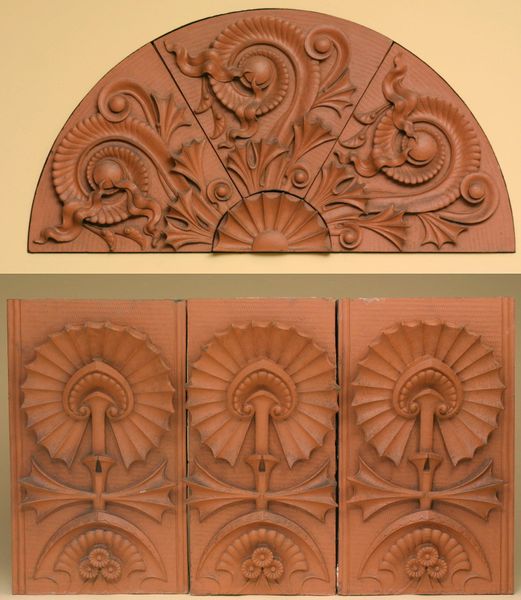
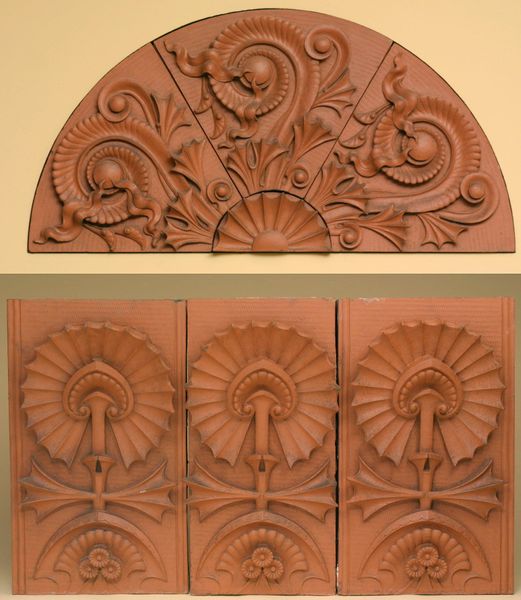
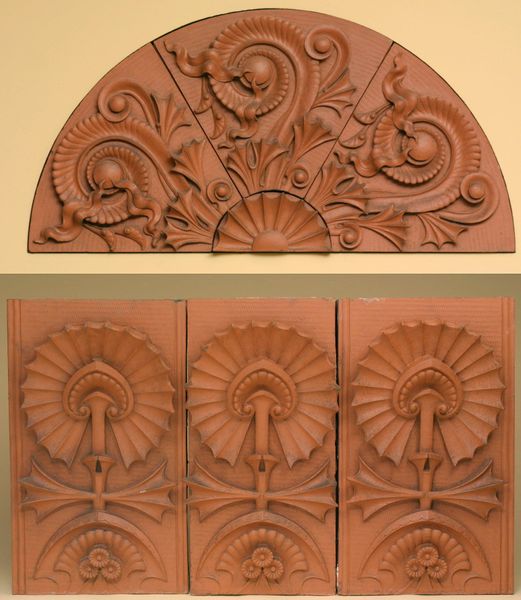
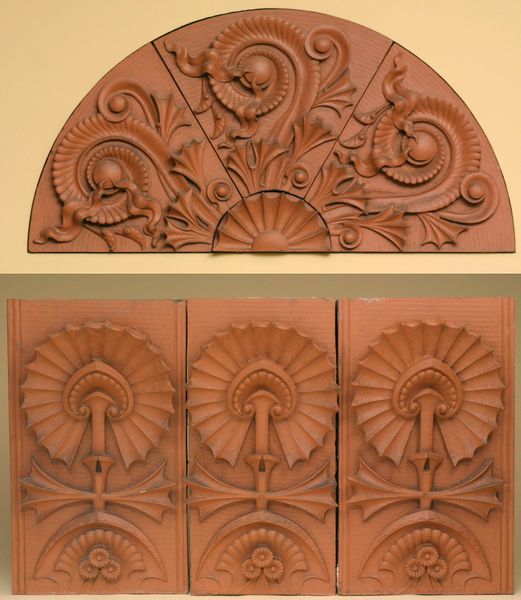
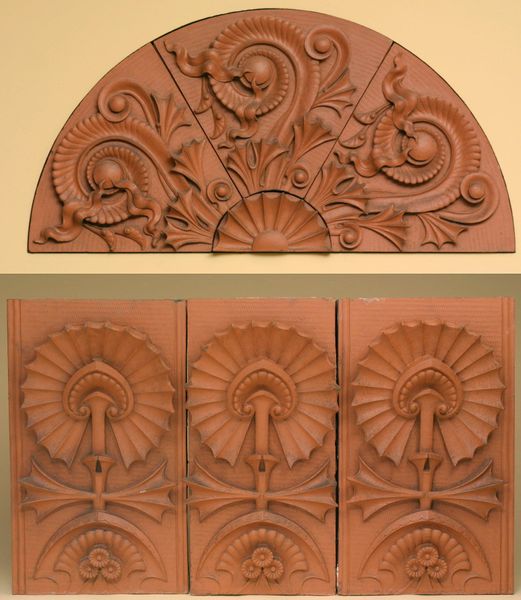
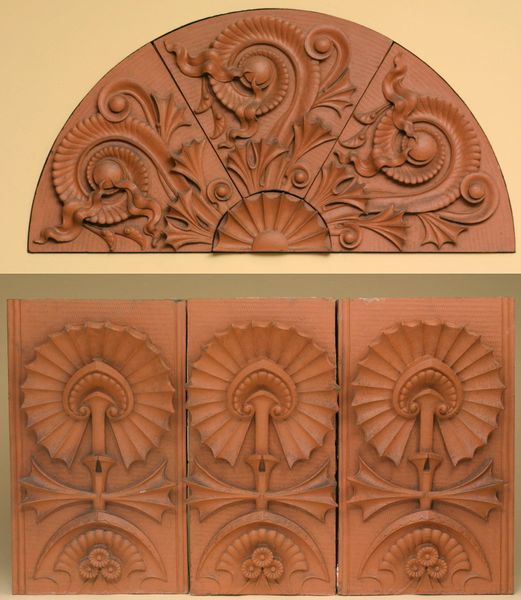
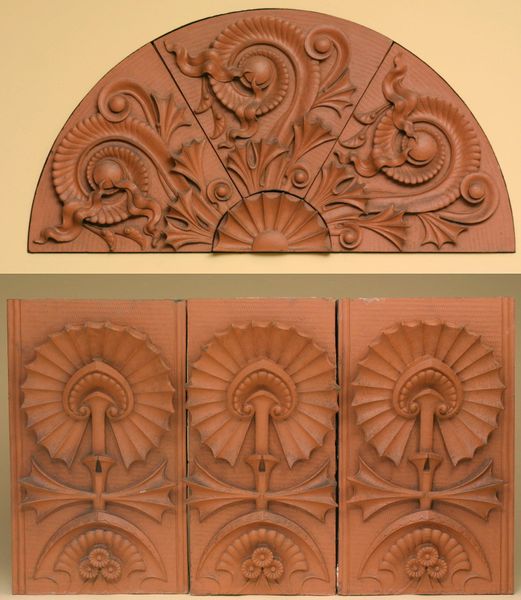
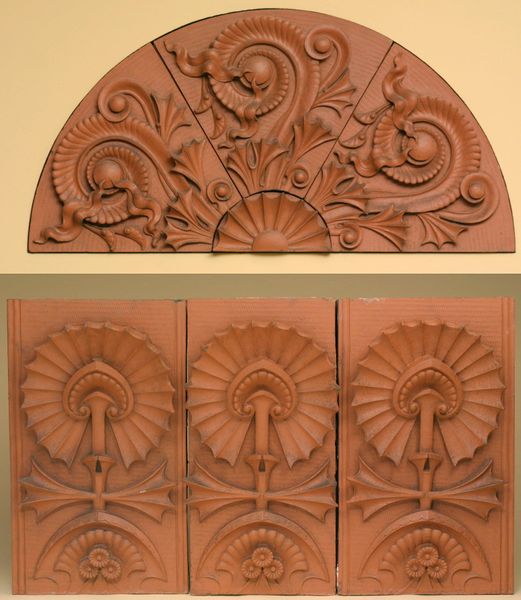
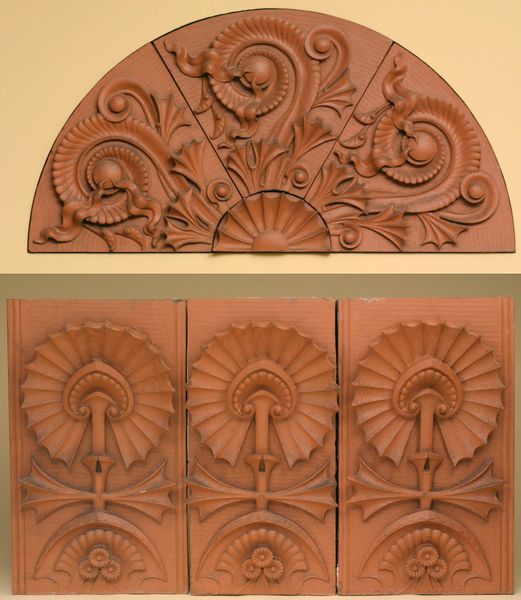
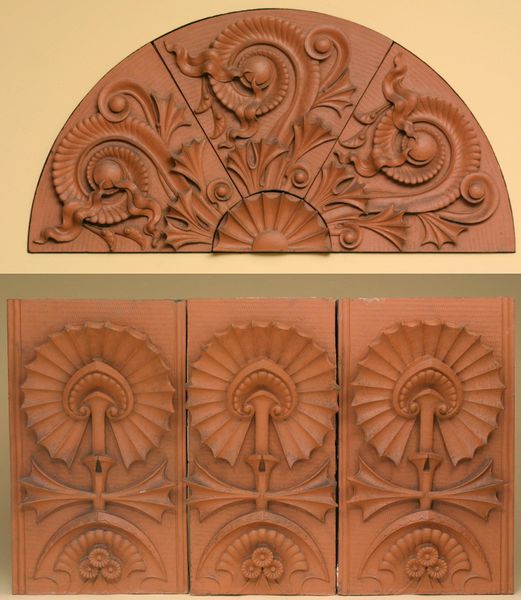
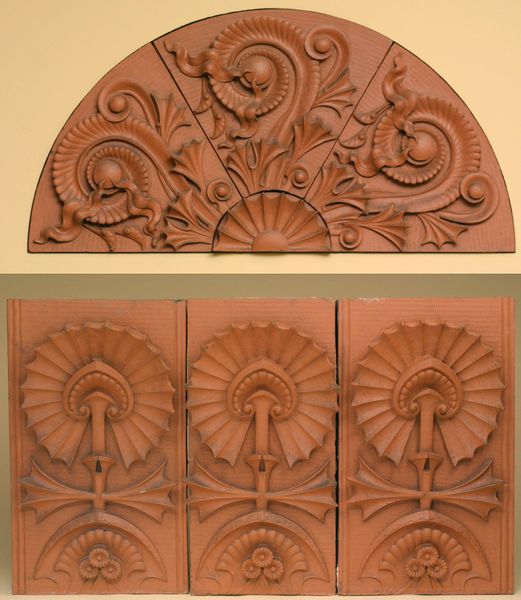
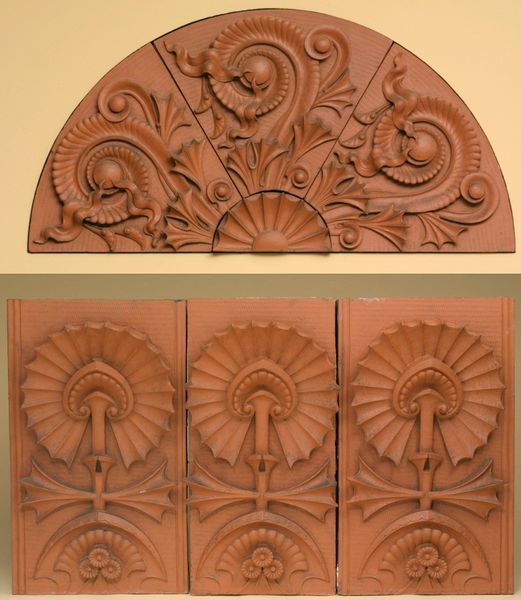
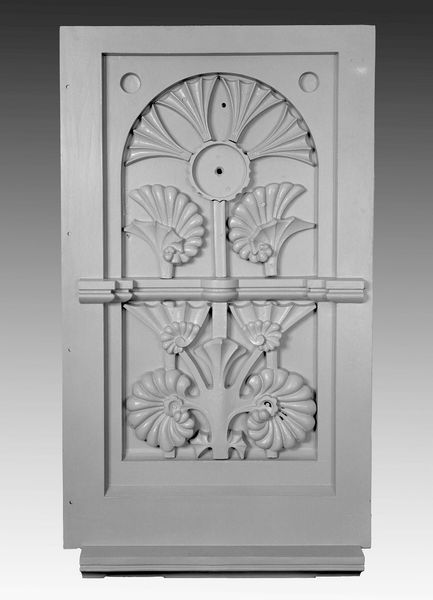
Curator: Isn’t this terracotta relief absolutely captivating? This "Lunette and decorative panel," crafted by Louis Henri Sullivan between 1884 and 1885, feels almost…alive. Editor: Alive is right. It's got this organic, almost pulsating quality. The texture invites touch, while the stylized foliage seems ready to unfurl. There's an earthy sensuality despite the geometric underpinnings. Curator: It’s fascinating how Sullivan marries that geometric discipline with such unrestrained naturalism. As part of the Art Nouveau movement, his architectural ornamentation rejected classical styles in favor of more fluid, nature-inspired forms. You see here the stylized botanical motifs. The sunflower and those almost Art Deco-esque swirling fronds... Editor: Precisely! And the terracotta medium itself is key, isn't it? Durable, accessible, and wonderfully tactile. Think about the urban landscape where these would have lived, injecting a bit of unruly nature into rigid city grids. It becomes a political act. Curator: Indeed. Sullivan believed in democratizing beauty through architecture. He envisioned accessible art elevating everyday life. Terracotta allowed for mass production and ornate decoration on a scale that marble never could. These panels, housed here at the Minneapolis Institute of Art, really encapsulate his commitment to accessible design. They speak to the power of art to humanize even the most functional of spaces. Editor: And beyond accessibility, there’s a sort of utopian vision in play. A blending of art, architecture, and nature to improve the human experience. It’s an optimism that’s deeply moving, even today. To imagine such beauty being available to everyone… it's truly inspiring. Curator: Absolutely. It feels so hopeful and reminds us that even the smallest detail in our environment can spark a moment of wonder. Editor: Yes, that every line, every curve holds a little bit of the possible.
Comments

minneapolisinstituteofart over 2 years ago
⋮
Louis Sullivan designed these terracotta panels for the exterior of the Scoville Building in Chicago, one of the Adler and Sullivan firm's earliest commissions. It required them to remodel an existing Adler structure to accord with a new, much larger addition. The terracotta pieces shown here formed part of the organic decoration of stylized plants with which Sullivan tied the two buildings together. This lunette ornamented the arch above the windows of the top (fifth) story. It has an undulating design of ferns unfurling and would have complemented other organically-inspired terracotta pieces throughout the exterior.


Join the conversation
Join millions of artists and users on Artera today and experience the ultimate creative platform.
 Collect
More like this