relief, terracotta, architecture
#
art-nouveau
#
relief
#
geometric pattern
#
traditional architecture
#
geometric
#
united-states
#
terracotta
#
architecture
Copyright: Public Domain
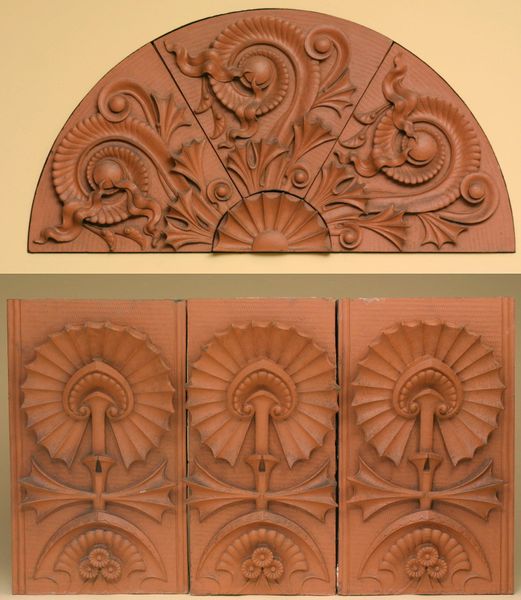
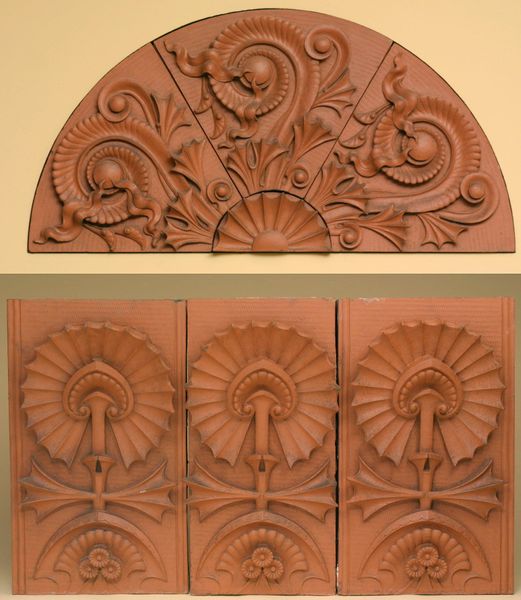
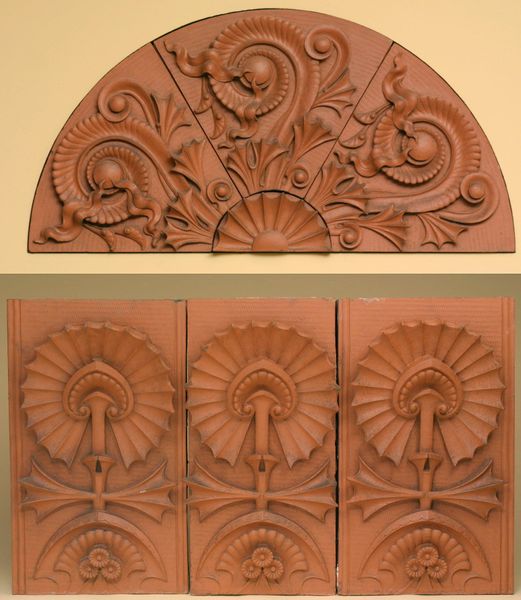
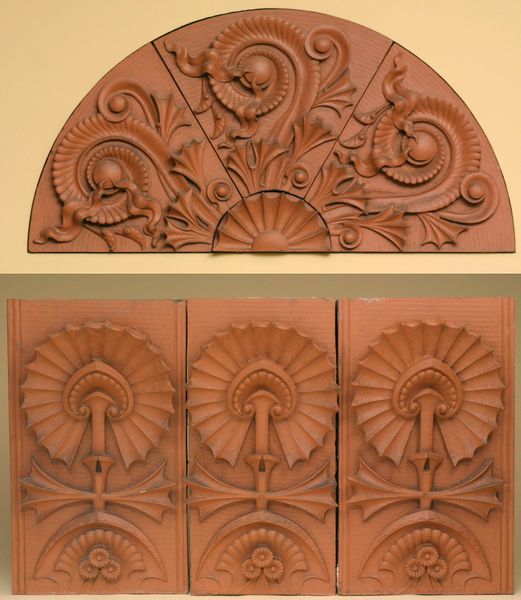
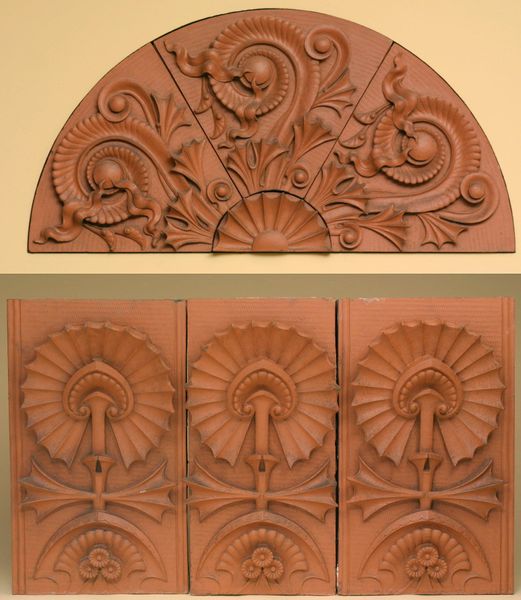
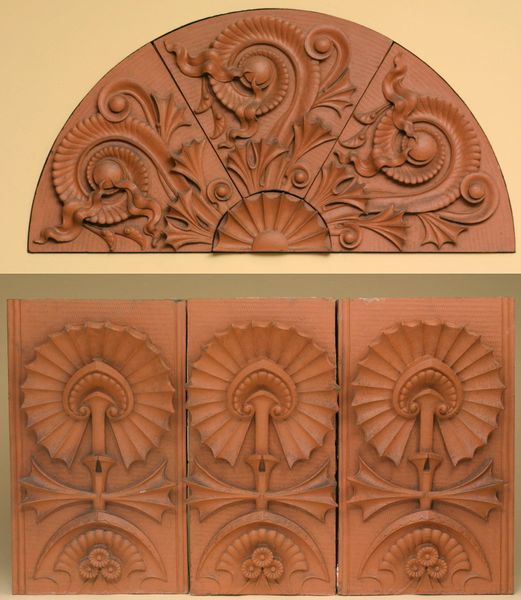
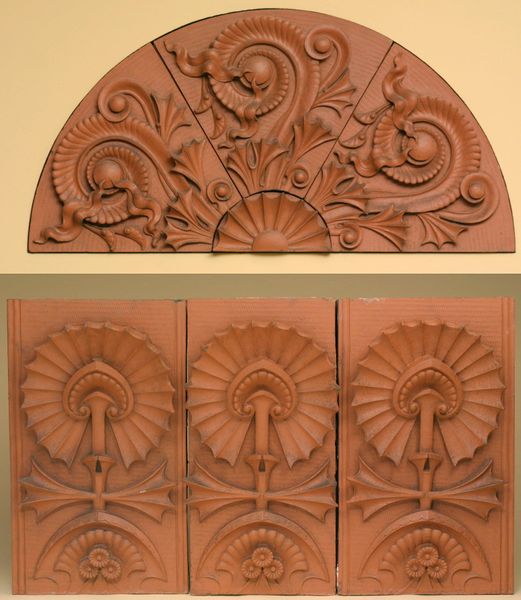
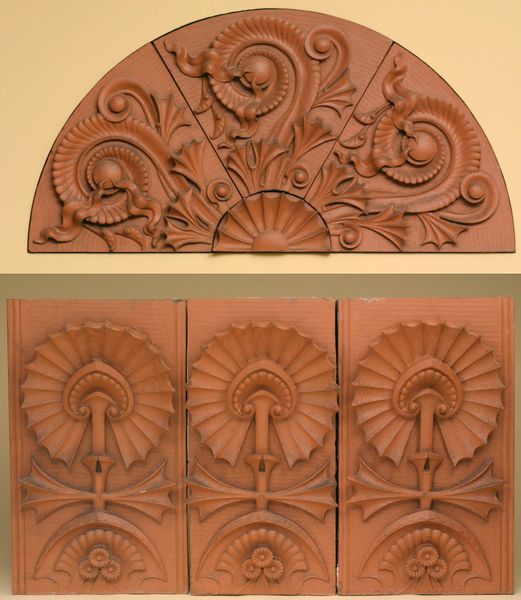
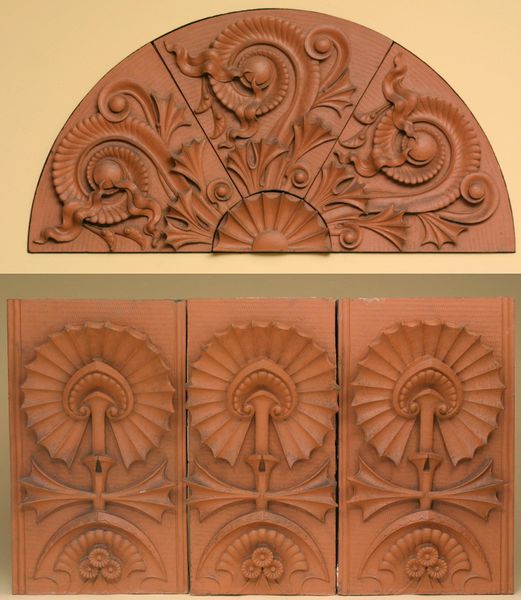
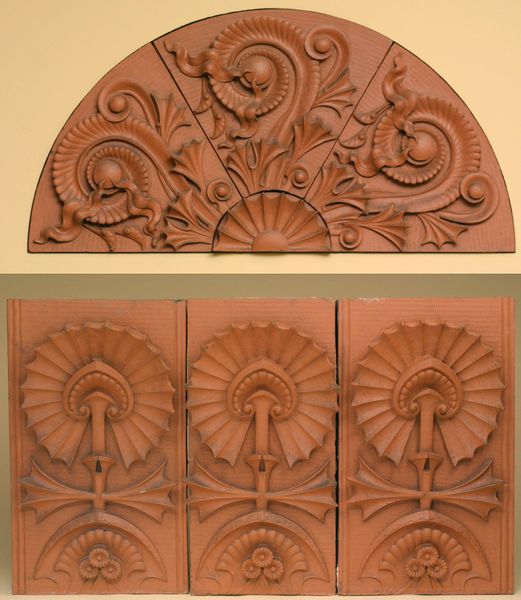
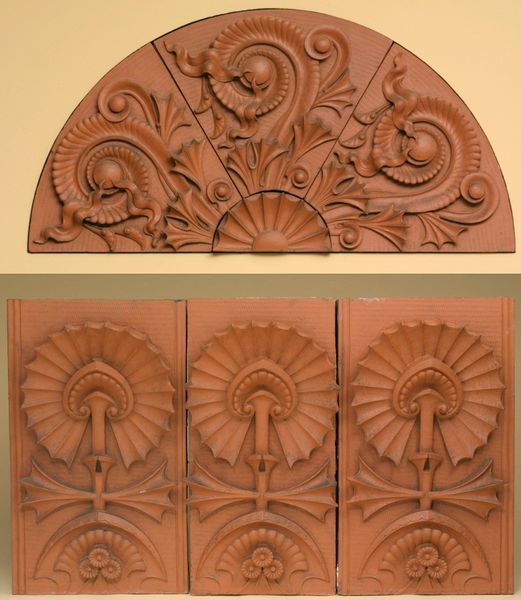
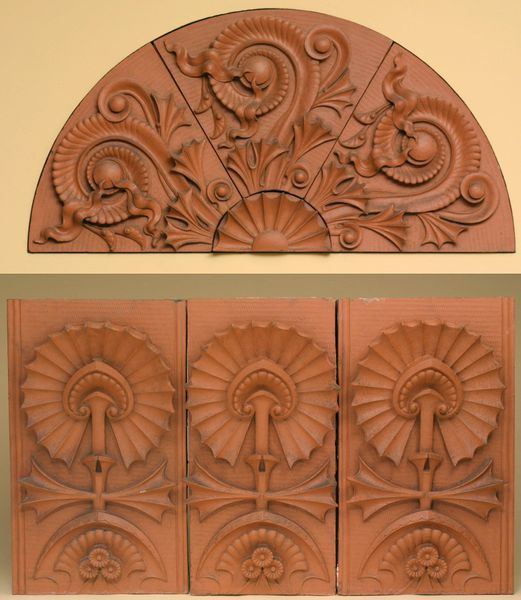
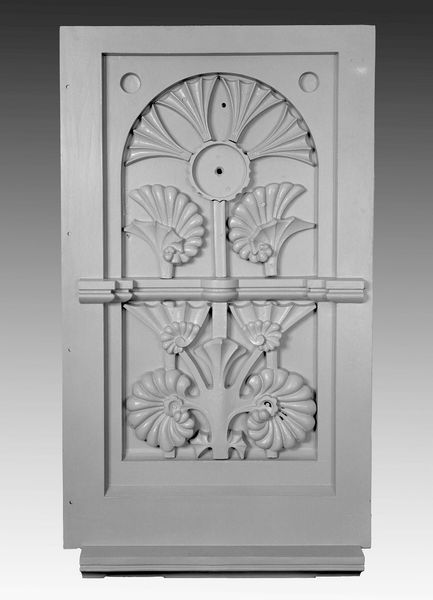
Louis Henri Sullivan created this lunette and decorative panel from terracotta. Its warm earthy tones and intricate relief work give it a tactile, almost organic presence. The lunette above features swirling, plant-like forms that recall the Art Nouveau style. These curved lines and natural motifs create a sense of movement and growth, contrasting with the geometric panel below. Here, the stylized floral pattern repeats across three tiles, suggesting modularity and mass production. Sullivan’s architectural ornament can be seen as a visual language, each element a signifier. The contrast between the lunette’s flowing lines and the panel’s rigid geometry highlights a tension between nature and industry, individualism and mass culture. Sullivan was exploring the potential for ornament to communicate meaning and structure space. Consider how the material itself, terracotta, contributes to this dialogue. Its durability and malleability allowed Sullivan to blend handcrafted detail with industrial processes. This piece embodies a larger conversation about how art and architecture can destabilize traditional categories. The design invites us to reflect on the relationship between form and function, nature and culture, and the role of ornament in shaping our perception of the built environment.
Comments

minneapolisinstituteofart about 2 years ago
⋮
Louis Sullivan designed these terracotta panels for the exterior of the Scoville Building in Chicago, one of the Adler and Sullivan firm's earliest commissions. It required them to remodel an existing Adler structure to accord with a new, much larger addition. The terracotta pieces shown here formed part of the organic decoration of stylized plants with which Sullivan tied the two buildings together. This lunette ornamented the arch above the windows of the top (fifth) story. It has an undulating design of ferns unfurling and would have complemented other organically-inspired terracotta pieces throughout the exterior.


Join the conversation
Join millions of artists and users on Artera today and experience the ultimate creative platform.
 Collect
More like this