ceramic
#
portrait
#
ceramic
#
black and white theme
#
black and white
#
italian-renaissance
Dimensions: Diameter: 8 5/16 in. (21.1 cm)
Copyright: Public Domain
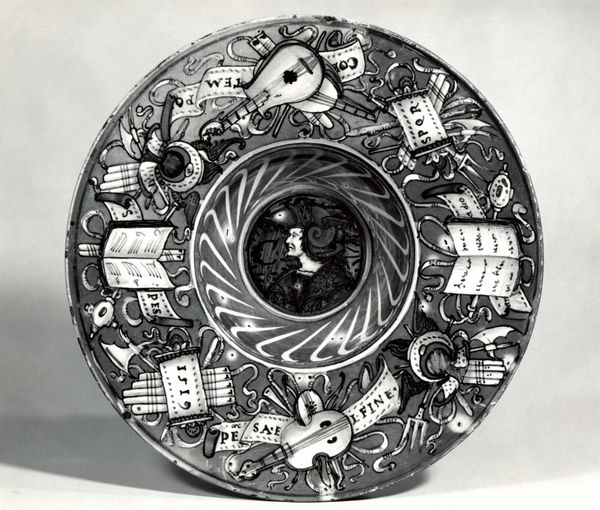
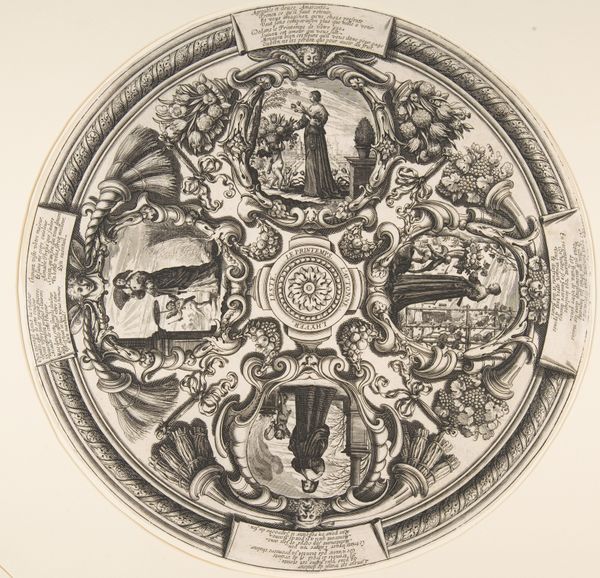
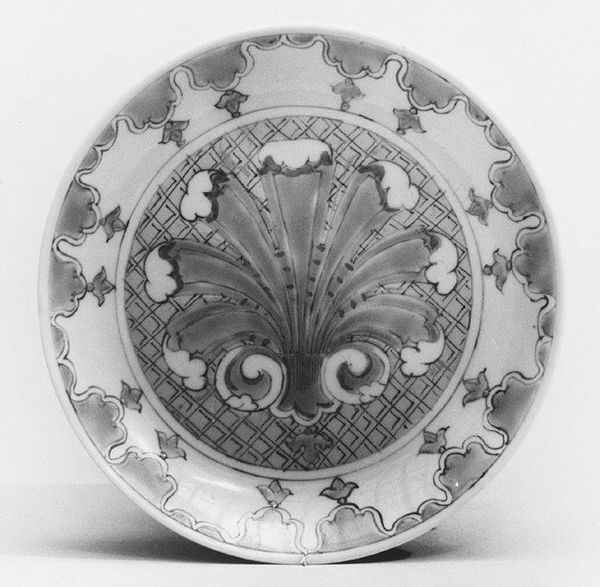
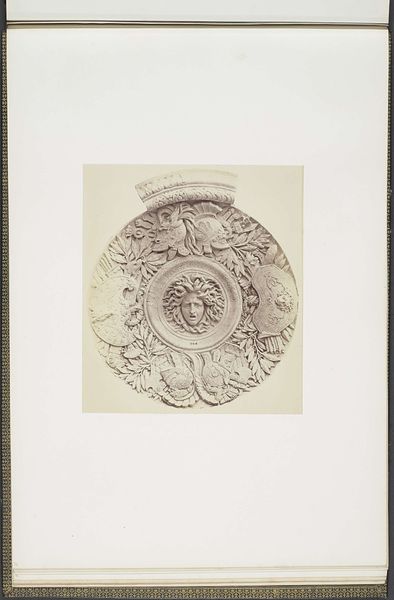
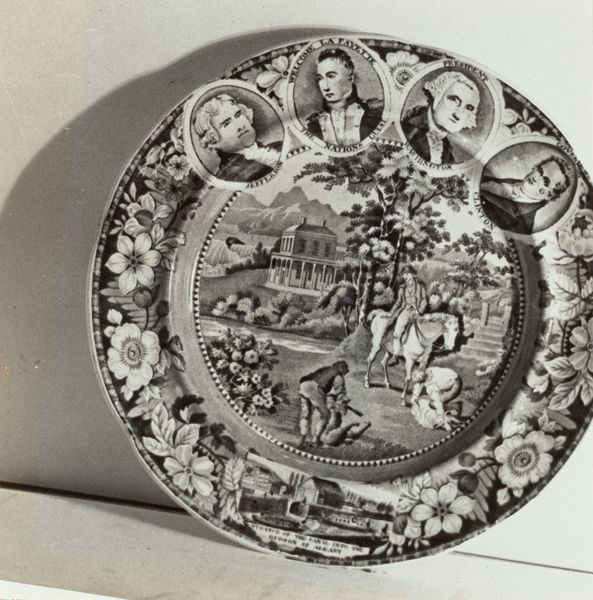
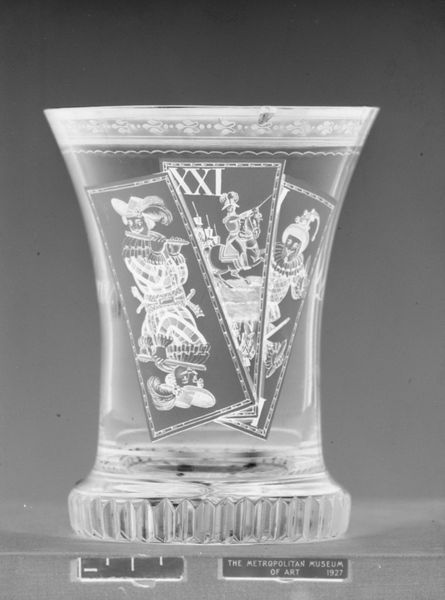
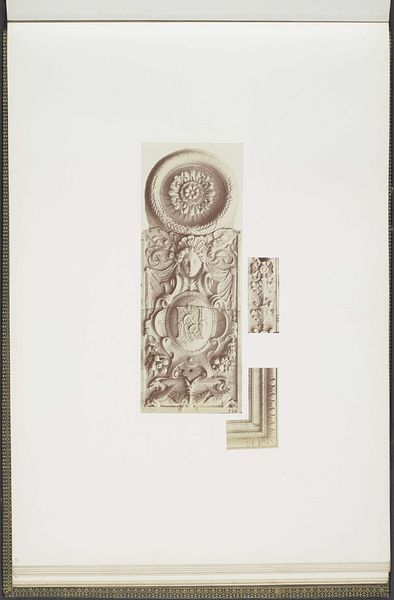
Curator: This is an interesting object. Editor: Yes, the Metropolitan Museum of Art has this ceramic plate from 1519, created by Maestro Giorgio Andreoli. It features a portrait surrounded by books. It's monochrome, stark even, and quite different from what I typically associate with the Renaissance. How do you approach something like this? Curator: I see a powerful statement about the production and consumption of knowledge. Look at the way the ceramic material, normally associated with utilitarian objects, is elevated to the status of high art through the depiction of intellectual pursuits. What kind of labor would produce these ceramics? Who commissioned the piece, and how did it function within the market of Renaissance goods? Editor: That’s a very interesting angle! I hadn’t considered the labor involved in making ceramics at the time. So, the act of firing and painting itself becomes part of the narrative, not just the imagery. The black and white is a stark visual departure for the era. It looks so modern! Curator: Exactly. It disrupts traditional notions of value and elevates both material and knowledge itself. This monochromatic style speaks volumes. Are we to take away color as a deliberate rejection of luxury and excess that underscores intellectual austerity and focus? How did this artwork enter into consumption patterns among the educated elite in 16th century Italy? Editor: So, the monochrome choice points us towards ideas like scholarly austerity? How clever. I am beginning to understand that this plate’s function goes beyond dining to being a symbolic commentary about the values and labour surrounding literacy and knowledge in Renaissance society. Thank you, I hadn't thought about it that way before. Curator: Precisely! Considering the material conditions, processes, and socio-economic relationships encoded within artworks is the most fascinating aspect.
Comments
No comments
Be the first to comment and join the conversation on the ultimate creative platform.
 Collect
 React
React Comment
More like this