About this artwork
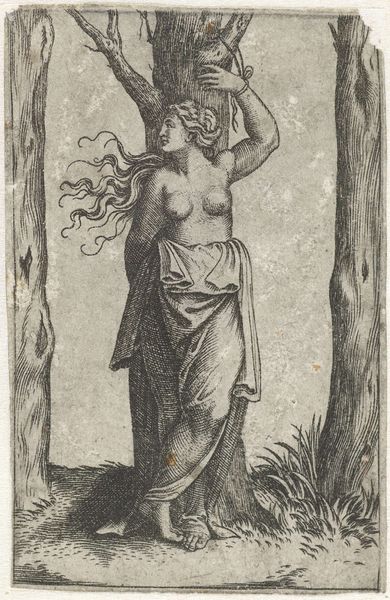
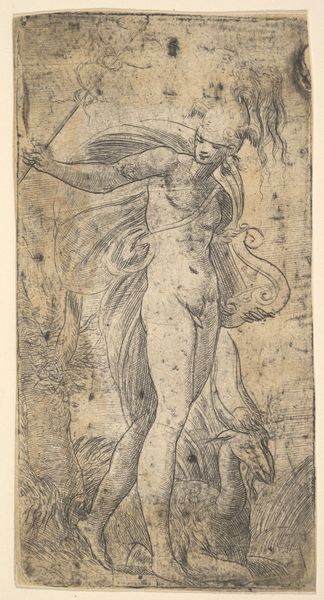
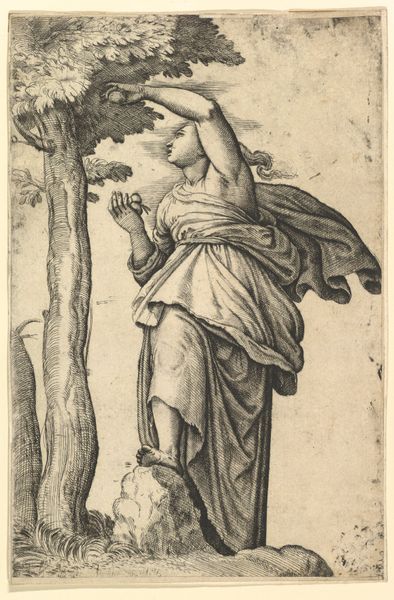
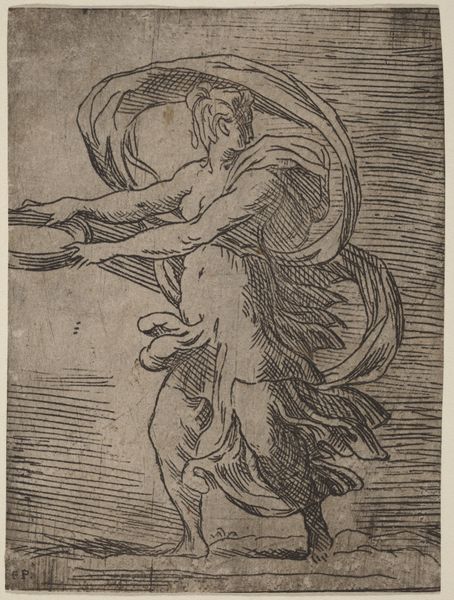
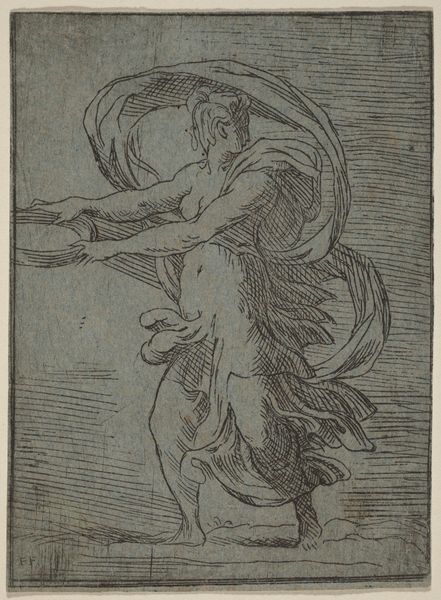
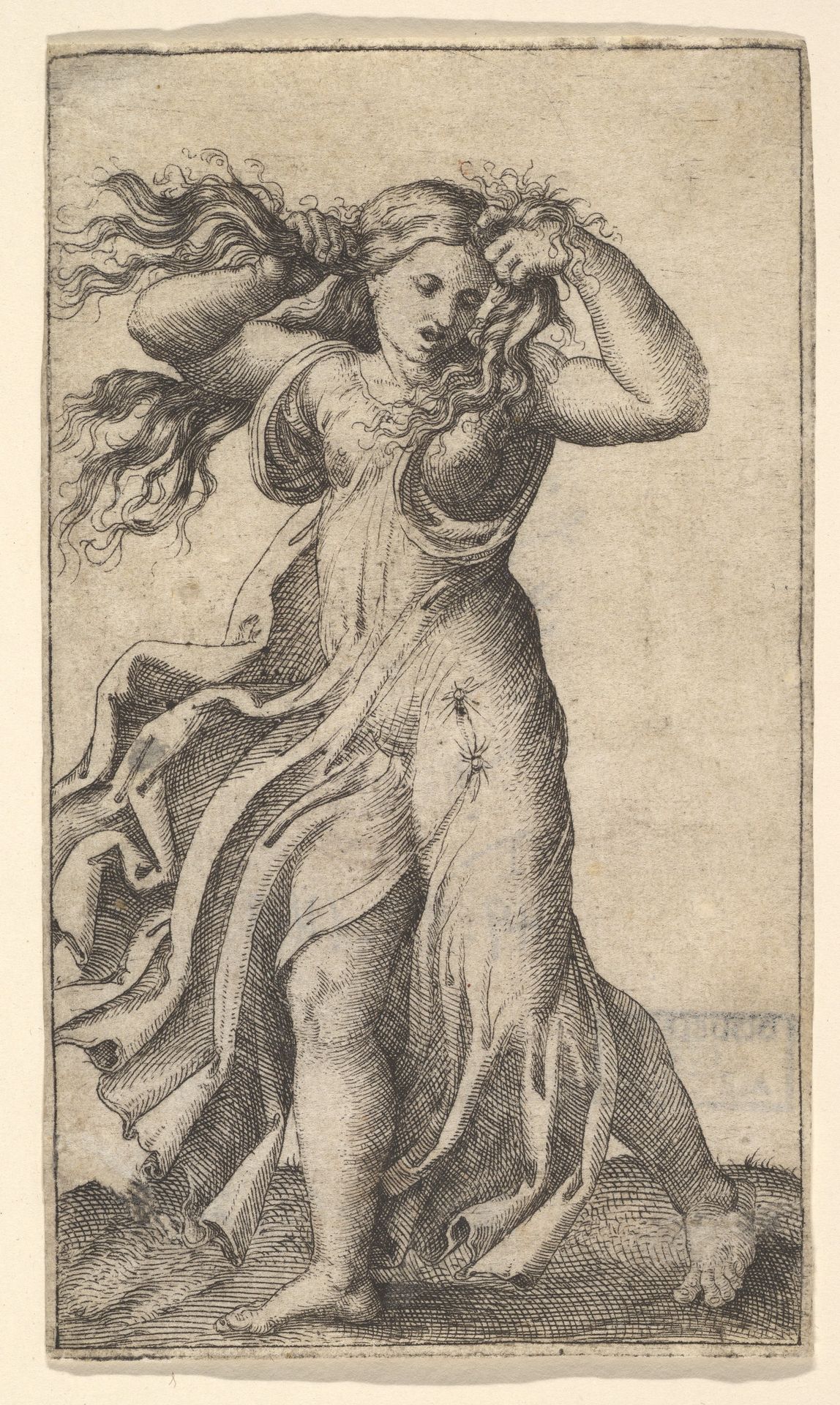
Marcantonio Raimondi created this engraving, *Woman Pulling Her Hair*, in Italy in the early 16th century. It depicts a female figure, draped in classical robes, with her arms raised, pulling at her long, flowing hair. The image’s meaning lies in the era’s relationship with the classical past and the establishment of artistic academies. Raimondi was instrumental in disseminating the ideas of the Italian Renaissance. He made his name by producing engravings of paintings and drawings by masters like Raphael. The use of classical motifs and the idealized human form, seen here, reflect the rediscovery of Greek and Roman art during the Renaissance. But engravings like these also served a vital educational purpose. They allowed artists to study and learn from the works of others, contributing to the establishment of formal artistic training. To understand this image more fully, we can consult early printed books on art theory and the records of the academies that shaped artistic practice at this time. This helps us understand how art reinforces cultural values.
Woman pulling Her Hair
1510 - 1520

Marcantonio Raimondi
1475 - 1534
The Metropolitan Museum of Art
Metropolitan Museum of Art, New York, NYArtwork details
- Medium
- drawing, print, engraving
- Dimensions
- 4 1/8 x 2 3/8 in. (10.5 x 6.0 cm)
- Location
- Metropolitan Museum of Art, New York, NY
- Copyright
- Public Domain
Tags
Comments
Share your thoughts
About this artwork
Marcantonio Raimondi created this engraving, *Woman Pulling Her Hair*, in Italy in the early 16th century. It depicts a female figure, draped in classical robes, with her arms raised, pulling at her long, flowing hair. The image’s meaning lies in the era’s relationship with the classical past and the establishment of artistic academies. Raimondi was instrumental in disseminating the ideas of the Italian Renaissance. He made his name by producing engravings of paintings and drawings by masters like Raphael. The use of classical motifs and the idealized human form, seen here, reflect the rediscovery of Greek and Roman art during the Renaissance. But engravings like these also served a vital educational purpose. They allowed artists to study and learn from the works of others, contributing to the establishment of formal artistic training. To understand this image more fully, we can consult early printed books on art theory and the records of the academies that shaped artistic practice at this time. This helps us understand how art reinforces cultural values.
Comments
Share your thoughts