About this artwork
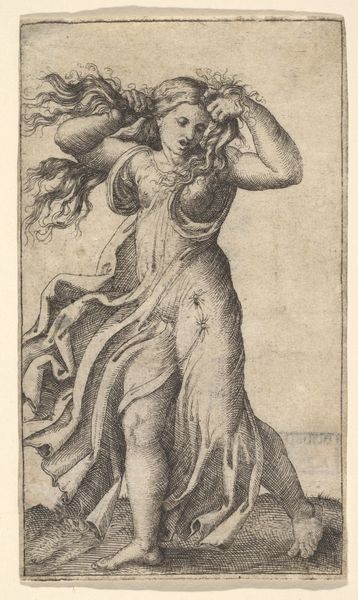
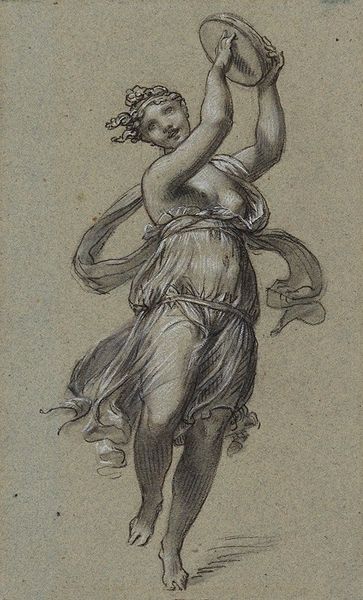
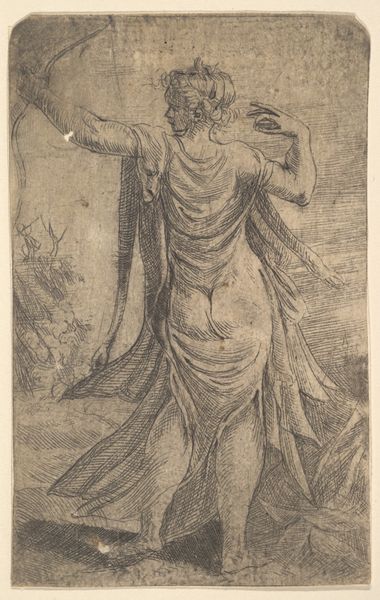
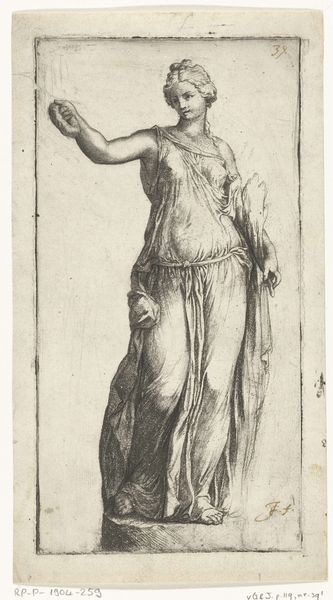
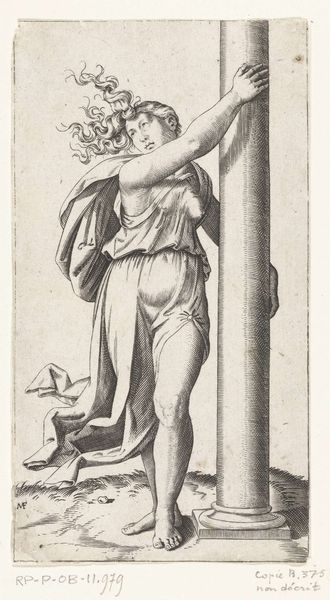
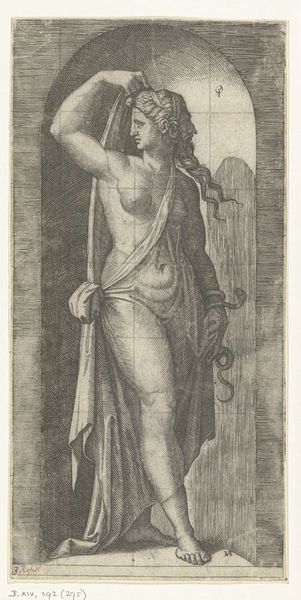
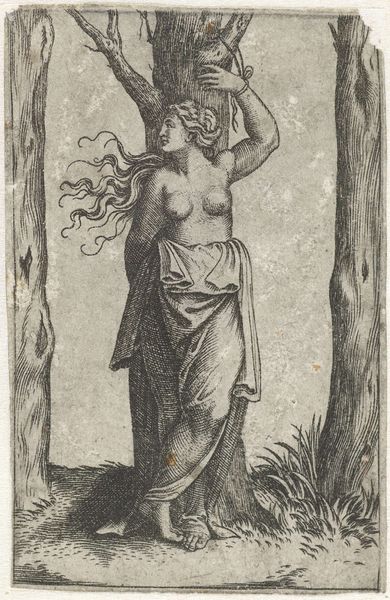
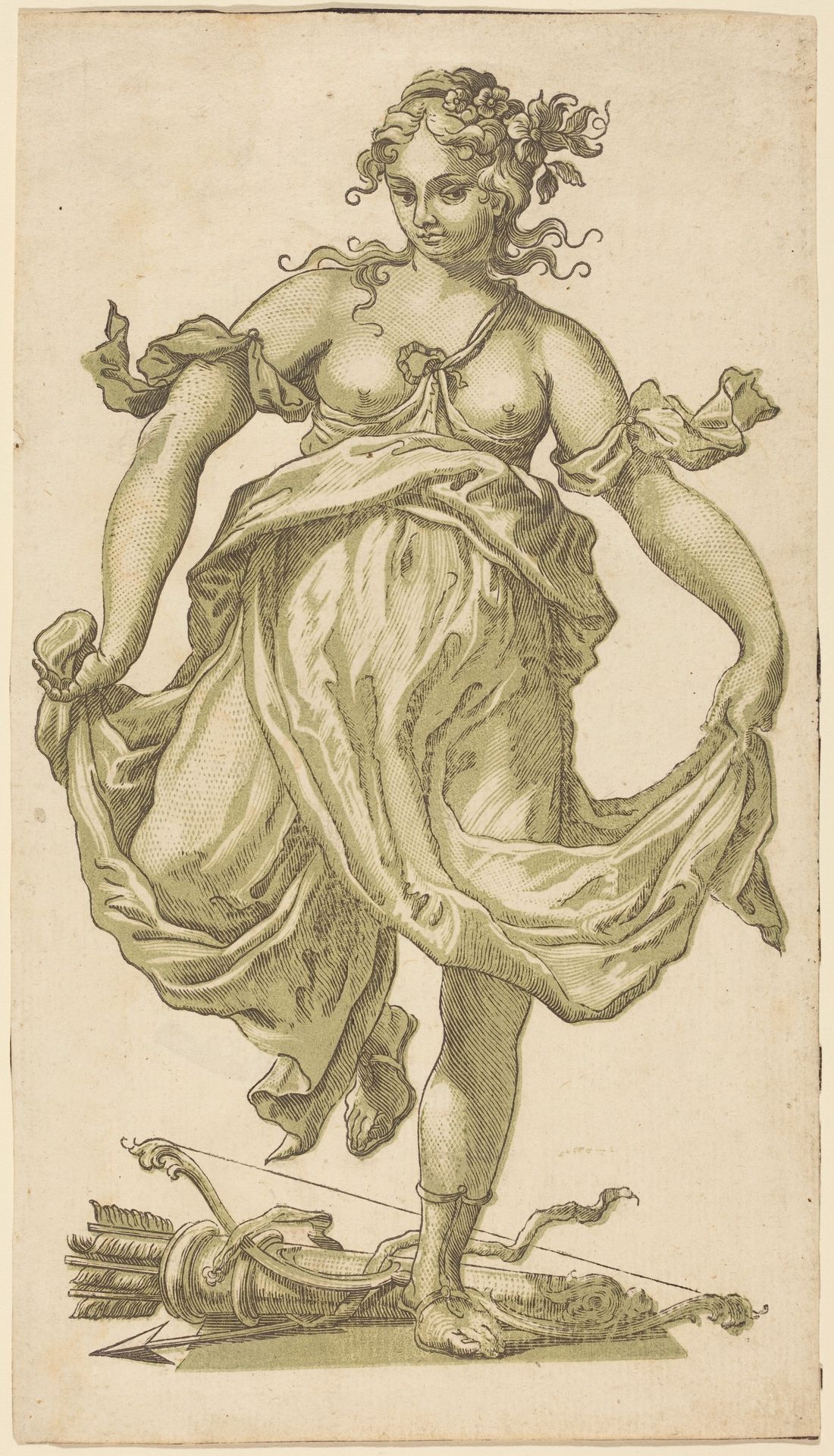
This print of a Dancing Nymph, was made by John Baptist Jackson in the 18th century, using a woodcut. Woodcut is a relief printmaking technique, where the artist carves an image into the surface of a block of wood, leaving the printing parts level with the surface while removing the non-printing parts. The areas that appear 'white' are those that have been cut away from the woodblock. The process lends the image a particular appearance, characterized by bold lines and strong contrasts. The nymph's form is delineated by thick lines, while finer, cross-hatched lines create shading and volume. Jackson's skillful manipulation of the medium can be seen in the fluid drapery of the nymph's gown, which contrasts the texture of the woodblock itself. The result is not only a striking visual image, but also a testament to the labor and skill involved in the printmaking process. Understanding the material and techniques of production are key to fully appreciating Jackson's Dancing Nymph, and to questioning traditional distinctions between fine art and craft.
Dancing Nymph with Bow and Arrows
1752 - 1754


Artwork details
- Medium
- Dimensions
- overall: 31 x 17.5 cm (12 3/16 x 6 7/8 in.)
- Copyright
- National Gallery of Art: CC0 1.0
Tags
Comments
Share your thoughts
About this artwork
This print of a Dancing Nymph, was made by John Baptist Jackson in the 18th century, using a woodcut. Woodcut is a relief printmaking technique, where the artist carves an image into the surface of a block of wood, leaving the printing parts level with the surface while removing the non-printing parts. The areas that appear 'white' are those that have been cut away from the woodblock. The process lends the image a particular appearance, characterized by bold lines and strong contrasts. The nymph's form is delineated by thick lines, while finer, cross-hatched lines create shading and volume. Jackson's skillful manipulation of the medium can be seen in the fluid drapery of the nymph's gown, which contrasts the texture of the woodblock itself. The result is not only a striking visual image, but also a testament to the labor and skill involved in the printmaking process. Understanding the material and techniques of production are key to fully appreciating Jackson's Dancing Nymph, and to questioning traditional distinctions between fine art and craft.
Comments
Share your thoughts