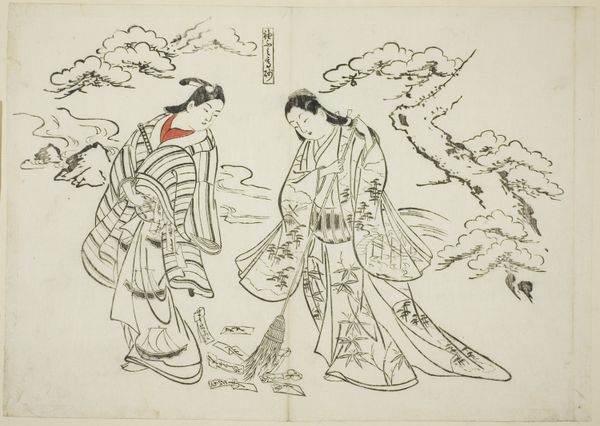
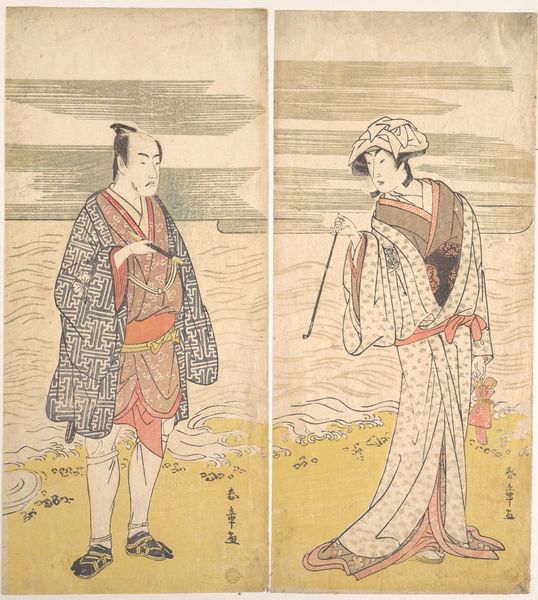
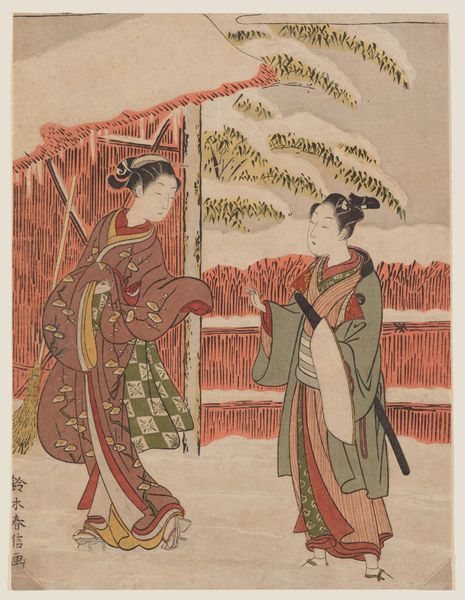
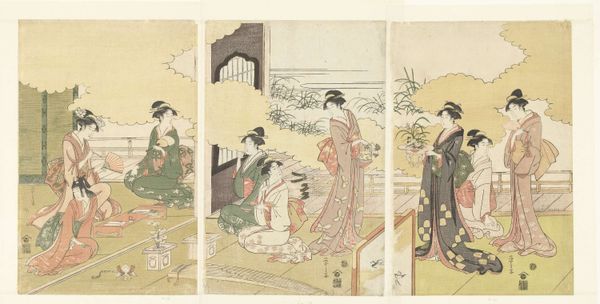
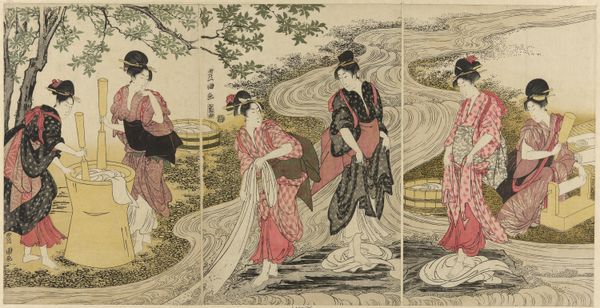
Visual Parody of the Noh Play -Takasago- 1765
0:00
0:00


print, ink
#
portrait
# print
#
asian-art
#
ukiyo-e
#
figuration
#
ink
Dimensions: 18 × 22 1/16 in. (45.7 × 56 cm) (mat, vertical chūban diptych)
Copyright: Public Domain
This diptych was created by Suzuki Harunobu in Japan. The print offers a visual parody of the Noh play *Takasago*. Woodblock prints like this one were made and circulated during the Edo period, and are known as *ukiyo-e*, or "pictures of the floating world." They often depicted scenes from daily life, landscapes, and popular entertainment, reflecting a vibrant urban culture. Harunobu was a leading artist in this movement, known for his elegant and refined style. The women depicted here are wearing elaborate kimonos and hairstyles. The print plays with gender roles and expectations, depicting women in roles traditionally associated with men. The original play told the story of a married couple who, as spirits of two pine trees, represent marital harmony. Here, the artist replaces the aging couple with young women in a lighthearted interpretation of the classic tale. The print suggests a more playful and perhaps subversive view of traditional narratives. This work transforms the emotional resonance of the Noh play into a lighter, visually engaging experience.
Comments

minneapolisinstituteofart about 2 years ago
⋮
Calender print of the year Meiwa 2 (1765) with the numbers for the long months on the woman's sleeves and the ones for the short months on the man's undergarment.


Join the conversation
Join millions of artists and users on Artera today and experience the ultimate creative platform.
 Collect
More like this