About this artwork
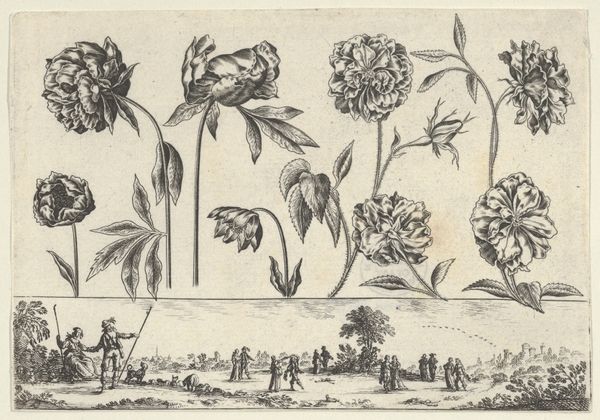
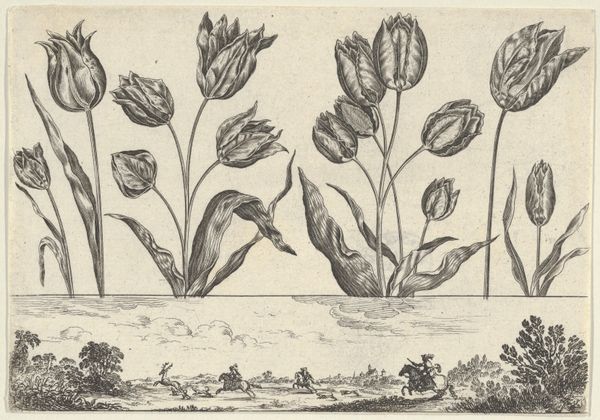
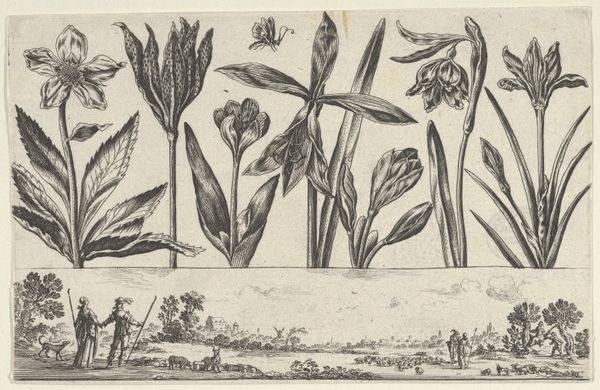
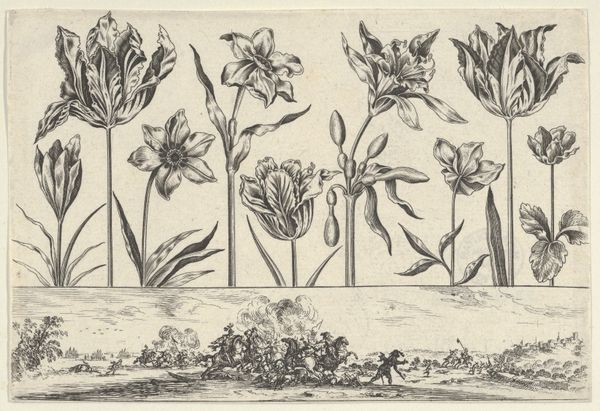
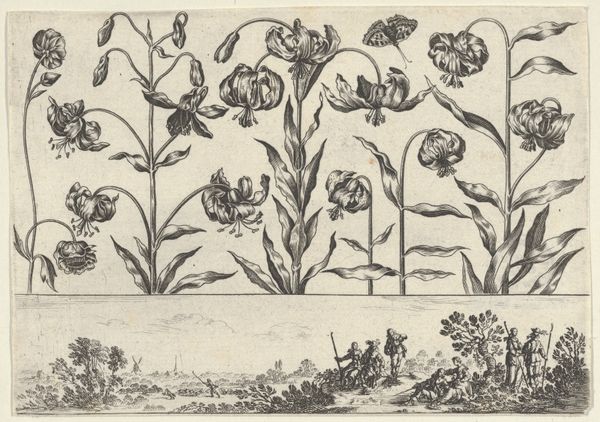
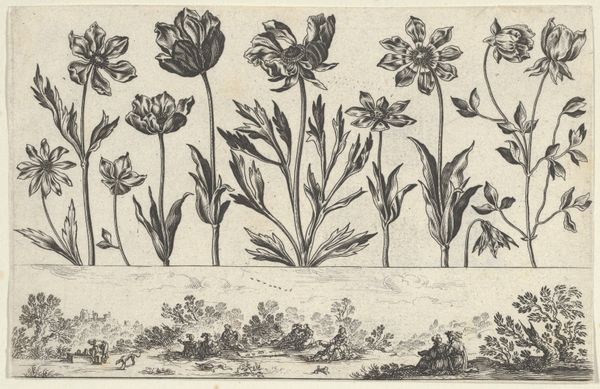
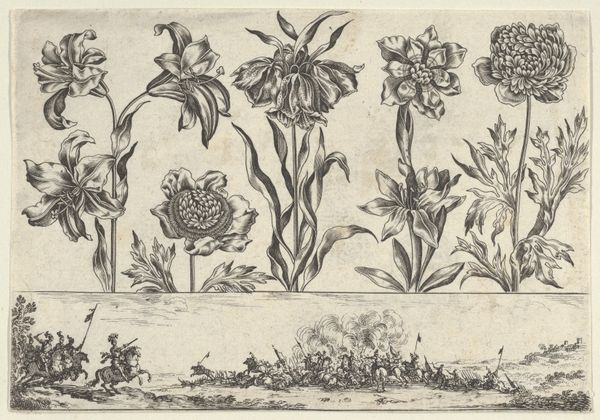
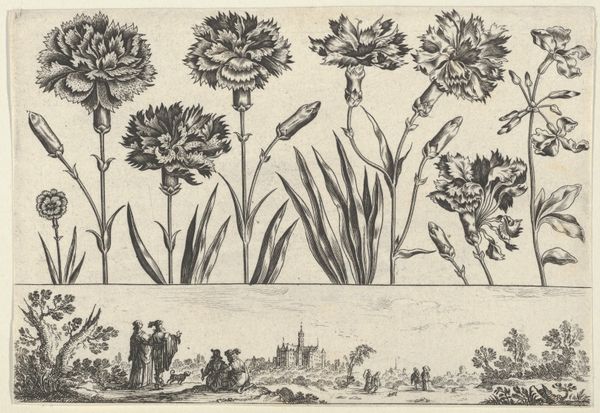
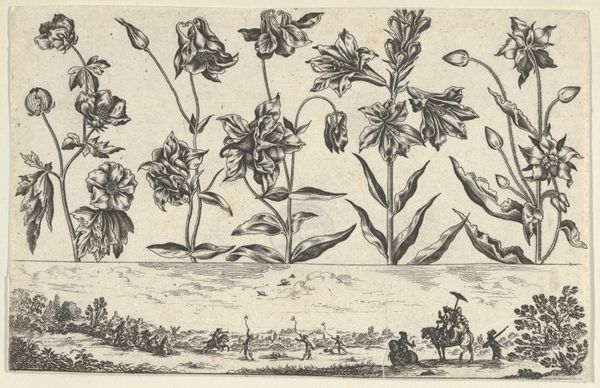
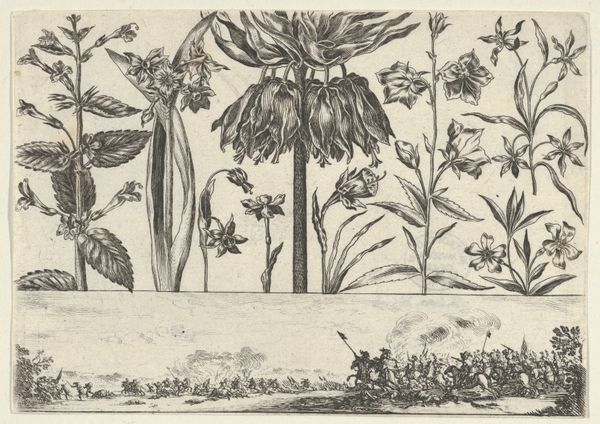
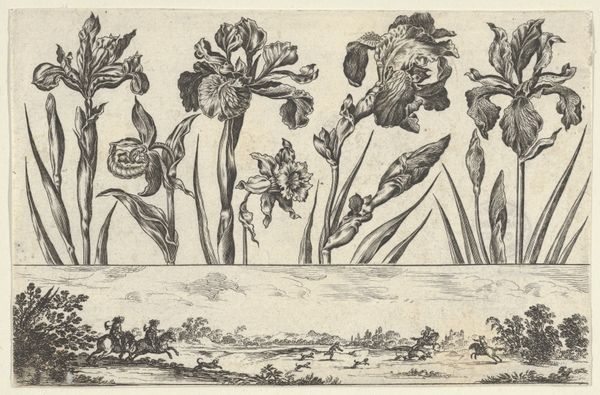
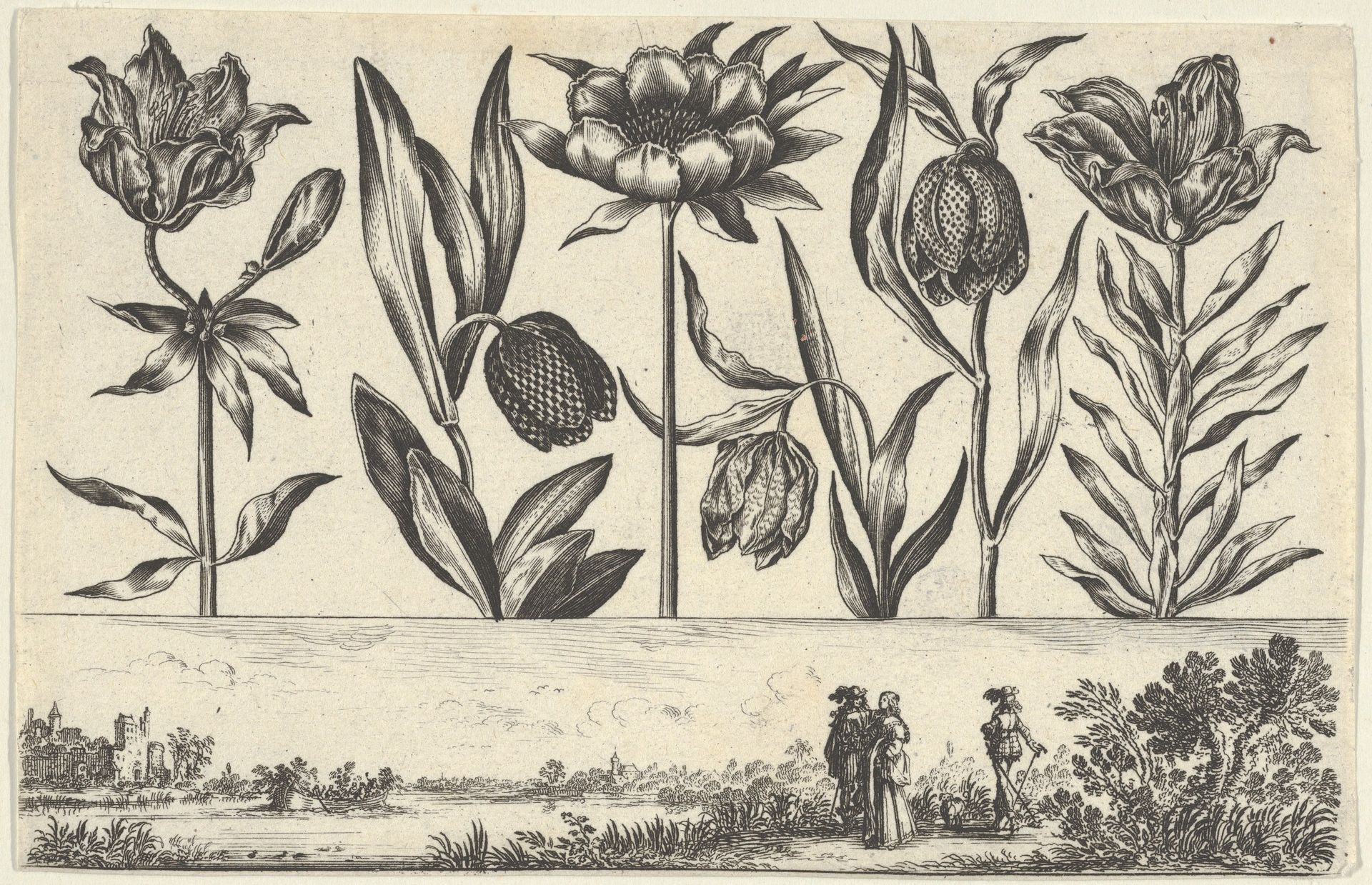
This 'Horizontal Panel with Flowers and Figures' was made by Nicolas Cochin, a master of etching, sometime in the 17th century. The prominent floral motifs reflect the period's interest in botanical studies and symbolism. The flowers, rendered with meticulous detail, serve as more than just decorative elements. Take the tulip, for instance: during this time, it symbolized wealth, status, and the ephemeral nature of beauty due to its popularity during the "Tulip Mania." This economic bubble caused widespread speculation based on the flower. Throughout art history, flora has been closely tied to ideas of vanity and the brevity of life, echoing sentiments found even in ancient Roman vanitas paintings. In Cochin's time, the rise of floral still lifes indicated more than just aesthetic appreciation. The flowers and their stage of bloom invite contemplation on the transience of human existence and the shifting fortunes of life, captured with the knowing hand of a master craftsman. The human figures at the bottom reinforce this contrast. Ultimately, the cyclical nature of growth, decay, and rebirth reminds us that symbols resurface, evolve, and are reborn in new contexts.
Horizontal Panel with a Row of Flowers Above a Frieze with Figures in a Landscape, from Livre Nouveau de Fleurs Tres-Util
1645


Artwork details
- Medium
- drawing, print, engraving
- Dimensions
- Sheet: 2 15/16 × 4 5/8 in. (7.5 × 11.7 cm)
- Location
- Metropolitan Museum of Art, New York, NY
- Copyright
- Public Domain
Tags
Comments
Share your thoughts
About this artwork
This 'Horizontal Panel with Flowers and Figures' was made by Nicolas Cochin, a master of etching, sometime in the 17th century. The prominent floral motifs reflect the period's interest in botanical studies and symbolism. The flowers, rendered with meticulous detail, serve as more than just decorative elements. Take the tulip, for instance: during this time, it symbolized wealth, status, and the ephemeral nature of beauty due to its popularity during the "Tulip Mania." This economic bubble caused widespread speculation based on the flower. Throughout art history, flora has been closely tied to ideas of vanity and the brevity of life, echoing sentiments found even in ancient Roman vanitas paintings. In Cochin's time, the rise of floral still lifes indicated more than just aesthetic appreciation. The flowers and their stage of bloom invite contemplation on the transience of human existence and the shifting fortunes of life, captured with the knowing hand of a master craftsman. The human figures at the bottom reinforce this contrast. Ultimately, the cyclical nature of growth, decay, and rebirth reminds us that symbols resurface, evolve, and are reborn in new contexts.
Comments
Share your thoughts