About this artwork
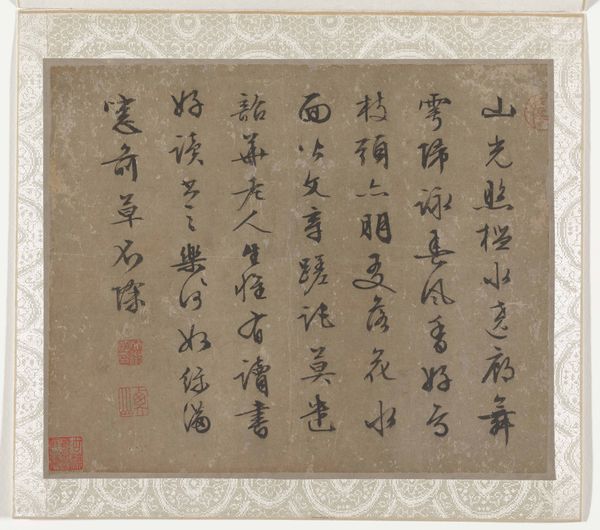
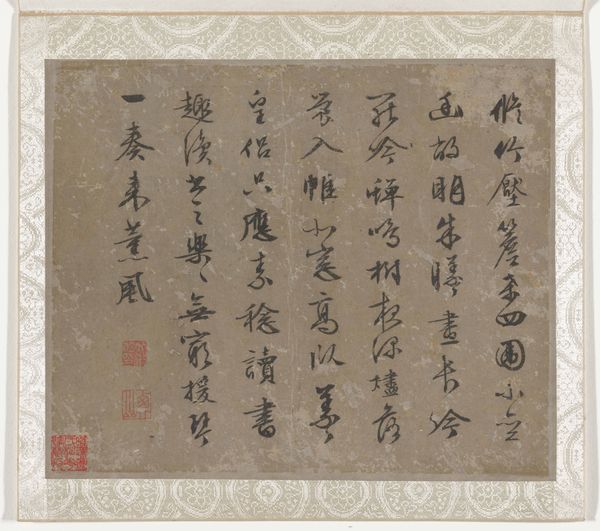
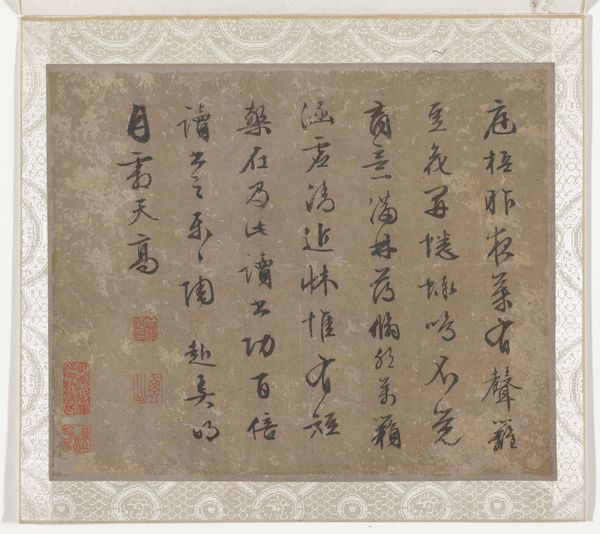
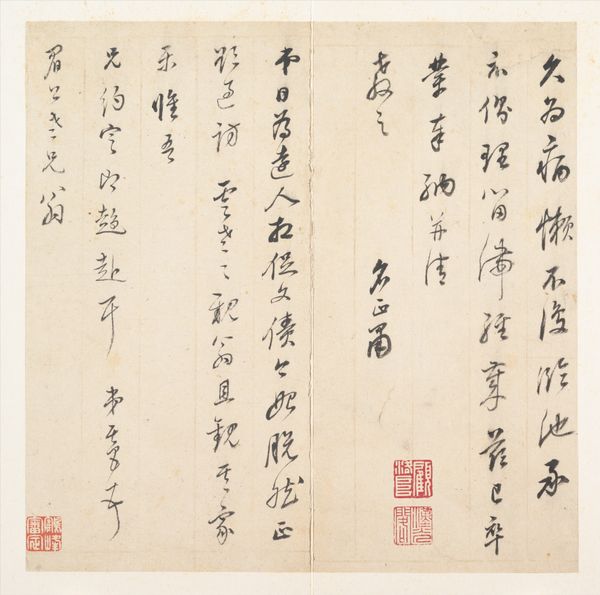
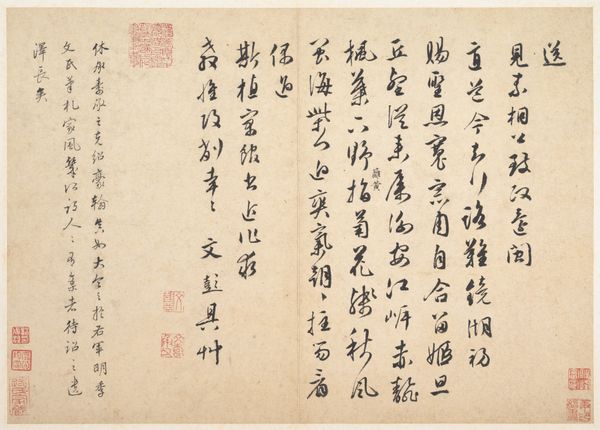
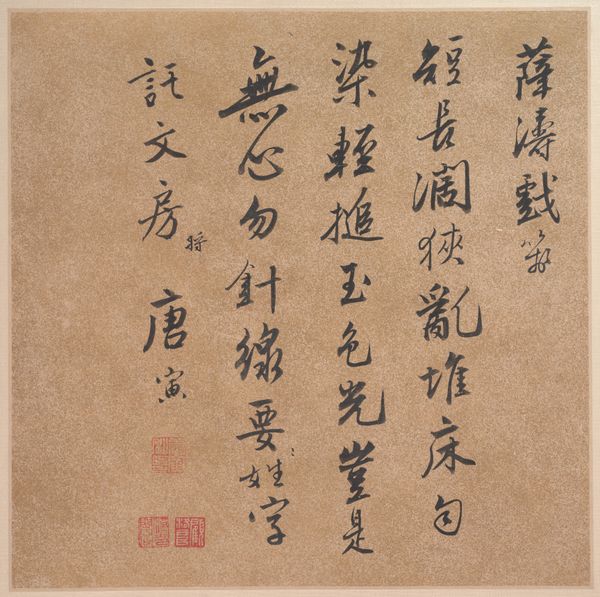
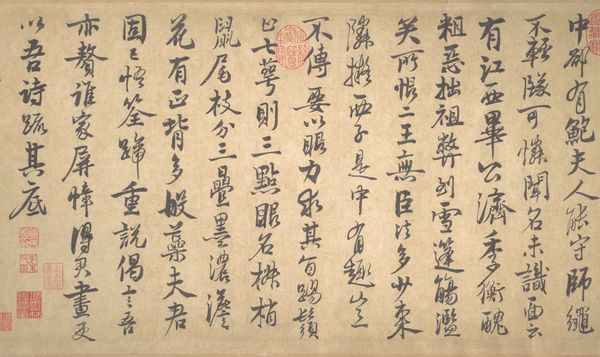
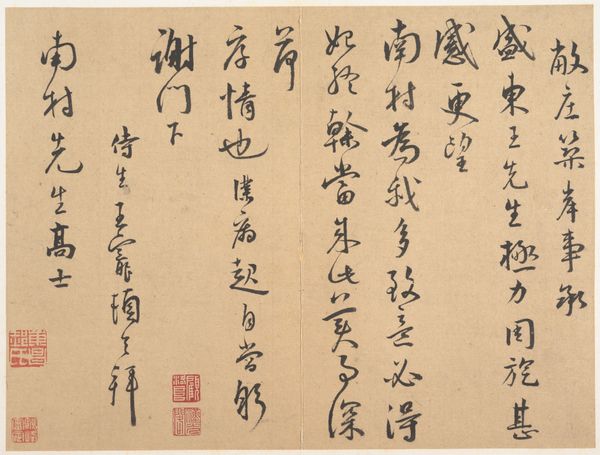
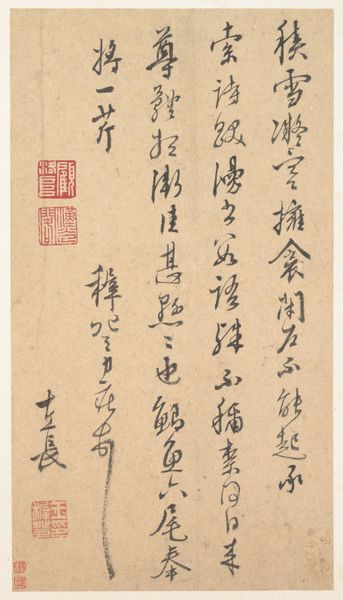
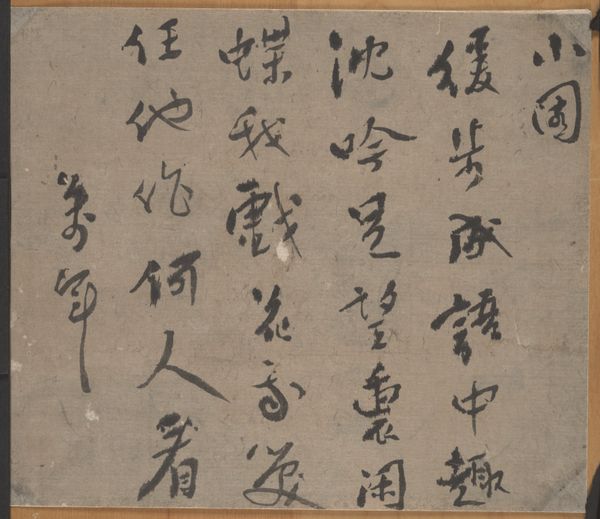
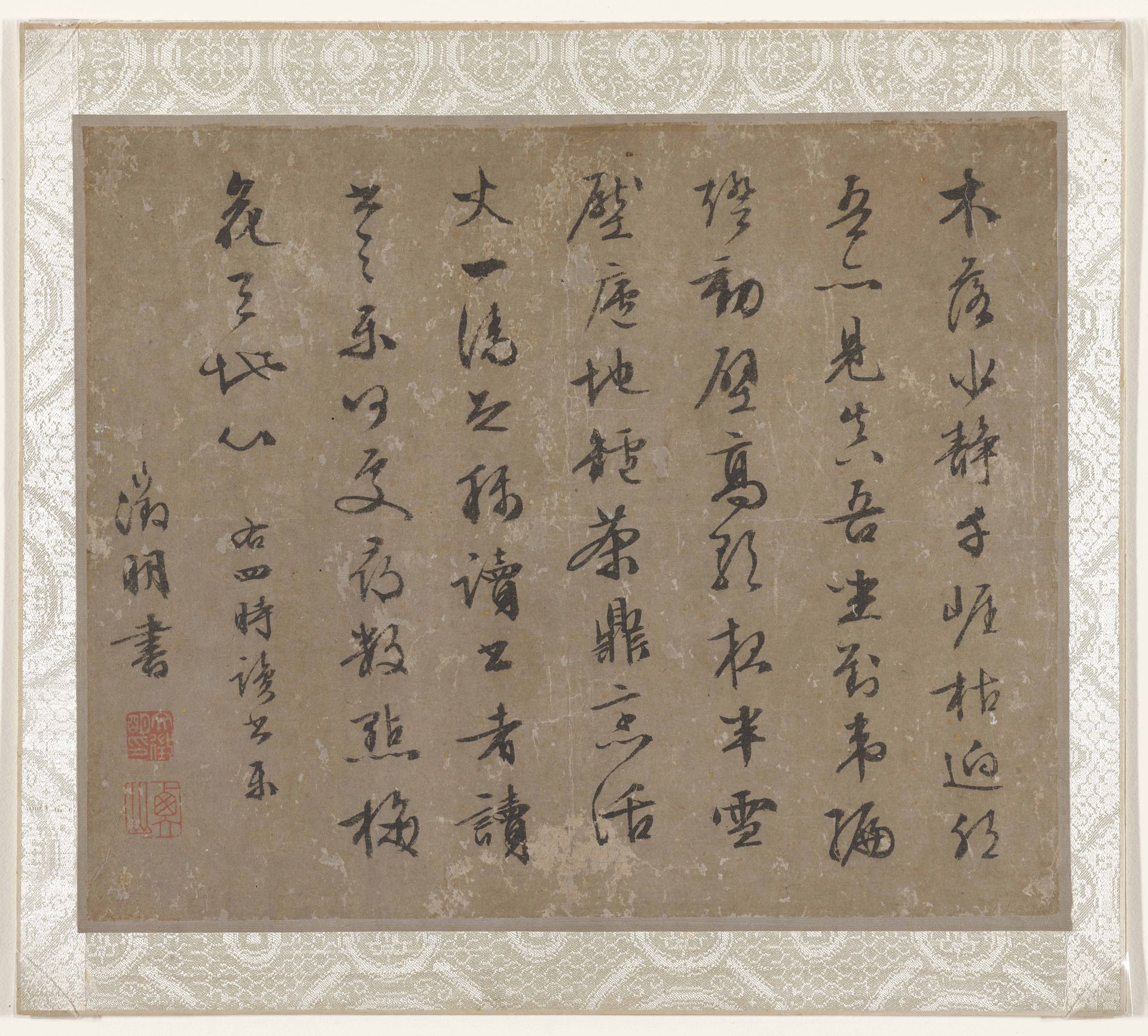
Curator: This is Weng Sen's poem in running script, created around the 16th century by Wen Zhengming. It's rendered in ink on paper. Editor: The sweeping brushstrokes create such a sense of movement! It’s as if the poem is unfolding right before your eyes. How do you interpret this work beyond its aesthetic beauty? Curator: Beyond the formal elements, consider the historical and social context. During the Ming dynasty, calligraphy was far more than just beautiful writing. It was a deeply political act, a means of self-expression, and a way to connect with like-minded individuals who sought solace in artistic pursuits during times of upheaval. Editor: Political, how so? Curator: Calligraphy reflected one's social standing and philosophical alignment. To master the running script, Wen Zhengming wasn't simply practicing technique, but embodying values linked to tradition and scholarly ideals. This can be interpreted as both upholding the old ways but also a possible subtle protest to the emerging social constructs that he was critical of. It is both an act of embracing culture and an understated defiance. What emotions does that history evoke for you? Editor: I didn't expect calligraphy to have such complexity and social weight. It pushes me to think about how different art forms and styles may either reflect or resist the political atmosphere in their particular historical context. Curator: Exactly! And this awareness compels us to examine our present moment through a more historically informed lens. This is how art and history, past and present, intersect to shape understanding. Editor: This exploration has expanded my view of what calligraphy can signify. Curator: For me, it reinforced how crucial it is to view art and its forms of expression, from calligraphy to contemporary creations, as interwoven within complex networks of social, political, and cultural experiences.
Weng Sen's poem in running script
c. 16th century


Artwork details
- Medium
- drawing, paper, ink-on-paper, ink
- Dimensions
- 10 1/4 × 12 1/2 in. (26.04 × 31.75 cm) (image)12 3/4 × 14 1/4 in. (32.39 × 36.2 cm) (mount, bottom half of mount, from fold downward)
- Location
- Minneapolis Institute of Art
- Copyright
- Public Domain
Tags
Comments

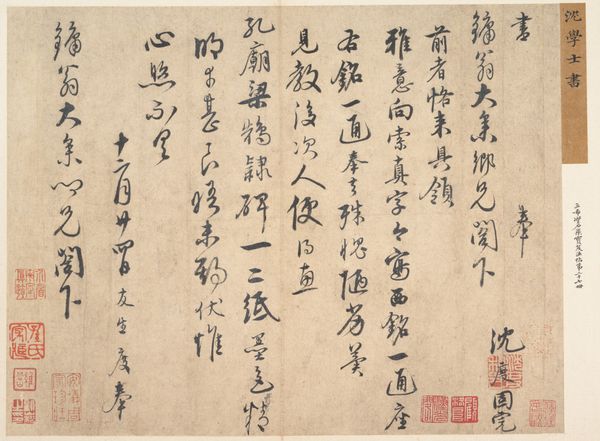
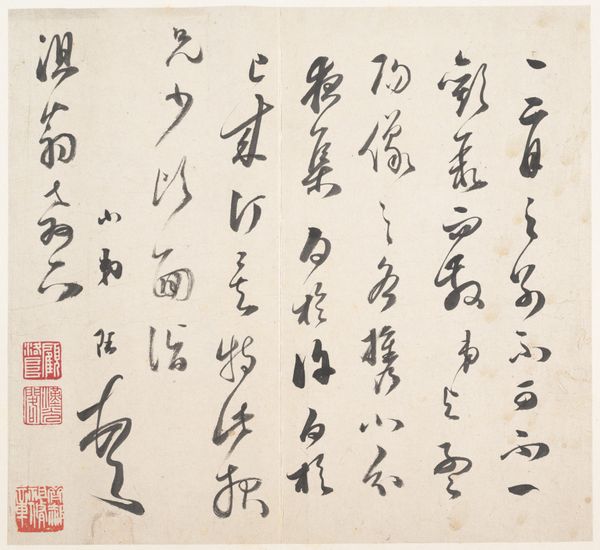
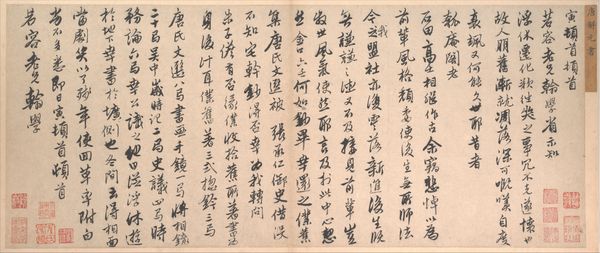
During the Ming period, members of the elite who gained fame for their calligraphy were often equally famous for their achievements in painting. Within elite society, calligraphy was equally admired as painting. It was viewed as quintessential yet functional, rather than as merely an independent visual art form or means of self-expression and cultivation. Many artists in the Ming dynasty were not only good at painting, but also excelled in composing poems and calligraphy. These three arts are known as the sanjue, or the “Three Perfections.” Both Wen Zhengming and Zhu Yunming are regarded as great masters with skills of the “Three Perfections.”
About this artwork
Curator: This is Weng Sen's poem in running script, created around the 16th century by Wen Zhengming. It's rendered in ink on paper. Editor: The sweeping brushstrokes create such a sense of movement! It’s as if the poem is unfolding right before your eyes. How do you interpret this work beyond its aesthetic beauty? Curator: Beyond the formal elements, consider the historical and social context. During the Ming dynasty, calligraphy was far more than just beautiful writing. It was a deeply political act, a means of self-expression, and a way to connect with like-minded individuals who sought solace in artistic pursuits during times of upheaval. Editor: Political, how so? Curator: Calligraphy reflected one's social standing and philosophical alignment. To master the running script, Wen Zhengming wasn't simply practicing technique, but embodying values linked to tradition and scholarly ideals. This can be interpreted as both upholding the old ways but also a possible subtle protest to the emerging social constructs that he was critical of. It is both an act of embracing culture and an understated defiance. What emotions does that history evoke for you? Editor: I didn't expect calligraphy to have such complexity and social weight. It pushes me to think about how different art forms and styles may either reflect or resist the political atmosphere in their particular historical context. Curator: Exactly! And this awareness compels us to examine our present moment through a more historically informed lens. This is how art and history, past and present, intersect to shape understanding. Editor: This exploration has expanded my view of what calligraphy can signify. Curator: For me, it reinforced how crucial it is to view art and its forms of expression, from calligraphy to contemporary creations, as interwoven within complex networks of social, political, and cultural experiences.
Comments
During the Ming period, members of the elite who gained fame for their calligraphy were often equally famous for their achievements in painting. Within elite society, calligraphy was equally admired as painting. It was viewed as quintessential yet functional, rather than as merely an independent visual art form or means of self-expression and cultivation. Many artists in the Ming dynasty were not only good at painting, but also excelled in composing poems and calligraphy. These three arts are known as the sanjue, or the “Three Perfections.” Both Wen Zhengming and Zhu Yunming are regarded as great masters with skills of the “Three Perfections.”