c. 18th century
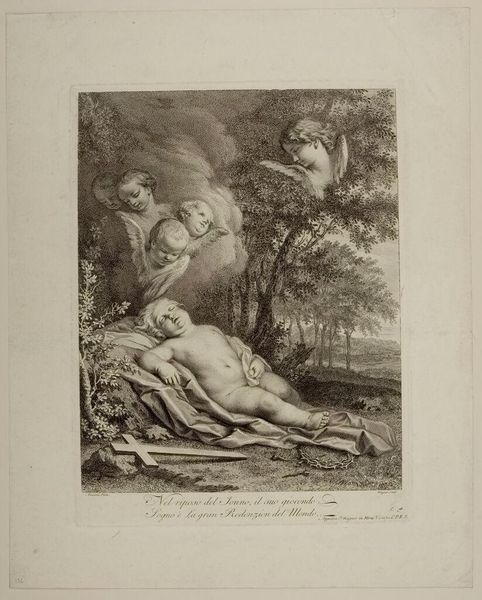
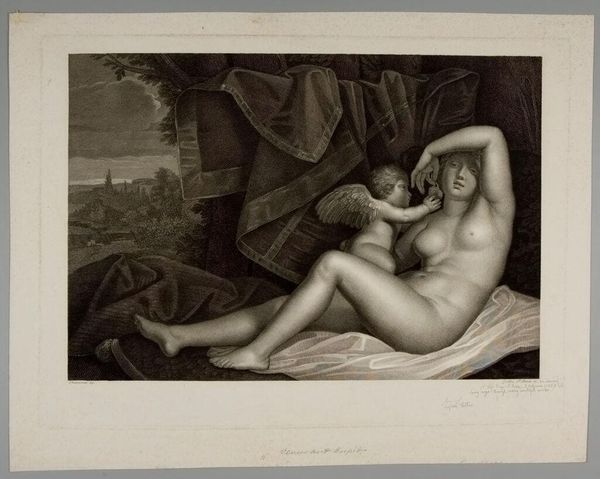
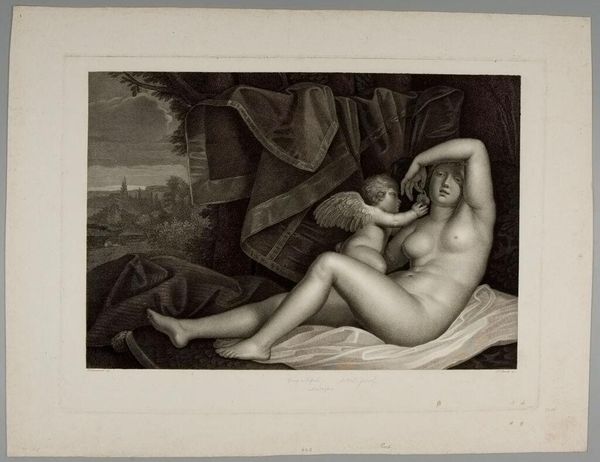
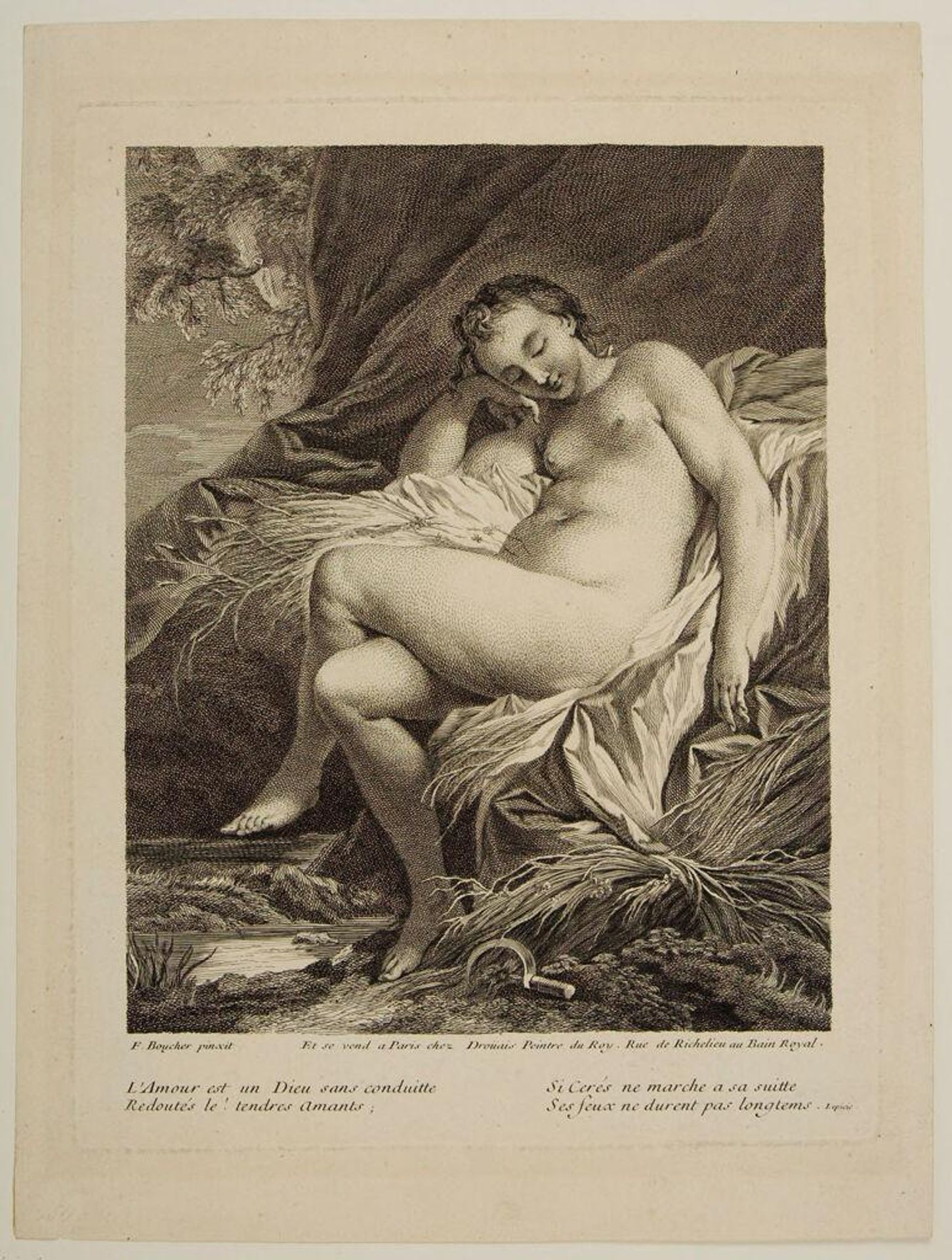
Ceres Asleep

Listen to curator's interpretation
Curatorial notes
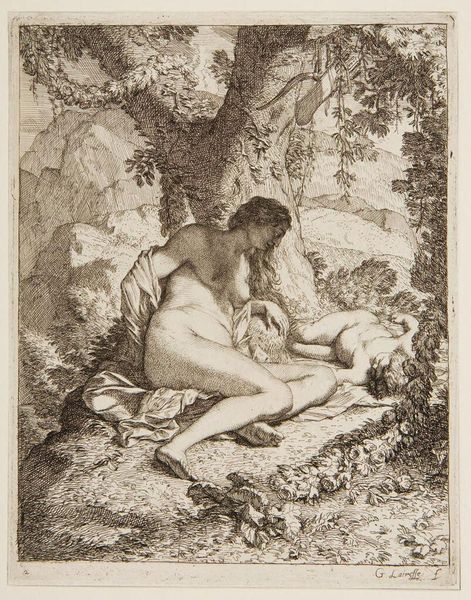
Editor: So this is Bernard Lépicié’s "Ceres Asleep," an undated print housed at the Harvard Art Museums. It has a languid feel, almost dreamlike. What strikes you about it? Curator: The reclining Ceres, goddess of agriculture, can be viewed as a figure of both power and vulnerability. Consider the social and political implications of depicting a female deity in such a state. Is it an act of reverence, or does it perpetuate a patriarchal gaze? What does it mean to see her sleeping, and how might this be interpreted in relation to gender and labour? Editor: I never thought about it that way. It's powerful to consider how these classical images can reflect ongoing power dynamics. Curator: Exactly, and by questioning these representations, we can understand the historical construction of femininity and its continued relevance.