About this artwork
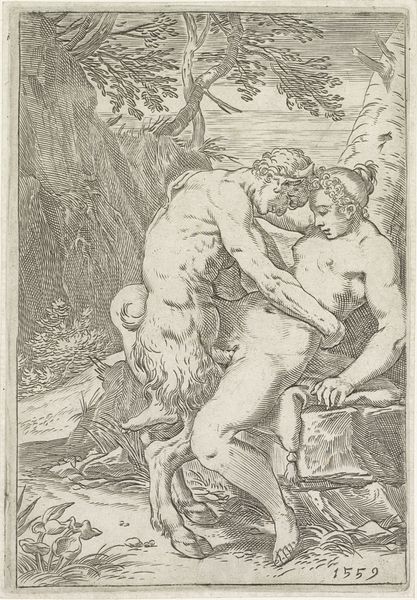
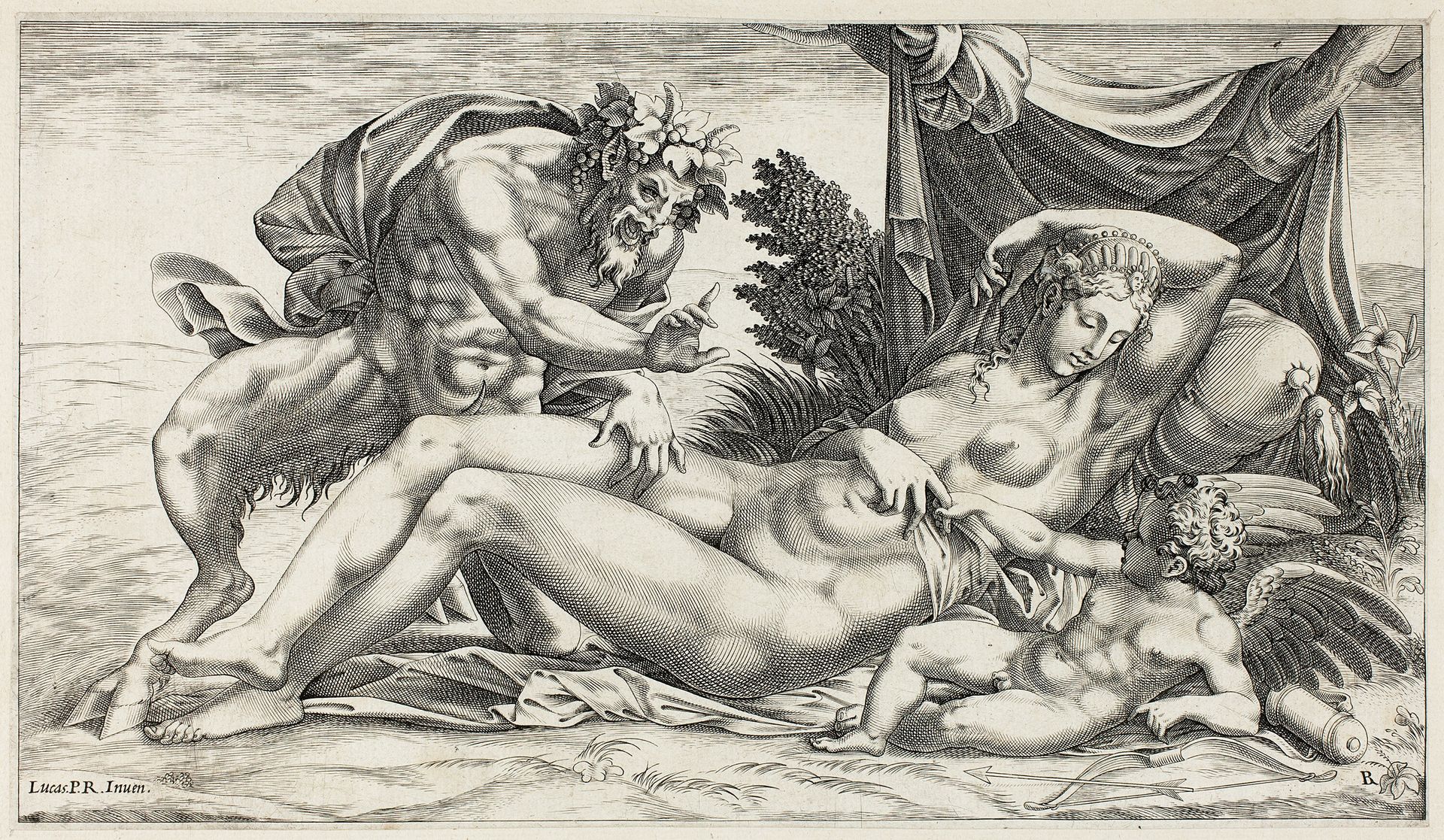
René Boyvin made this engraving, Jupiter and Antiope, in France sometime in the late 16th century. The image depicts Jupiter as a satyr, about to awaken the sleeping Antiope. The tale speaks to underlying beliefs about class, power, and gender in early modern Europe. The story of Jupiter and Antiope, found in Ovid's Metamorphoses, typically served as a reminder of the dangers women faced from powerful men, and as a warning against promiscuity. The status of women, especially in powerful families, was often codified and fiercely protected, and visual depictions of myths like this one served as a way to remind the public of those structures. In Boyvin's interpretation, the male figure looks more animalistic, hinting at the uncontrolled lust. By studying the visual culture of the period, we can learn much about how the elites of France thought about and reinforced the social order.
Jupiter and Antiope
1550s


Artwork details
- Medium
- drawing, print, paper, engraving
- Dimensions
- 162 × 286 mm (image); 166 × 288 mm (sheet); 252 × 367 mm (secondary support)
- Location
- The Art Institute of Chicago
- Copyright
- Public Domain
Tags
Comments
Share your thoughts
About this artwork
René Boyvin made this engraving, Jupiter and Antiope, in France sometime in the late 16th century. The image depicts Jupiter as a satyr, about to awaken the sleeping Antiope. The tale speaks to underlying beliefs about class, power, and gender in early modern Europe. The story of Jupiter and Antiope, found in Ovid's Metamorphoses, typically served as a reminder of the dangers women faced from powerful men, and as a warning against promiscuity. The status of women, especially in powerful families, was often codified and fiercely protected, and visual depictions of myths like this one served as a way to remind the public of those structures. In Boyvin's interpretation, the male figure looks more animalistic, hinting at the uncontrolled lust. By studying the visual culture of the period, we can learn much about how the elites of France thought about and reinforced the social order.
Comments
Share your thoughts