About this artwork
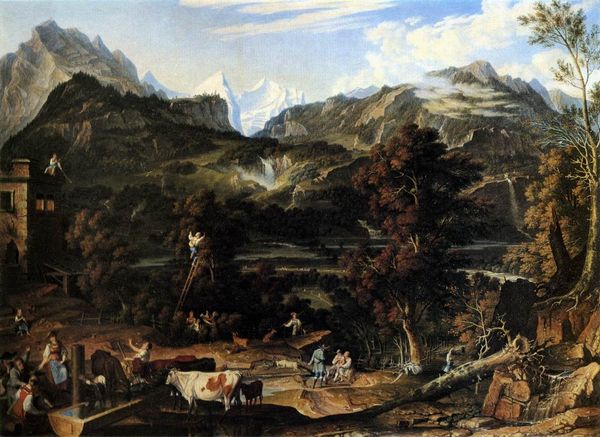
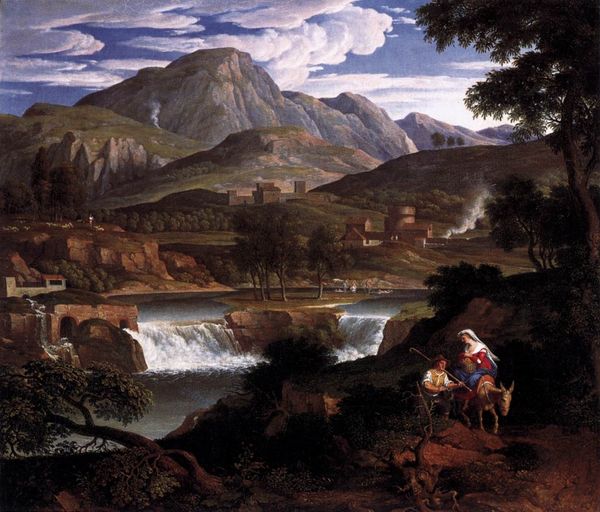
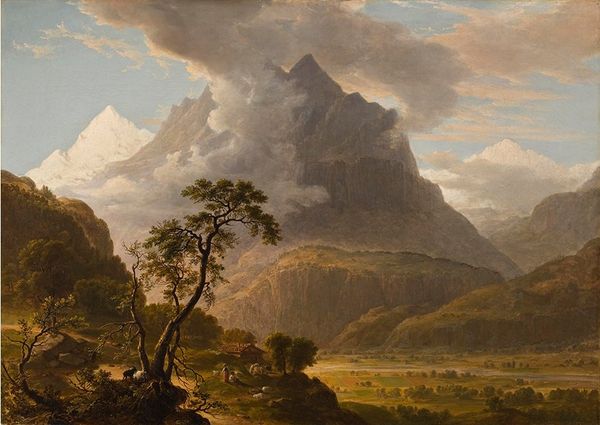
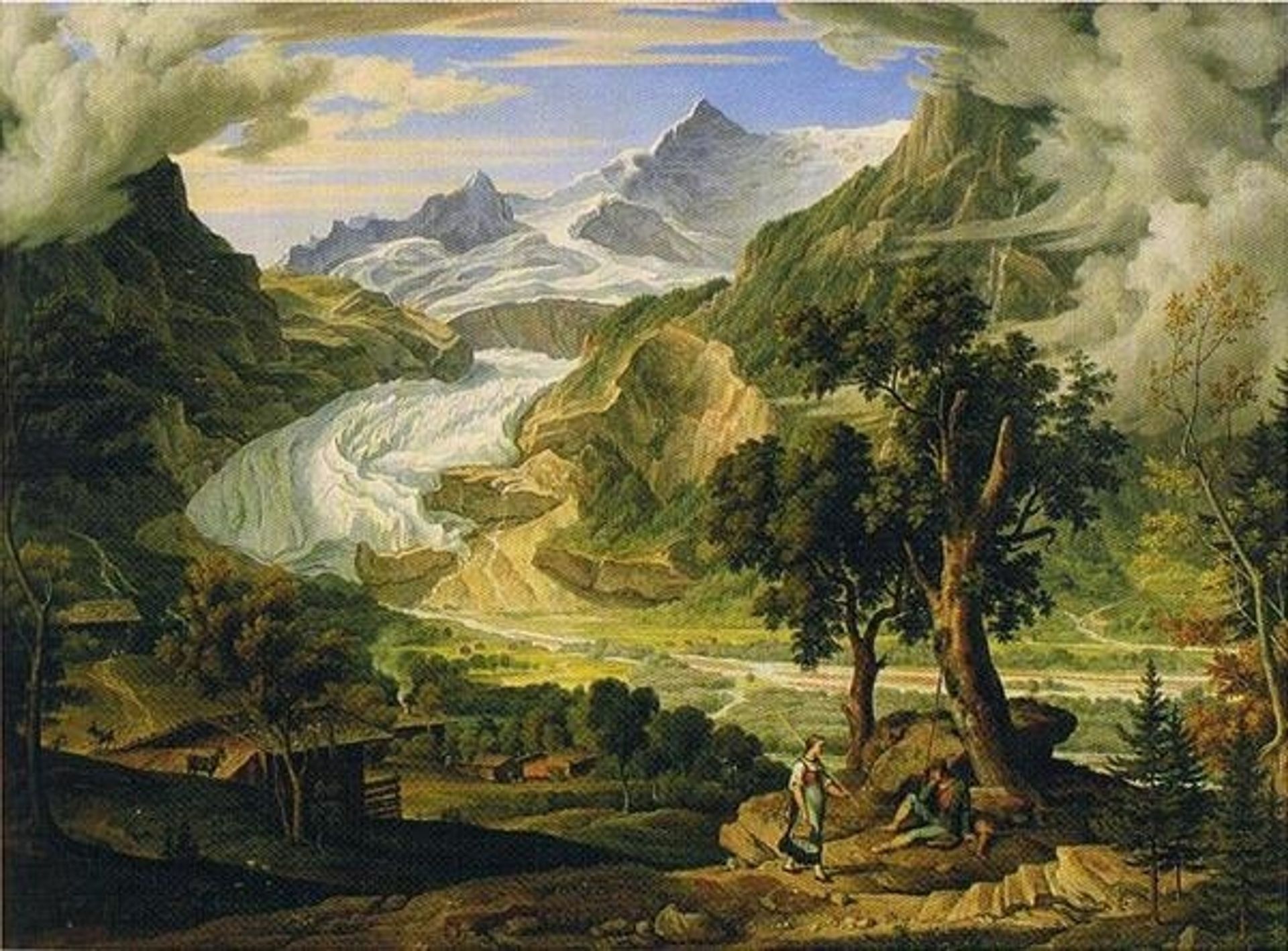
Editor: This is "Grindelwald Glacier in the Alps" painted by Joseph Anton Koch in 1823. It's striking how the figures in the foreground are dwarfed by the monumental landscape. What draws your eye when you look at this piece? Curator: I'm particularly interested in how Koch has translated the glacial landscape into material form. The application of paint – consider its texture and layering – directly mimics the geological processes at play: the grinding force of the glacier, the erosion of the mountains, the deposition of sediment. Editor: So, you see the painting itself as echoing the physical changes in the landscape? Curator: Precisely! Look at the rendering of the waterfall, how he’s used white paint to simulate the cascade. And notice the small human figures positioned not as masters of the scene, but clearly working and almost subsumed. This isn't simply about aesthetics. It's about understanding humanity's place within a larger system of resource extraction and transformation, a system of labour visualized through his meticulous rendering of each detail. The labor inherent to mining this landscape. Editor: That's a really different way to look at landscape painting, it makes me wonder about the patrons who commissioned work like this and their involvement in this labor as well. So, not just depicting beauty, but portraying and framing how we engage with our world and resources? Curator: Exactly! The ownership and consumption involved in extracting resources become part of the artistic process as much as paint is applied to a canvas. We understand not only its creation but its place in early capitalistic frameworks as well. Editor: I’ll never see a landscape painting the same way again. This approach provides such a rich perspective. Curator: And understanding that perspective adds even more richness to our understanding of art and human relationship with environment.

Artwork details
- Dimensions
- 122.5 x 88.5 cm
- Copyright
- Public domain
Tags
Comments
Share your thoughts
About this artwork
Editor: This is "Grindelwald Glacier in the Alps" painted by Joseph Anton Koch in 1823. It's striking how the figures in the foreground are dwarfed by the monumental landscape. What draws your eye when you look at this piece? Curator: I'm particularly interested in how Koch has translated the glacial landscape into material form. The application of paint – consider its texture and layering – directly mimics the geological processes at play: the grinding force of the glacier, the erosion of the mountains, the deposition of sediment. Editor: So, you see the painting itself as echoing the physical changes in the landscape? Curator: Precisely! Look at the rendering of the waterfall, how he’s used white paint to simulate the cascade. And notice the small human figures positioned not as masters of the scene, but clearly working and almost subsumed. This isn't simply about aesthetics. It's about understanding humanity's place within a larger system of resource extraction and transformation, a system of labour visualized through his meticulous rendering of each detail. The labor inherent to mining this landscape. Editor: That's a really different way to look at landscape painting, it makes me wonder about the patrons who commissioned work like this and their involvement in this labor as well. So, not just depicting beauty, but portraying and framing how we engage with our world and resources? Curator: Exactly! The ownership and consumption involved in extracting resources become part of the artistic process as much as paint is applied to a canvas. We understand not only its creation but its place in early capitalistic frameworks as well. Editor: I’ll never see a landscape painting the same way again. This approach provides such a rich perspective. Curator: And understanding that perspective adds even more richness to our understanding of art and human relationship with environment.
Comments
Share your thoughts