1832
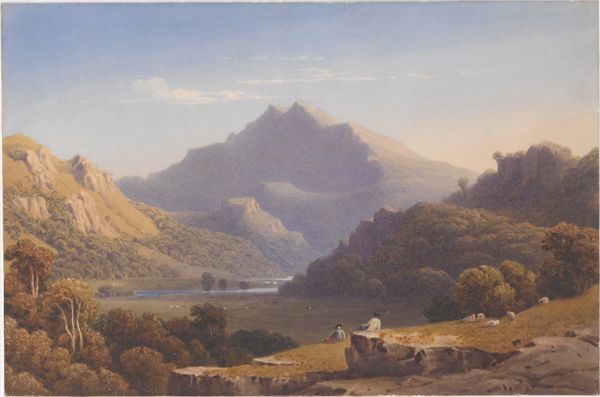
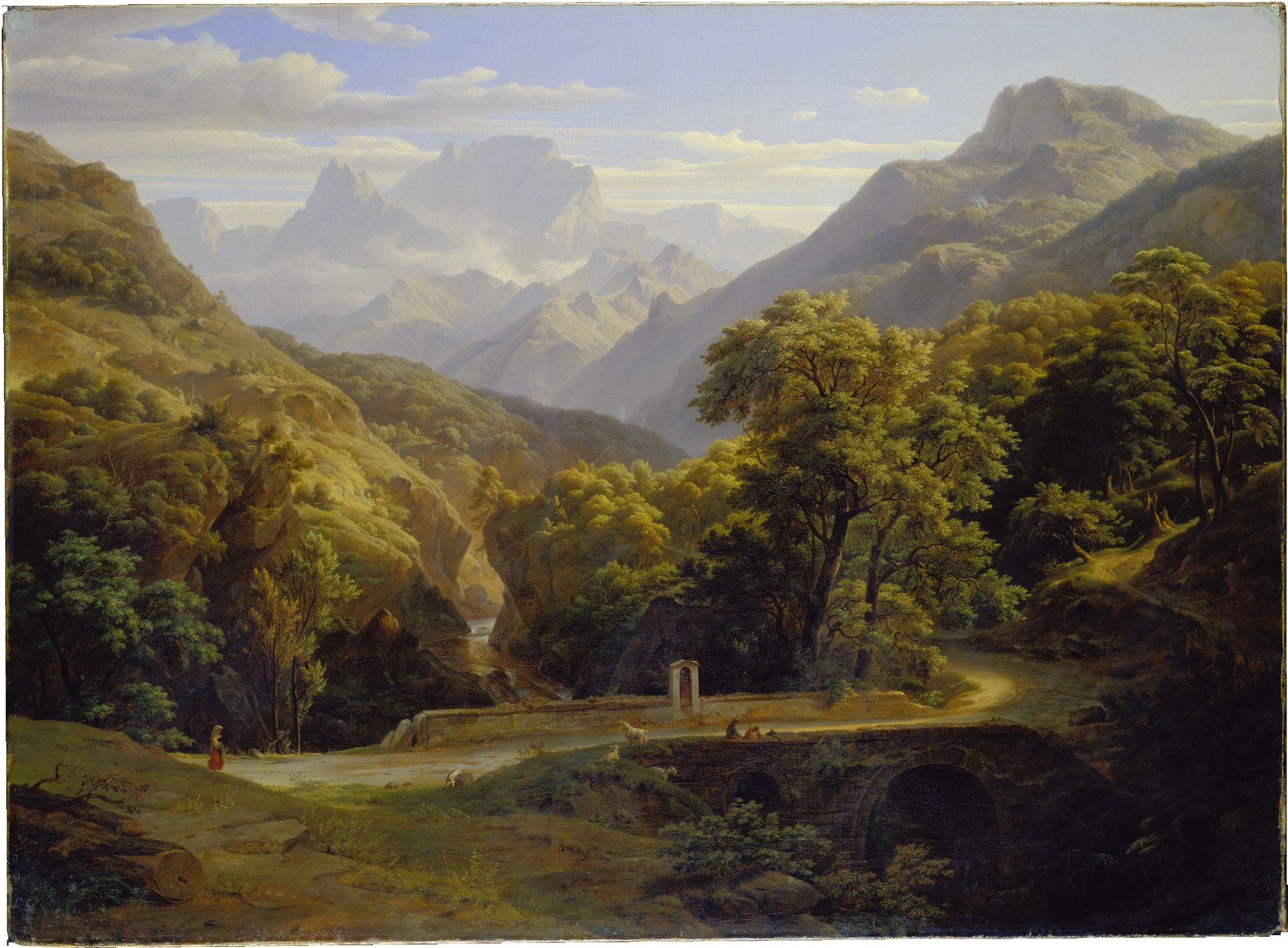
Mountainscape


Listen to curator's interpretation
Curatorial notes
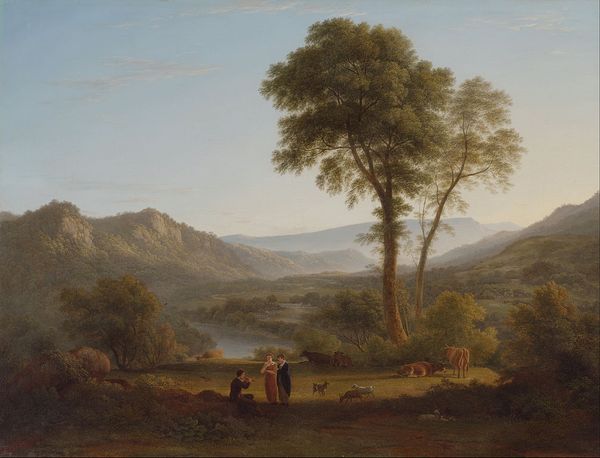
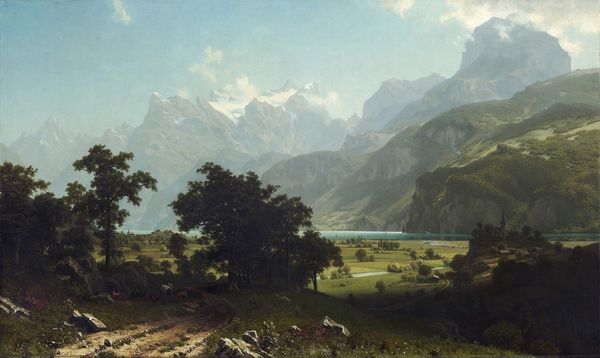
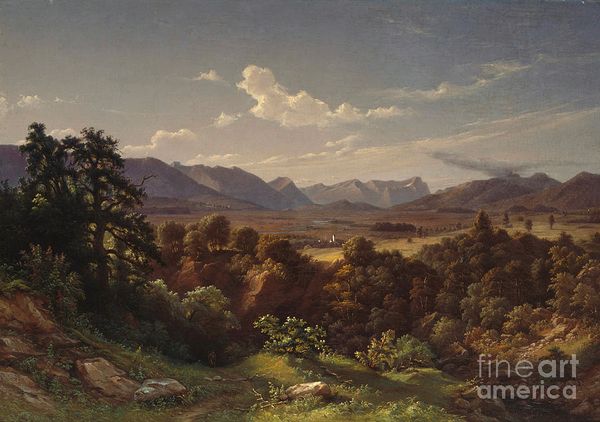
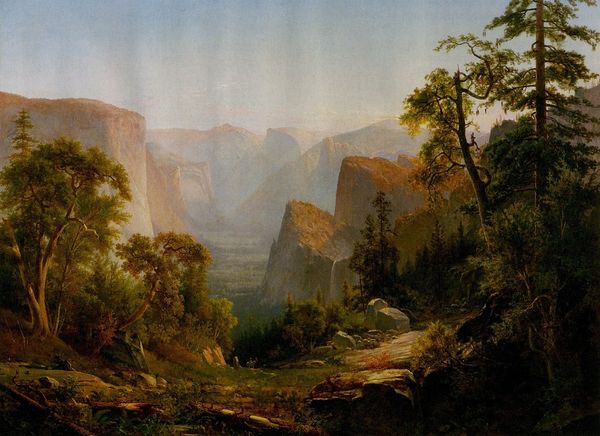
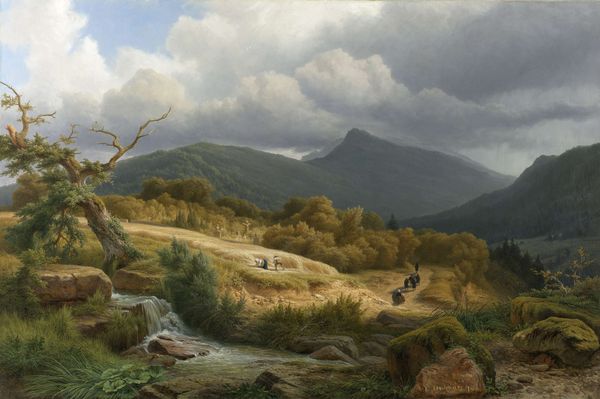
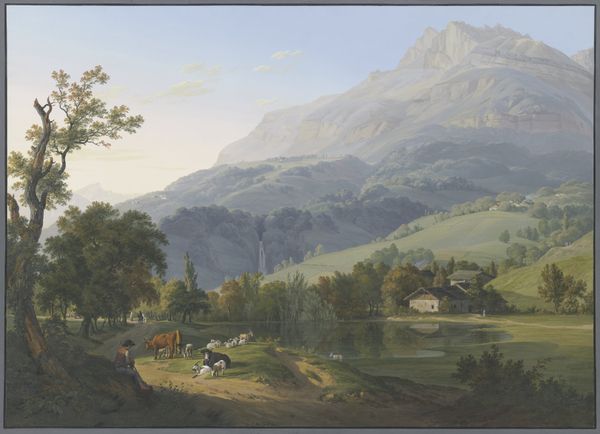
Ernst Fries painted this "Mountainscape" in the early 19th century. The painting invites us into a world where nature's grandeur meets human presence. But how does it speak to its time? Painted in Germany, this landscape embodies the Romantic era's fascination with nature as a source of sublime experience. Look at the meticulous detail of the natural elements. The atmospheric perspective softens the distant peaks, while the trees frame the scene, guiding the viewer's eye. These devices speak to a cultural and social context where nature was increasingly seen as a refuge. The figures in the painting seem at one with their environment, and this harmony highlights a self-consciously progressive worldview. By studying the historical context through letters, diaries, and travel literature, we can reveal the meanings embedded in this artwork. It reminds us that art is not created in a vacuum; rather, it reflects the complex interplay between social norms and individual expression.