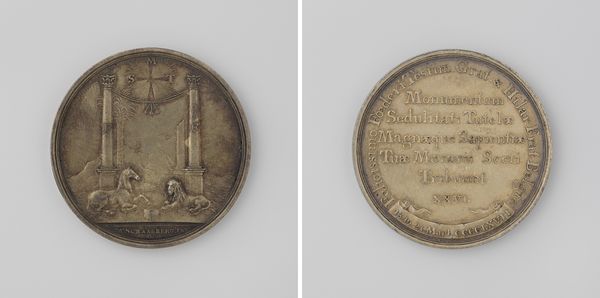
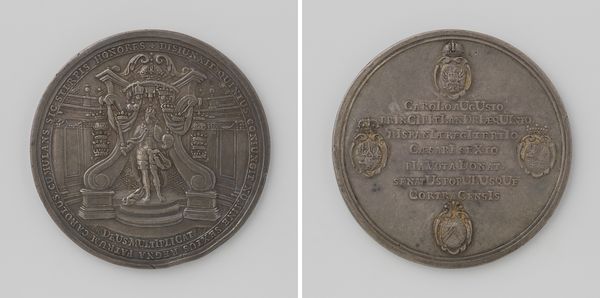
metal, relief, sculpture
#
portrait
#
medieval
#
baroque
#
metal
#
sculpture
#
relief
#
sculpture
Dimensions: diameter 5.7 cm, weight 52.58 gr
Copyright: Rijks Museum: Open Domain
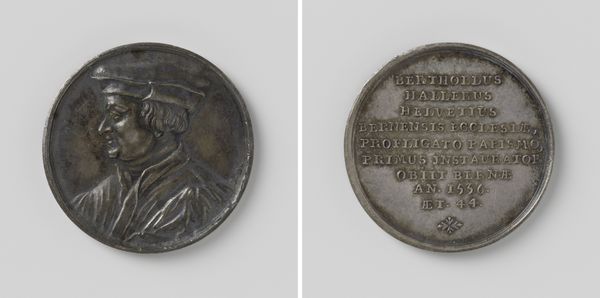
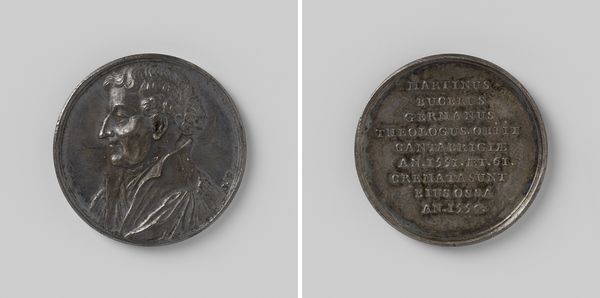
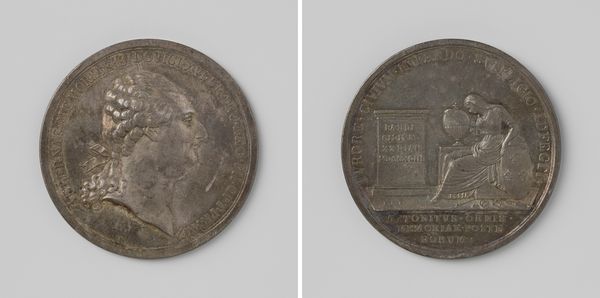
Editor: Here we have Sebastian Dadler’s medal, “Eeuwfeest van de Reformatie 1630,” created in 1630. It's crafted from metal, offering us a double-sided relief sculpture. It looks severe...like a portrait of unwavering conviction. What do you read in this artwork? Curator: Conviction, absolutely! I feel the weight of history, and almost a sense of…stubborn hope? The portrait is of Johann, Elector of Saxony, a key figure in the Reformation. That sword isn't just decoration; it's symbolic. I wonder, what does a sword represent for you? Is it violence? Protection? An idea? Editor: Both, perhaps. I see it more as protection. It reminds me that faith during the Reformation wasn’t just peaceful contemplation; it involved real courage and, yes, protection against those who opposed reform. Curator: Precisely! And notice the inscriptions? This wasn't just a celebration, but a declaration of faith, minted in metal, designed to last! You know, art during the Baroque era became a powerful way to propagate beliefs, influencing hearts and minds. Does it feel like propaganda to you, though? Editor: Hmmm... I hadn’t thought of that! Now that you mention it, a little. But maybe propaganda with good intentions? A passionate declaration of belief seems less insidious, somehow. Curator: It is fascinating, isn't it? Intent shifts everything! Looking at it now, after our chat, I see that intersection between faith, power, and permanence more clearly. A pretty nifty little piece of metal if you ask me. Editor: Totally! It's a compact expression of a complex historical moment. It makes me want to delve more into Reformation art now.
Comments
No comments
Be the first to comment and join the conversation on the ultimate creative platform.
 Collect
 React
React Comment
More like this