relief, bronze, sculpture
#
portrait
#
sculpture
#
relief
#
bronze
#
sculpture
#
history-painting
Dimensions: diameter 5.1 cm, weight 58.25 gr
Copyright: Rijks Museum: Open Domain
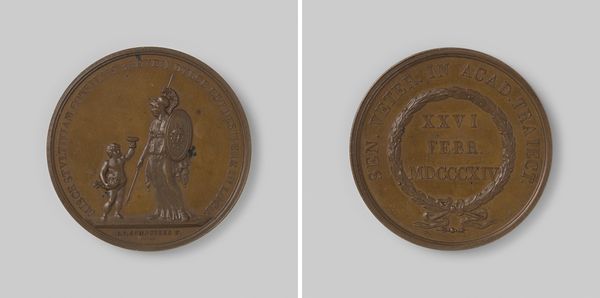
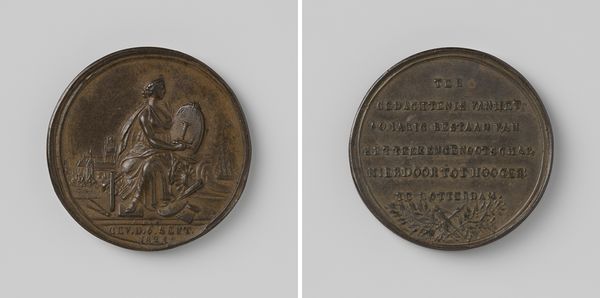
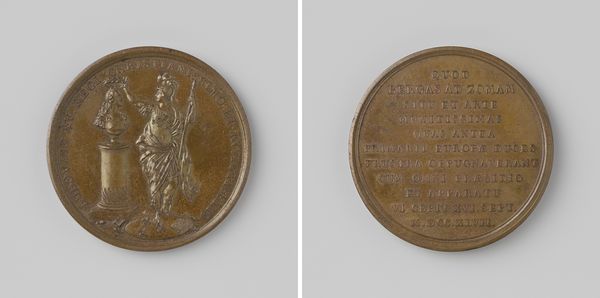
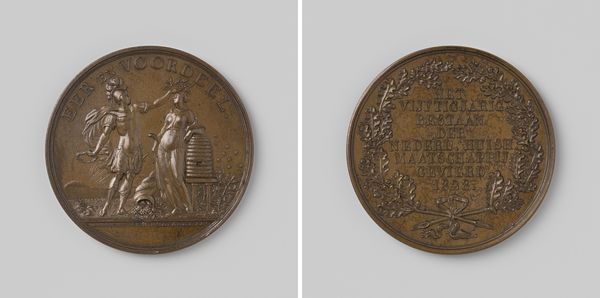
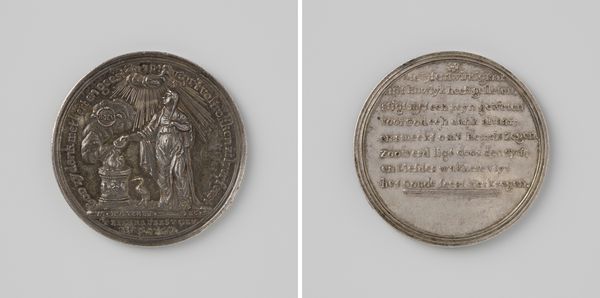
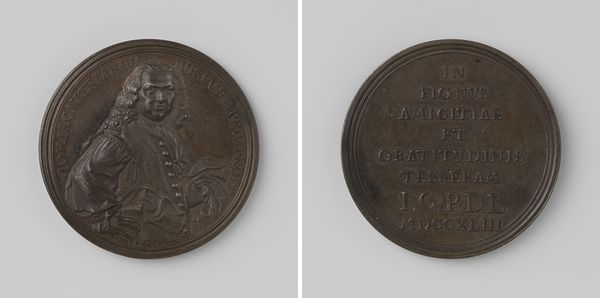
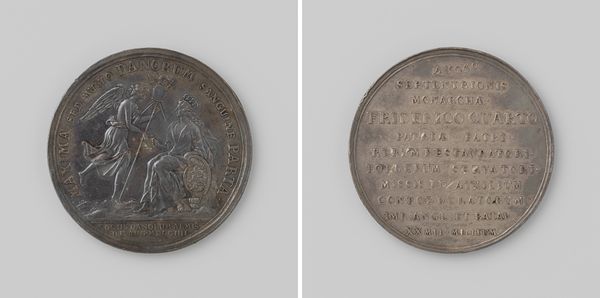
Editor: This is a bronze relief sculpture by Tjeerd Keikes, commemorating the 150th anniversary of the Frisian Mennonite Society in 1845. It looks like a medal or a coin. I’m struck by how it combines classical imagery with what seems to be a local, regional celebration. How do you interpret this work within its historical context? Curator: This piece really speaks to the role of commemorative objects in constructing institutional memory. The Frisian Mennonite Society used this medal to solidify its identity and project its values. Think about the decision to use bronze, a material associated with permanence and historical significance, immediately lending gravitas. Who do you think the figures represent, and why depict them this way? Editor: Well, there's a woman seated with what looks like a portrait, and two figures approaching. Is that… a depiction of charity, perhaps, offering gifts? The Society presenting itself as benevolent? Curator: Precisely. Consider also how these visual choices reinforce the Society’s position within a larger network of patronage and power. Religious societies often navigated complex political landscapes. What do you make of the inclusion of that small architectural detail on the left side, and the date inscriptions? Editor: The building seems to represent the Mennonite church or community itself. And the dual dating–1695 and 1845–creates a continuous historical narrative, linking the society's founding to the present. Curator: Yes. Objects like these perform a crucial function: to translate abstract ideas about history, community, and religious values into something tangible and shareable, fostering collective identity. A political statement in art, wouldn't you say? Editor: Absolutely. I never thought about a medal as being a political tool, it's made me completely re-evaluate how institutions use art to communicate power and values. Curator: That’s exactly why studying such objects is so important. They provide a microcosm through which we can explore much larger historical and societal forces at play.
Comments
No comments
Be the first to comment and join the conversation on the ultimate creative platform.
 Collect
 React
React Comment
More like this