drawing, paper, ink, pen
#
drawing
#
hand-lettering
#
dutch-golden-age
#
hand drawn type
#
hand lettering
#
paper
#
personal sketchbook
#
ink
#
hand-drawn typeface
#
ink drawing experimentation
#
pen-ink sketch
#
pen work
#
sketchbook drawing
#
pen
#
genre-painting
#
sketchbook art
Copyright: Rijks Museum: Open Domain
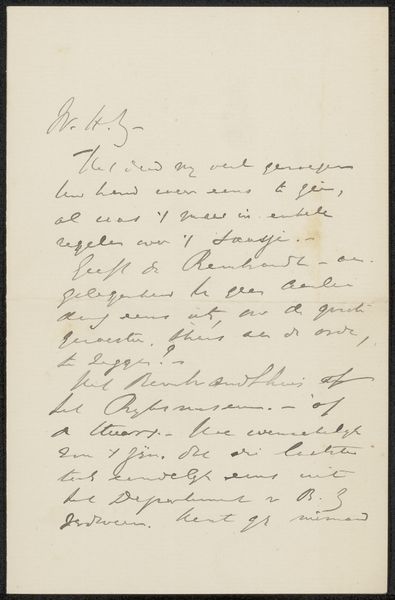
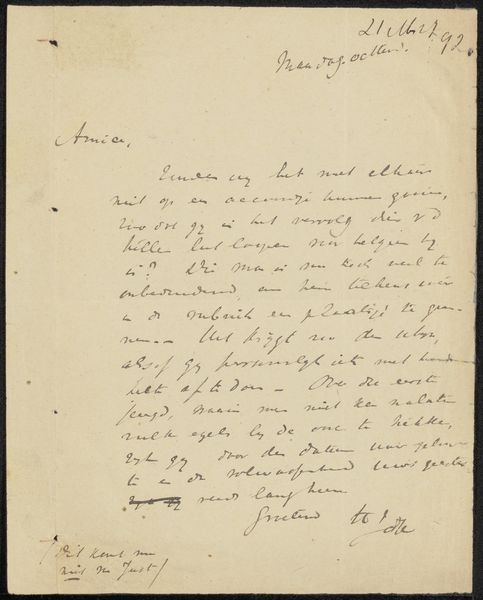
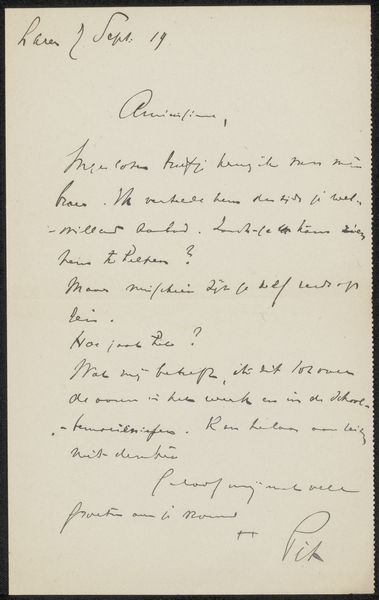
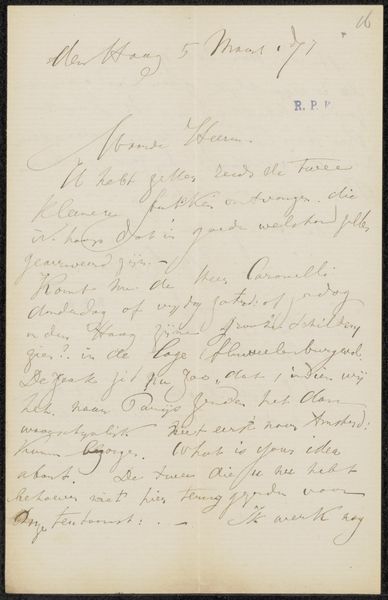
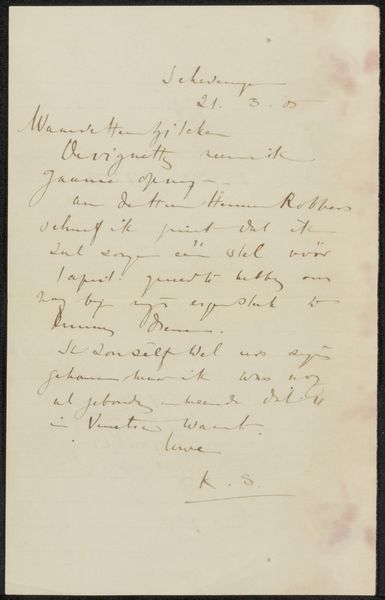
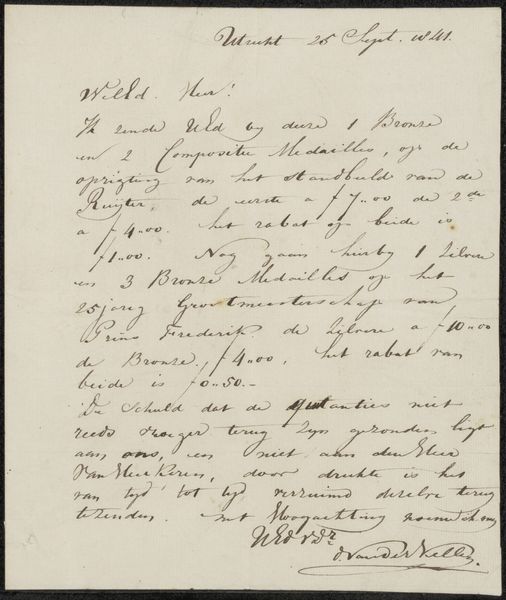
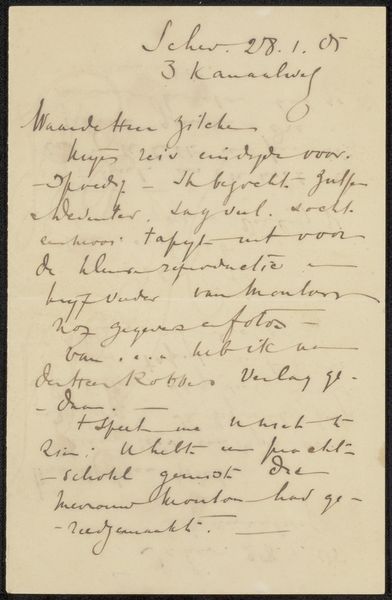
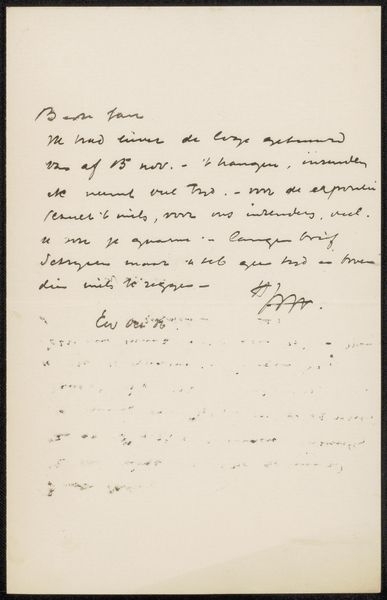
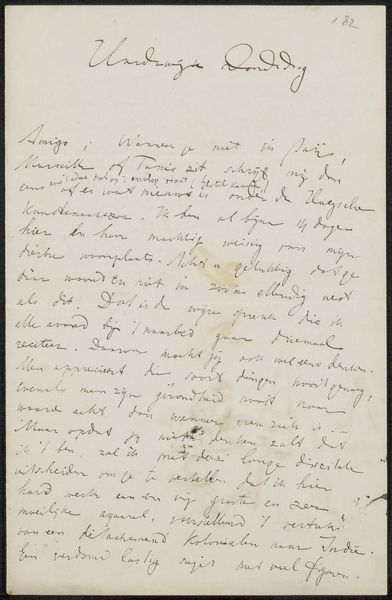
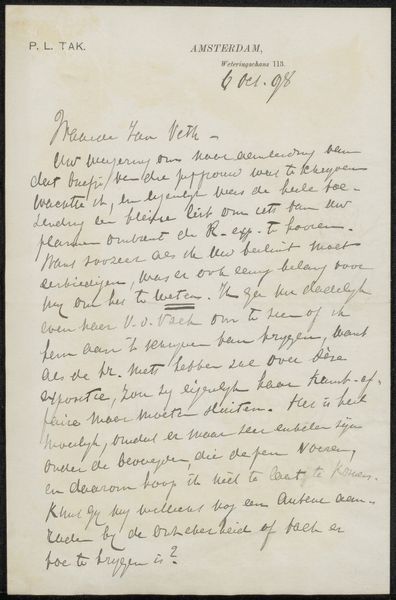
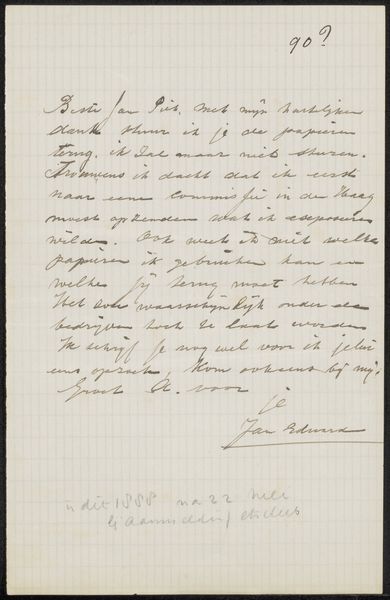
Curator: This work, called "Brief aan Jan Veth," likely dates from around 1887 to 1889. It's currently housed here at the Rijksmuseum. Executed in pen and ink on paper, it shows the distinct signature of Willem Bastiaan Tholen. Editor: Immediately, I notice how personal it feels, like stumbling upon someone's private thoughts. The cursive handwriting gives it a fragile quality. Curator: Yes, the letter as a form carries potent symbolic weight. The written word always did, and Tholen’s choice of it—a private, handwritten message—creates a sense of intimacy with the viewer. He bridges the gap between public and private through shared visual and linguistic systems. Editor: It's interesting to consider the materiality too. The texture of the paper, the way the ink bleeds in places – these small imperfections reveal the human element behind the words, making you consider his mood, and his environment while writing this. Curator: Absolutely, ink drawings like this one from Tholen were experimental in terms of personal lettering. The style is very rooted in the tradition of the Dutch Golden Age. Editor: Thinking about letter writing as a method of artistic connection, what cultural ripples came of this tradition? What impact did the receiver have in his circle through these writings? Curator: The hand-written note carries a cultural memory—a longing for tangible connection in our digital world. They embody a slower, more intentional mode of communication, preserving an archive of artistic exchange through written dialogue. Editor: Yes, seeing the artist’s hand, even through a screen, lends a directness we often lose today. I wonder what Veth thought when he read these words for the first time. Curator: Ultimately, seeing the connection through written language immortalized in time, serves as a bridge connecting eras and people. Editor: Indeed. "Brief aan Jan Veth" offers not just words, but whispers of the human condition—reaching us across the divide.
Comments
No comments
Be the first to comment and join the conversation on the ultimate creative platform.
 Collect
 React
React Comment
More like this