print, oil-paint, photography
# print
#
oil-paint
#
landscape
#
charcoal drawing
#
rugged
#
photography
#
site analysis
#
monochrome photography
#
realism
#
monochrome
Dimensions: height 280 mm, width 215 mm, height 385 mm, width 440 mm
Copyright: Rijks Museum: Open Domain
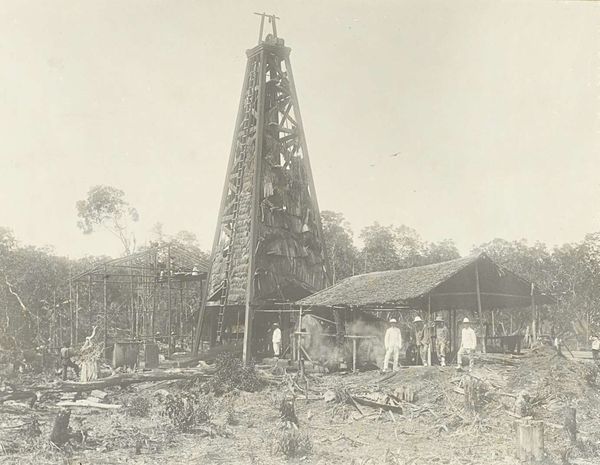
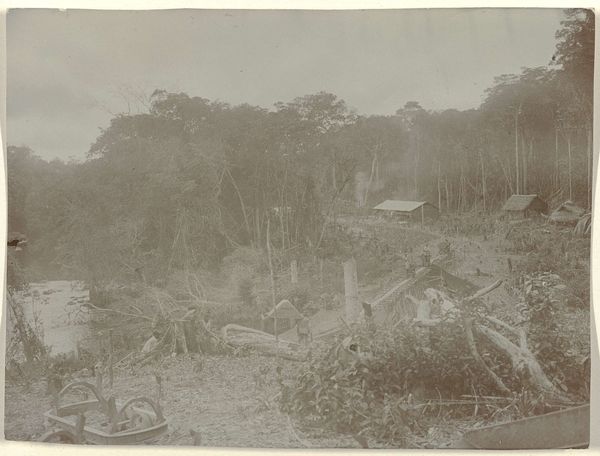
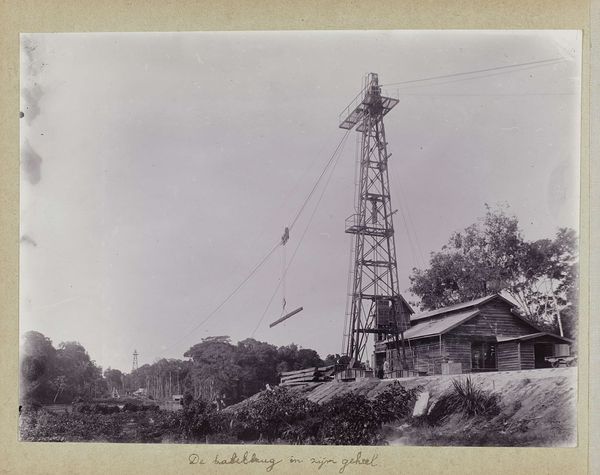
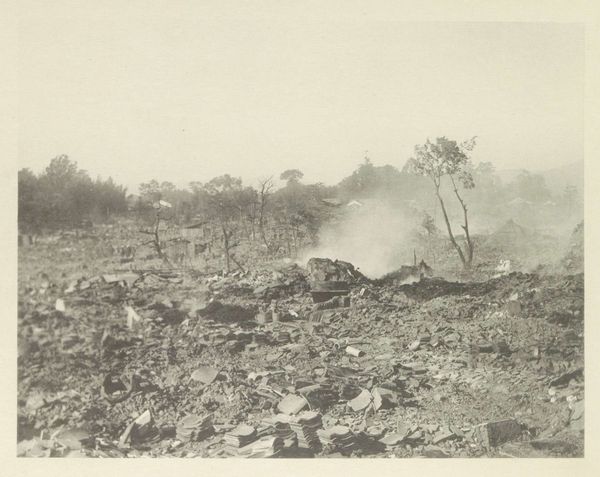
Curator: The starkness of this monochromatic scene immediately captures attention. What strikes you about the visual dynamics? Editor: There's a heavy, melancholic feeling—a grimy scene. The presence of smoke belching from the structure also lends a certain ominous air. Curator: Indeed. This artwork, simply titled "Spuiter", from circa 1903-1907, is presented in tones of gray. Notice how the photographer has framed this imposing industrial structure against the backdrop of a jungle. Editor: The material contrast is significant: we have organic foliage in tension with the inorganic mechanism. The pipes lying on the ground point towards the labor and resource extraction involved. Is this image intended to document progress or exploitation? Curator: That dichotomy is precisely where much of the work's complexity lies. Structurally, the towering drill rig commands the composition, a stark vertical thrust offset by the dense, horizontal sprawl of the jungle. The gaze travels upwards and meets dark smoke obscuring any possibility of seeing what lies above, leaving one feeling closed-in rather than liberated. Editor: The blurriness actually enhances the visual statement, obscuring any romantic or progressive intentions, if there were any. There are no idealogical claims here, just the facts of extraction and consumption and material waste. The figure, likely an employee, dwarfs next to his means of labour; that suggests dehumanization as a feature of industry itself. Curator: That tension resonates profoundly. How do we reconcile human progress with its ecological toll? Consider also the absence of clear tonal variation; a study in subdued shades offers the viewer few points of visual rest or resolution. Editor: Perhaps this composition reminds us to not sanitize our consumption, but sit with that darkness for longer. This photographer certainly wanted to record an ugly truth: an industrious footprint and its material implications. Curator: Quite. It presents an unsentimental portrait. This photograph, then, compels us to re-evaluate notions of landscape art, disrupting conventional notions of beauty. Editor: Precisely, it forces us to ponder progress as more than aesthetic value, to think beyond art's superficial value toward broader ethical contexts.
Comments
No comments
Be the first to comment and join the conversation on the ultimate creative platform.
 Collect
 React
React Comment
More like this