About this artwork
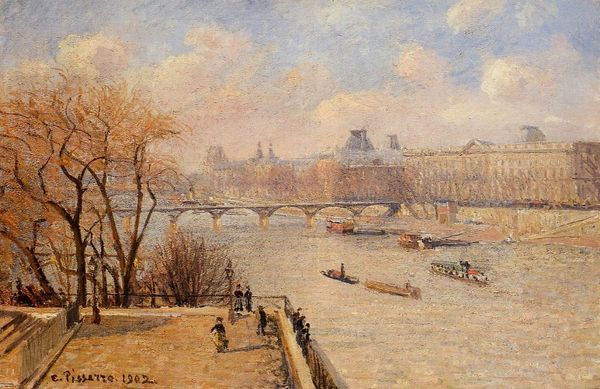
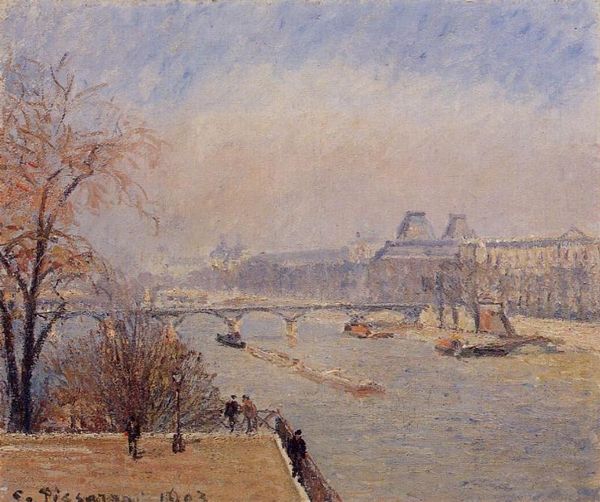
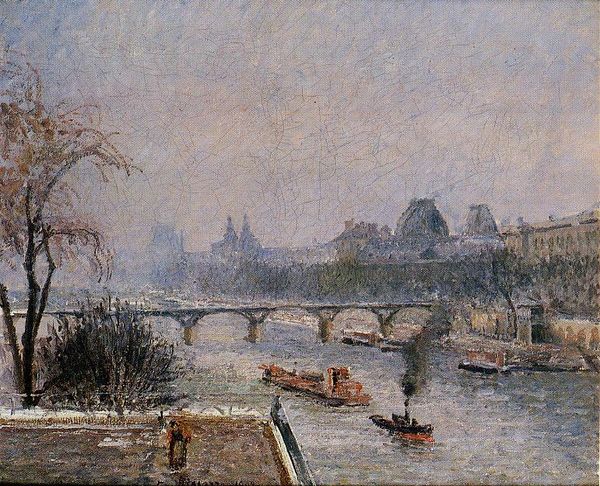
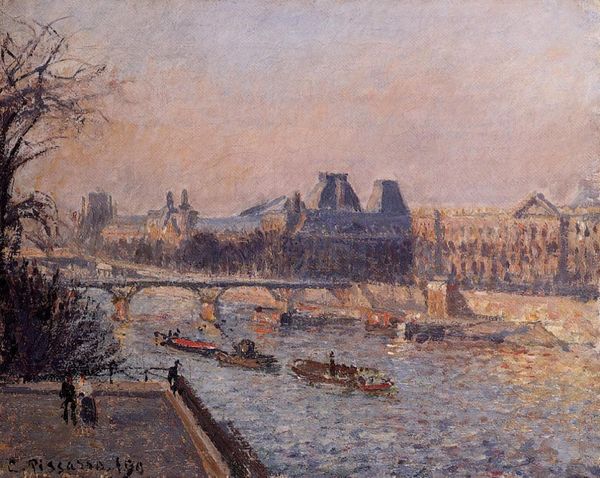
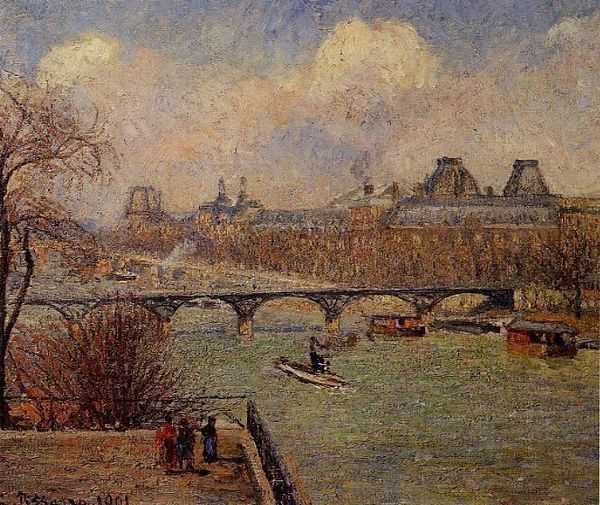
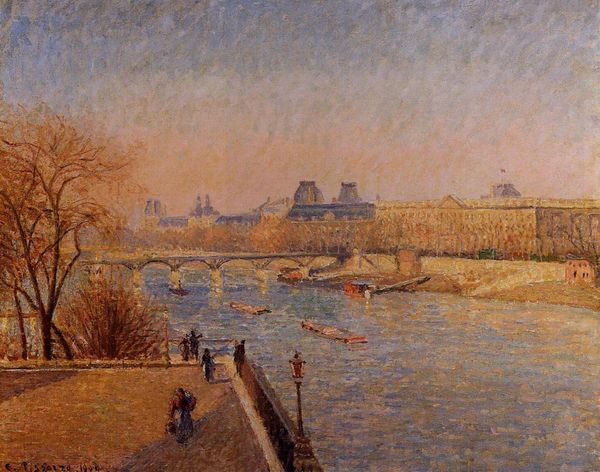
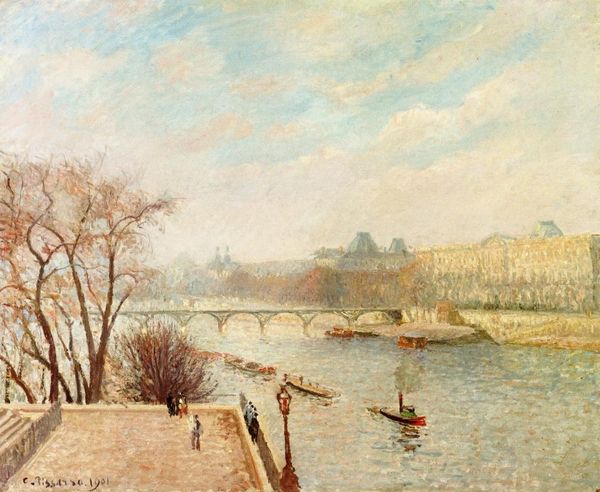
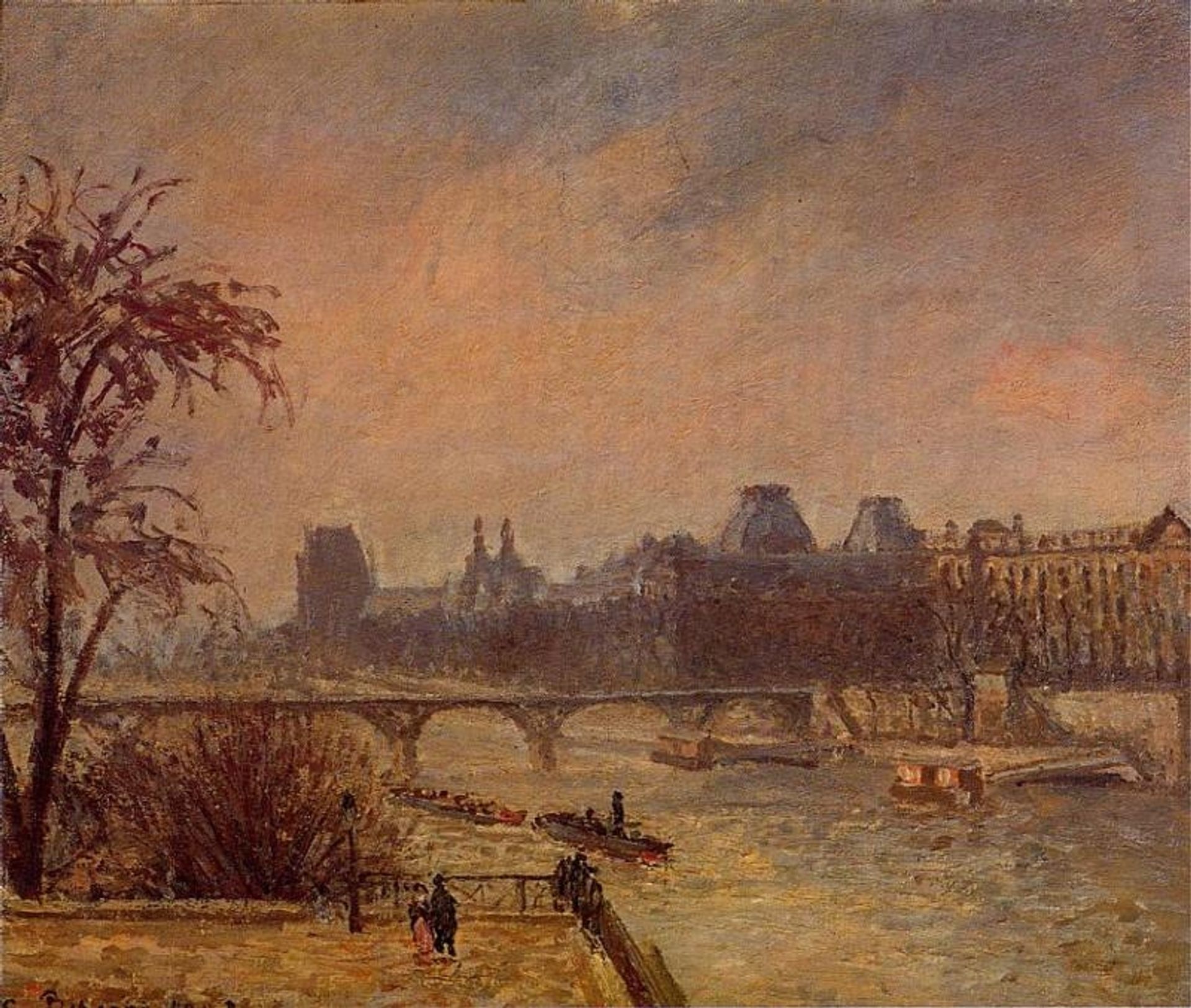
Camille Pissarro created this view of the Seine and the Louvre using oil on canvas. The very materiality of oil paint, its capacity to capture light and atmosphere, is crucial here. Look at how the brushstrokes create a sense of movement on the water, and a hazy sky. Pissarro's technique involved applying paint in small, broken touches, which gives the scene a shimmering quality. This painstaking process embodies a deliberate shift away from the smooth, almost invisible brushwork of earlier academic painting. Instead, we get an emphasis on the labour involved in image-making, akin to a craftsperson's dedication to their material. The rise of impressionism coincides with the rise of industrial capitalism, in which labor became more visible. Pissarro’s painting reflects a changing world, where the act of making becomes as significant as the image itself.
The Seine and the Louvre, Paris
1903


Artwork details
- Dimensions
- 46 x 55 cm
- Location
- Musée d'Orsay, Paris, France
- Copyright
- Public domain
Comments
Share your thoughts
About this artwork
Camille Pissarro created this view of the Seine and the Louvre using oil on canvas. The very materiality of oil paint, its capacity to capture light and atmosphere, is crucial here. Look at how the brushstrokes create a sense of movement on the water, and a hazy sky. Pissarro's technique involved applying paint in small, broken touches, which gives the scene a shimmering quality. This painstaking process embodies a deliberate shift away from the smooth, almost invisible brushwork of earlier academic painting. Instead, we get an emphasis on the labour involved in image-making, akin to a craftsperson's dedication to their material. The rise of impressionism coincides with the rise of industrial capitalism, in which labor became more visible. Pissarro’s painting reflects a changing world, where the act of making becomes as significant as the image itself.
Comments
Share your thoughts