Dimensions: 73 x 92 cm
Copyright: Public domain
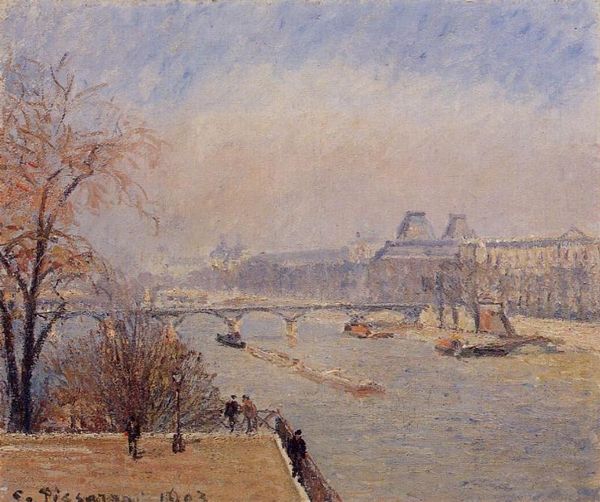
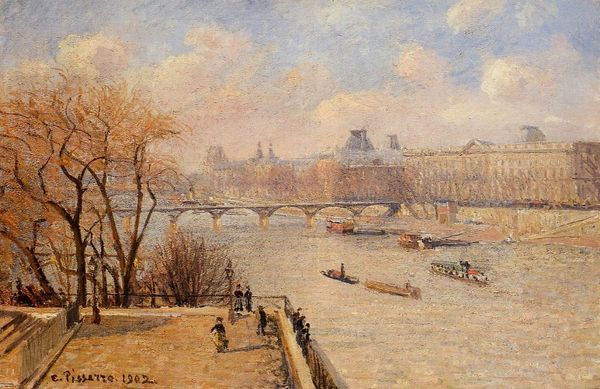
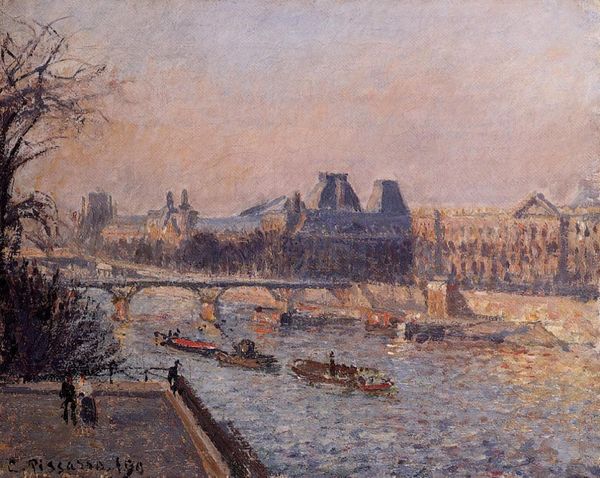
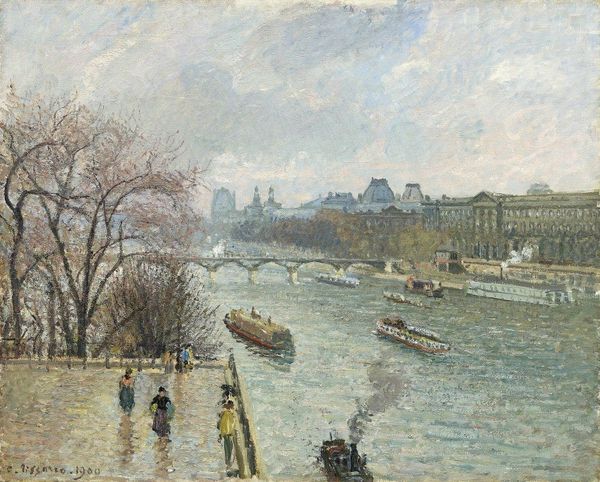
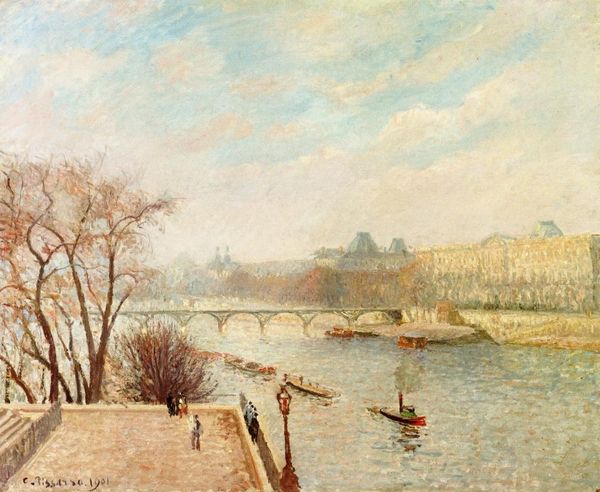
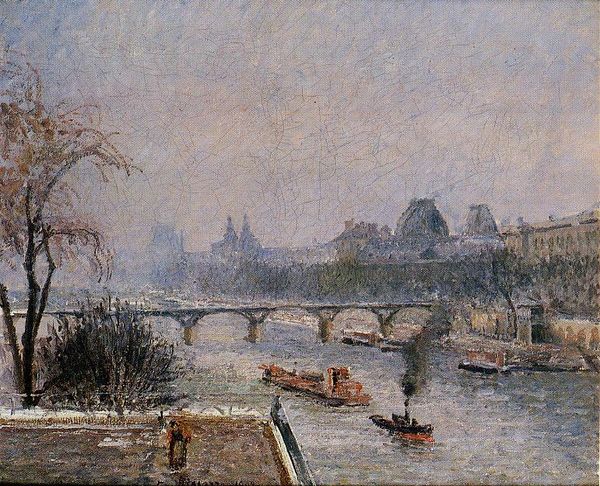
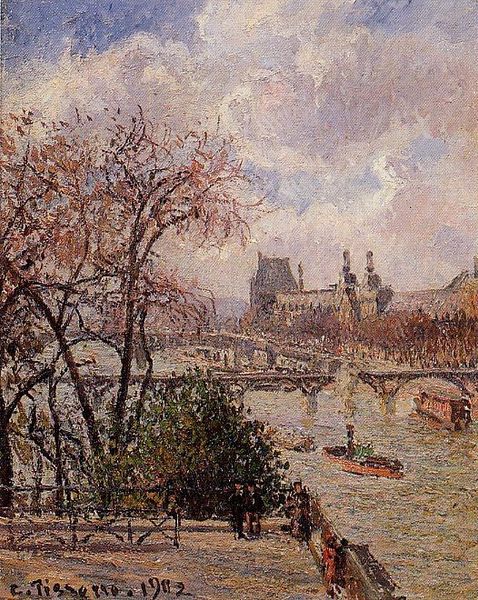
Editor: This is Camille Pissarro's "The Louvre, Winter Sunshine, Morning" from 1900, oil on canvas. The light seems almost hazy, like a dreamscape of the city. What do you see in this piece beyond just a pretty picture? Curator: Well, it's easy to get lost in the beauty of Impressionism, but let's consider the Paris Pissarro was depicting. It was a rapidly changing city, one marked by stark class divisions and political unrest. How might the choice of subject matter - the Louvre, a symbol of both art and power – engage with those tensions? Editor: So, you’re saying he's not just painting a pretty picture, but also commenting on power structures? Curator: Exactly! The soft brushstrokes and the muted colors could be interpreted as a critique of the established order, a way of blurring the edges of reality, and perhaps, the sharp edges of social inequality. It's almost a melancholic portrayal, don't you think? Winter light can often hold more truth than summer’s full glare. Editor: That’s a fascinating take. I hadn't considered that the ‘dreaminess’ could be a commentary on social issues. So, you are encouraging me to see the Louvre, and those Parisians, within that web of socio-political dynamics? Curator: Precisely. Now, how does knowing this influence your reading of other Impressionist landscapes, and even the role of landscape painting as a genre during periods of societal change? Editor: This really changes how I see Pissarro's work. It's not just about capturing a moment in time, but also reflecting the complexities of Parisian society at the turn of the century. Thanks for pointing that out. Curator: It is crucial to understand that artists do not create in a vacuum and it is in understanding their position in their world that their message really shines through.
Comments
No comments
Be the first to comment and join the conversation on the ultimate creative platform.
 Collect
 React
React Comment
More like this