About this artwork
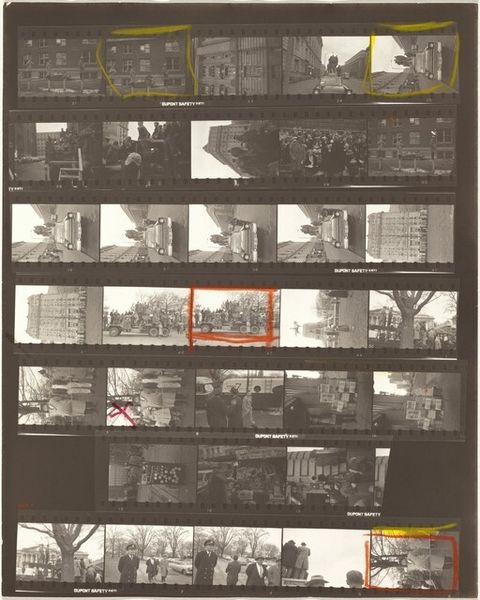
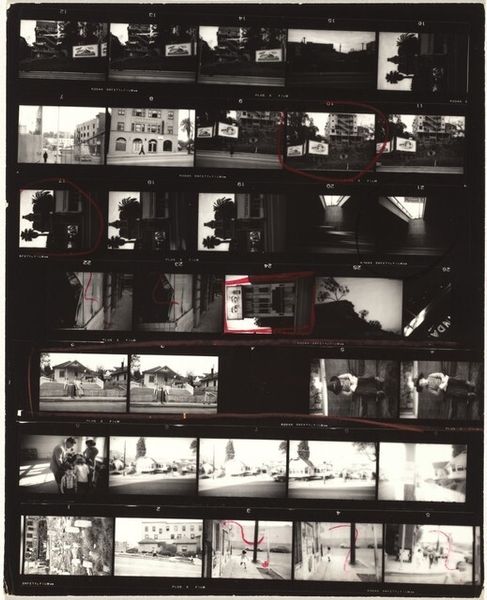
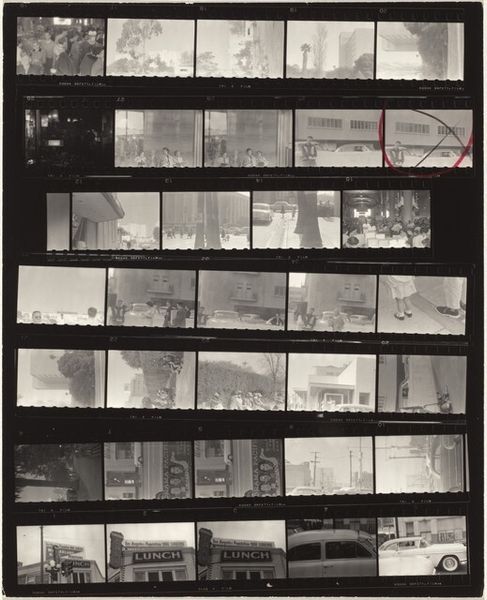
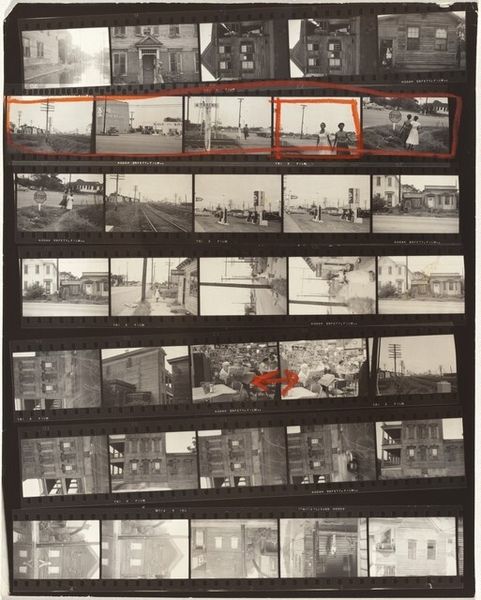
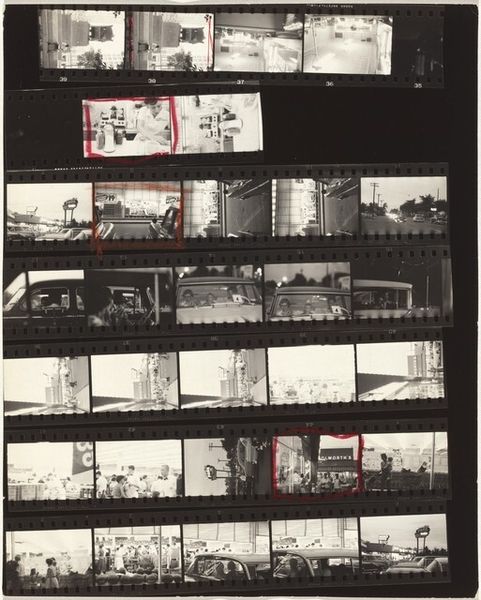
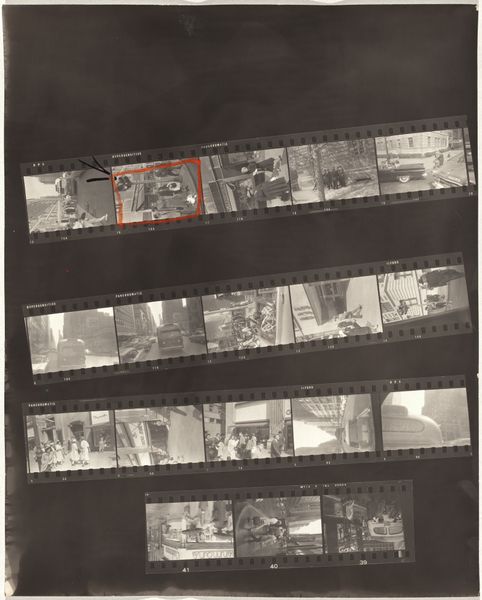
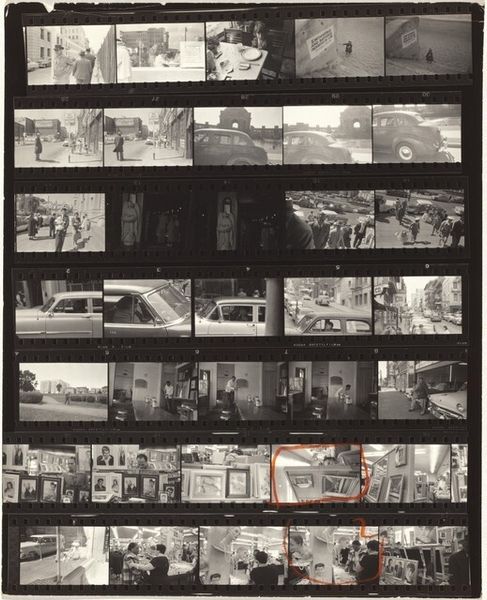
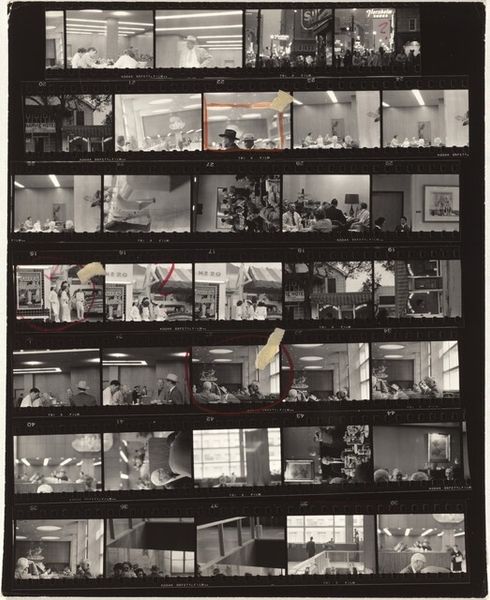
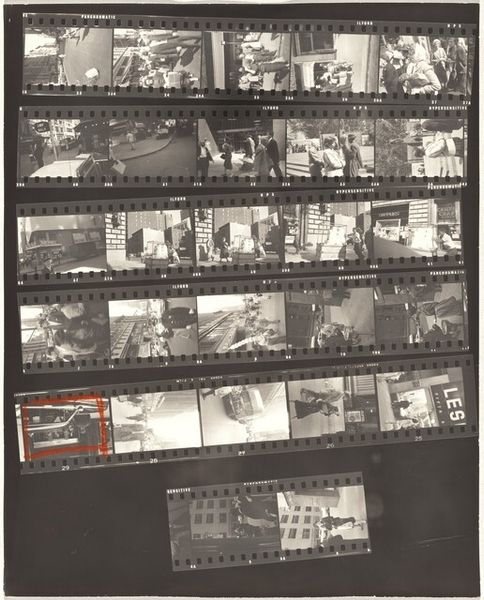
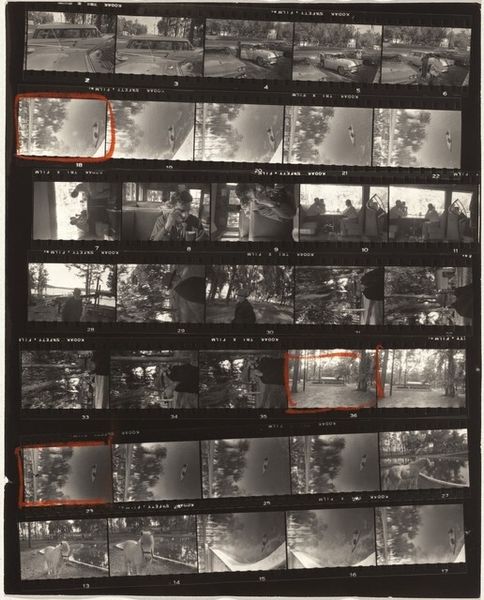
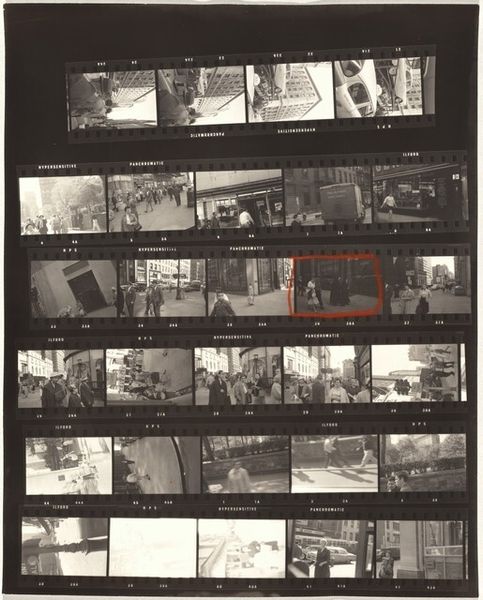
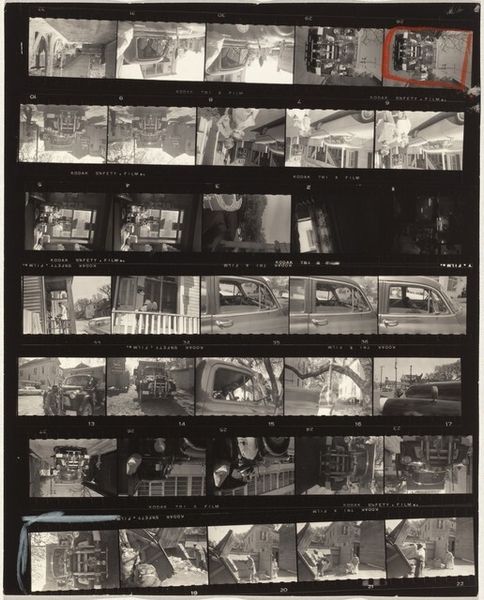
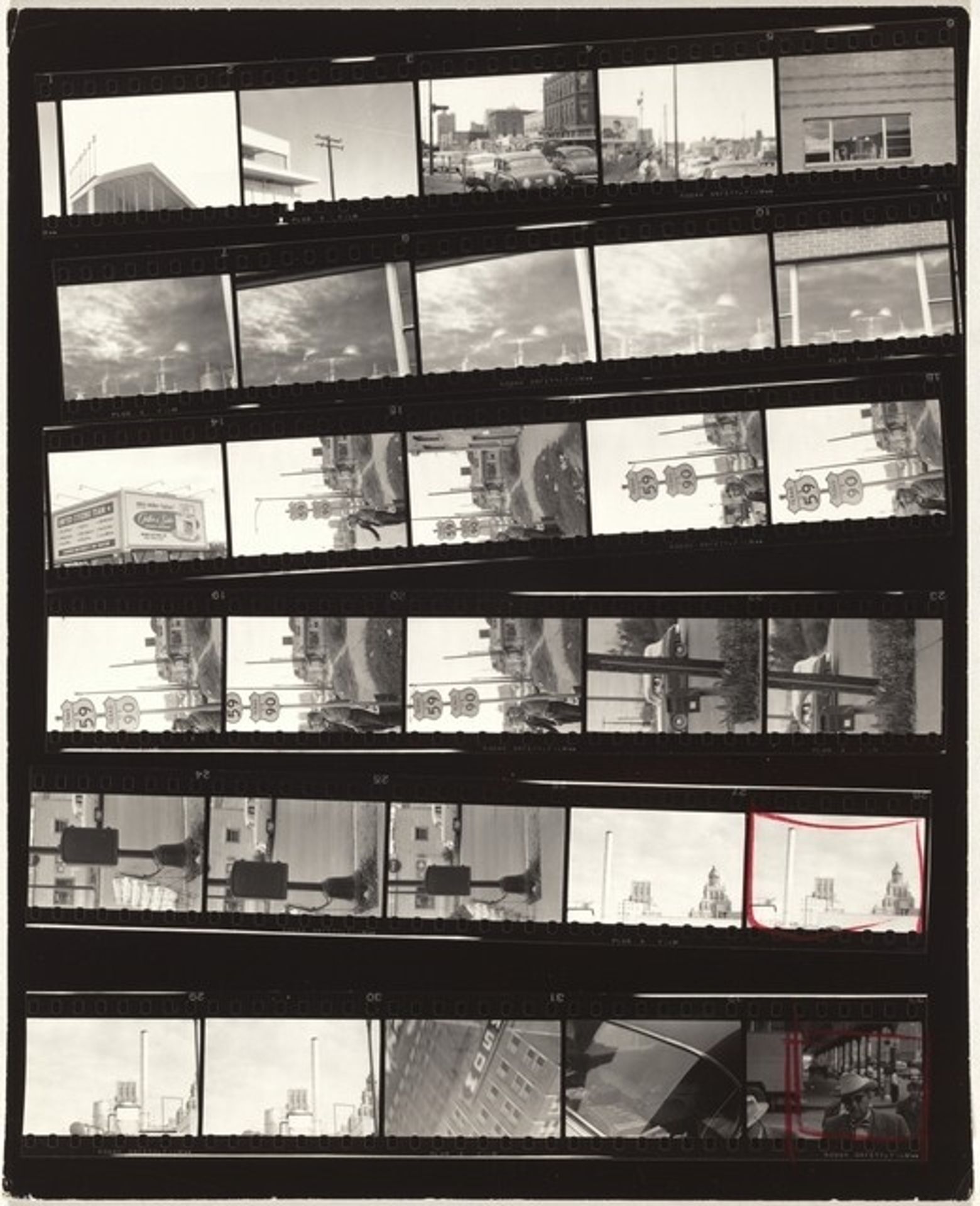
This is Robert Frank’s photographic work, "Guggenheim 366--Houston, Texas" made with film, a material with its own specific texture and grain. Looking at this contact sheet, you see a collection of moments, not a single, decisive one. It’s like a sketchbook page, full of experiments. Each frame is a little study in seeing. Frank's composition is very raw, kind of accidental. Some frames are blurry or tilted, which gives the feeling of immediacy. In the middle of the sheet, there is a frame with the number '18-18', repeated twice, which is mirrored. I read that as a formal exercise: a study of shape and form. It strikes me that this work is similar to Moholy-Nagy’s photographic investigations, thinking about the way that the camera sees, and the role of chance in the artistic process.
Guggenheim 366--Houston, Texas
1955


Artwork details
- Medium
- contact-print, photography, gelatin-silver-print
- Dimensions
- overall: 25.3 x 20.5 cm (9 15/16 x 8 1/16 in.)
- Copyright
- National Gallery of Art: CC0 1.0
Tags
film photography
contact-print
street-photography
photography
gelatin-silver-print
monochrome photography
pop-art
cityscape
realism
monochrome
Comments
Be the first to share your thoughts about this work.
About this artwork
This is Robert Frank’s photographic work, "Guggenheim 366--Houston, Texas" made with film, a material with its own specific texture and grain. Looking at this contact sheet, you see a collection of moments, not a single, decisive one. It’s like a sketchbook page, full of experiments. Each frame is a little study in seeing. Frank's composition is very raw, kind of accidental. Some frames are blurry or tilted, which gives the feeling of immediacy. In the middle of the sheet, there is a frame with the number '18-18', repeated twice, which is mirrored. I read that as a formal exercise: a study of shape and form. It strikes me that this work is similar to Moholy-Nagy’s photographic investigations, thinking about the way that the camera sees, and the role of chance in the artistic process.
Comments
Be the first to share your thoughts about this work.