
Curatorial notes
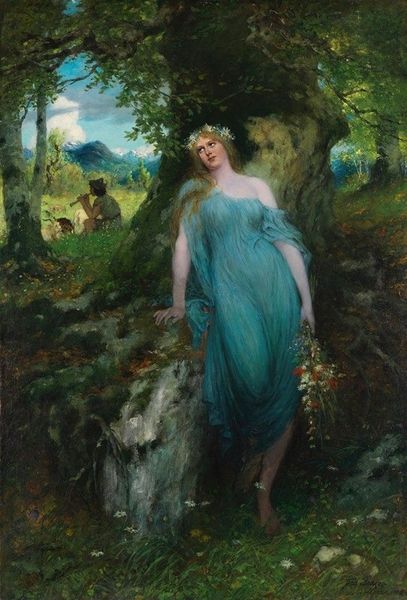
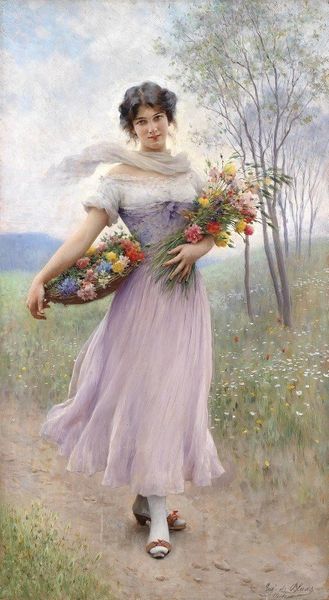
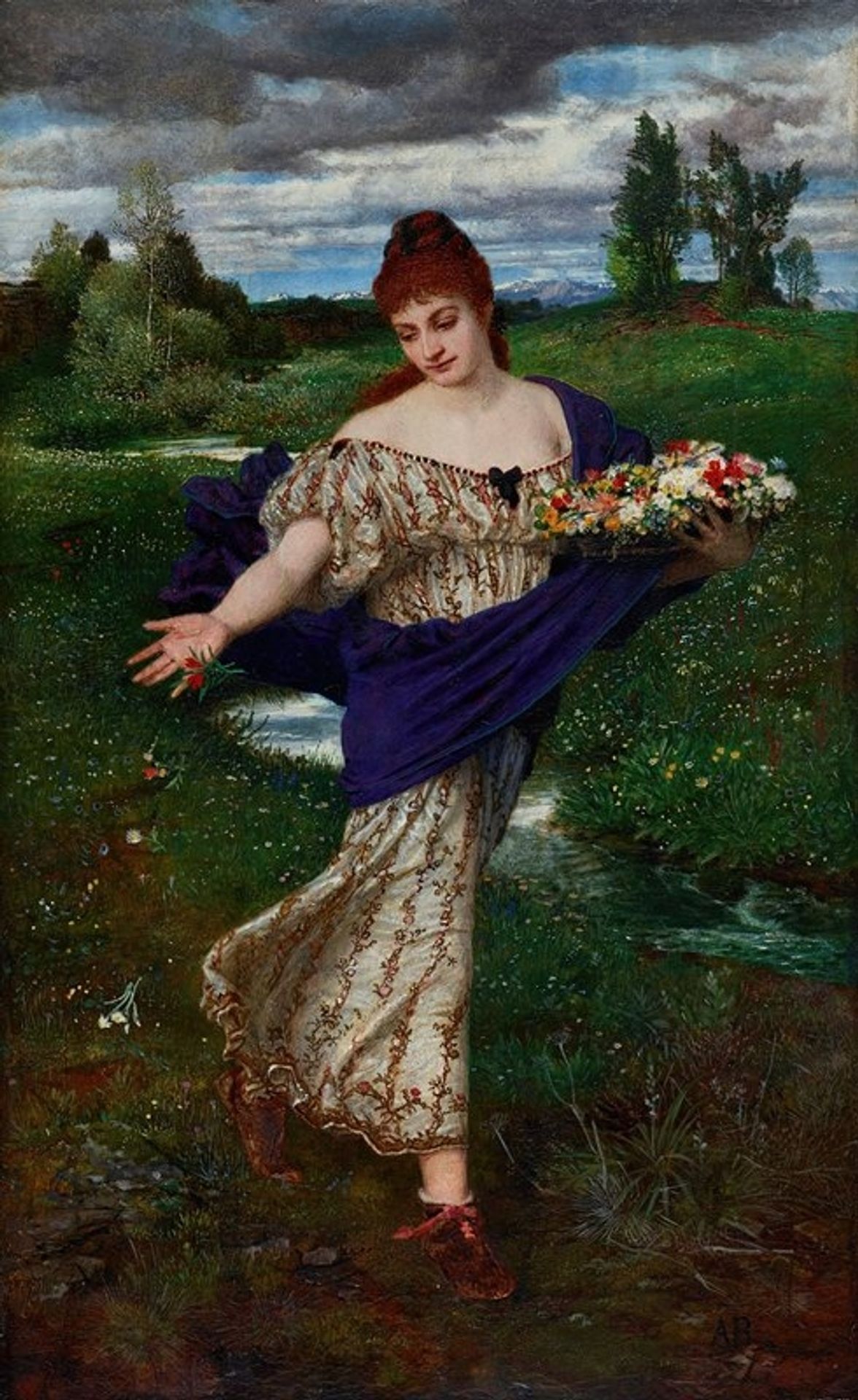
Curator: What can you tell me about this piece? Editor: This is Arnold Böcklin’s "Flora, scattering flowers," painted in 1875. It feels like a celebration of spring, or perhaps the feminine divine. What’s your take on it? Curator: I see Böcklin engaging with Romanticism’s fascination with nature, but through a lens that subtly challenges patriarchal structures. Consider Flora, the Roman goddess of flowers. She’s not merely a passive figure of beauty; she’s actively scattering, distributing, perhaps even democratizing beauty. Think about what it meant to depict a female figure as a generative force in the late 19th century. How does this image function within discussions of female agency? Editor: So, beyond just being a pretty picture, you’re suggesting it challenges traditional views of women? Curator: Precisely. Notice her gaze; it’s downward, introspective, but her body is in motion, actively changing the landscape. It prompts us to consider: Who has access to beauty? Who gets to define it? And what does it mean to freely distribute it, like Flora scattering those blossoms? Her agency isn’t overt, like a revolutionary, but subversive. Böcklin gives Flora a role, as if she is re-defining femininity. Editor: I never considered the democratization of beauty. Now I'm thinking about access, privilege...it’s so much more complex than I initially saw! Curator: Exactly. And Böcklin places her not in a grand hall or a heavenly throne, but in a very earthy landscape, connected with nature itself. I encourage you to look more into late 19th century views around women as goddesses and the art historical representation thereof. What happens to your reading of the artwork then? Editor: That’s really interesting. It completely shifts my understanding of what this painting is doing. Curator: Excellent. These connections open up new avenues of interpretation and invite conversations that are much bigger than just aesthetics.