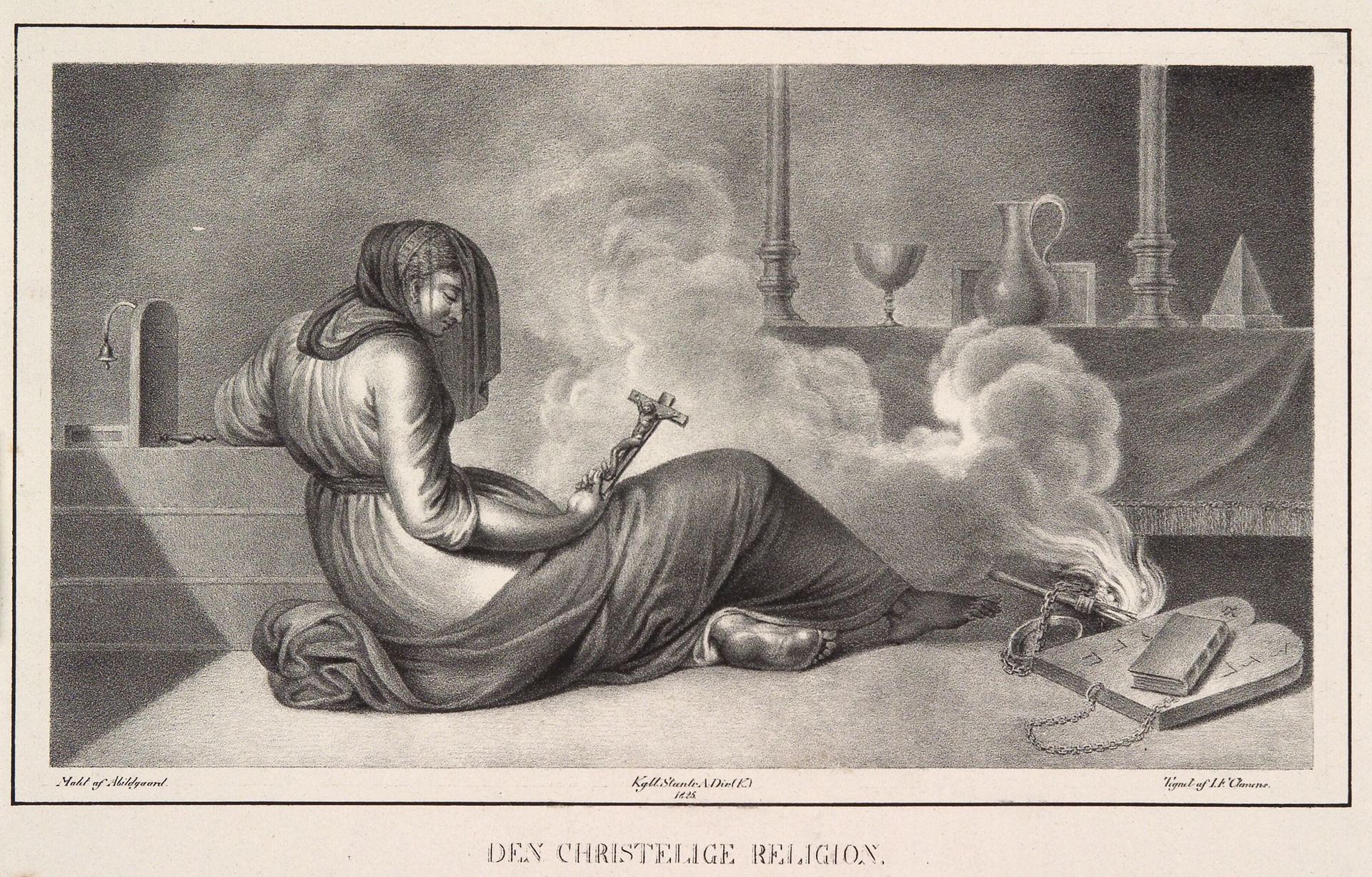
1825
Den christelige Religion


Listen to curator's interpretation
Curatorial notes
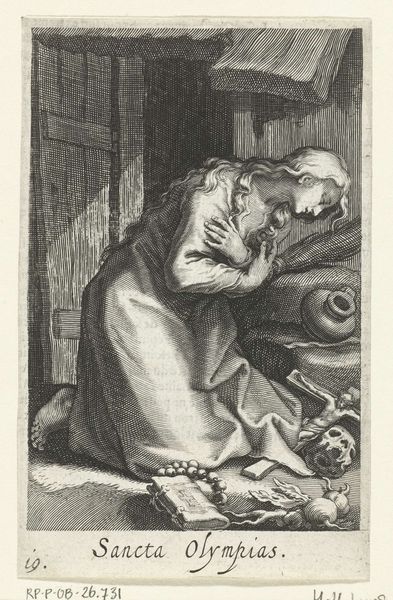
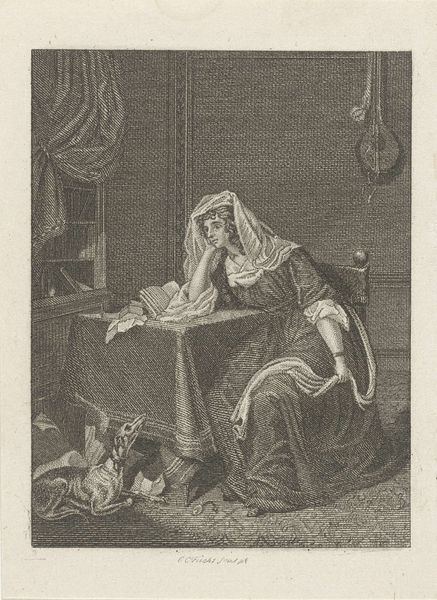
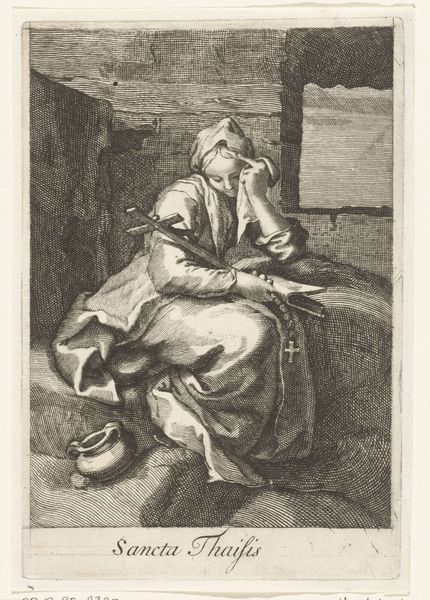
Editor: Here we have J.F. Clemens's "Den christelige Religion," a lithograph from 1825. The atmosphere is rather somber, don’t you think? A woman sits with a cross, while nearby a book burns… It seems like a commentary on something, but on what? How do you interpret this work? Curator: The burning book juxtaposed with the figure clutching the cross is highly suggestive. This piece comes from a period rife with religious and political upheaval. Clemens, whether consciously or not, captures this tension perfectly. The lithograph speaks to the socio-political tensions around faith itself. Is the book representing outdated dogma being questioned or even rejected? Editor: That's a powerful reading. The woman seems contemplative, almost mournful. It challenges the simplistic view of unwavering faith. Is she wrestling with these conflicting ideas? Curator: Precisely. Clemens subtly introduces the element of doubt and inquiry, concepts not always welcomed by established institutions. The work pushes us to consider who benefits from upholding these traditional interpretations of faith and who might suffer as a result. And who gets to define religious truth? Editor: So, it’s not just a peaceful religious scene; it’s a visual representation of the debates about power, tradition, and individual belief within society. It really makes you think about whose voices were suppressed and the cost of blindly following tradition. Curator: Exactly. The romanticism in the rendering combined with the gravity of the symbols creates a fascinating statement on religion’s intersection with personal liberty and societal control. We could spend hours unpacking Clemens's perspectives, which is precisely why art history and contemporary theory must work in concert. Editor: I didn't expect to see so much social commentary in what initially seemed like a straightforward religious image! It is far more subversive than I realized.