
Curatorial notes
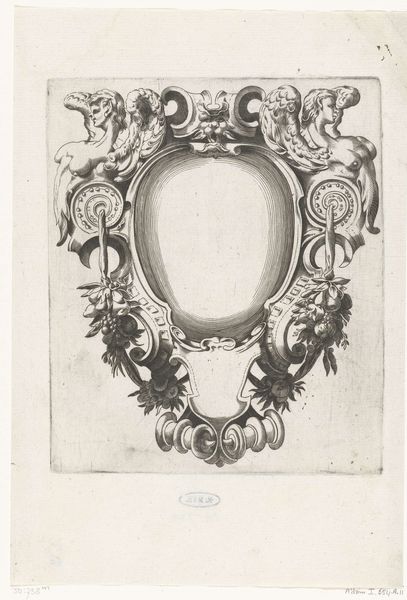
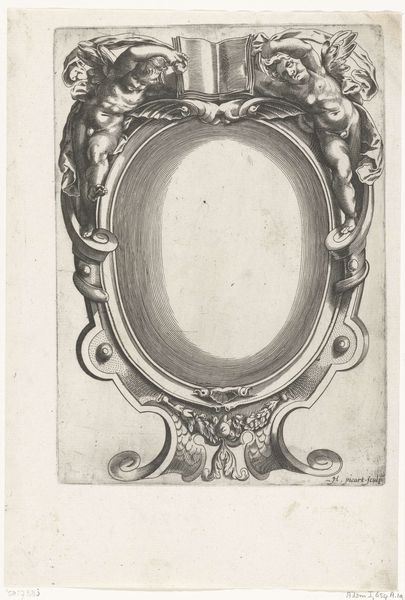
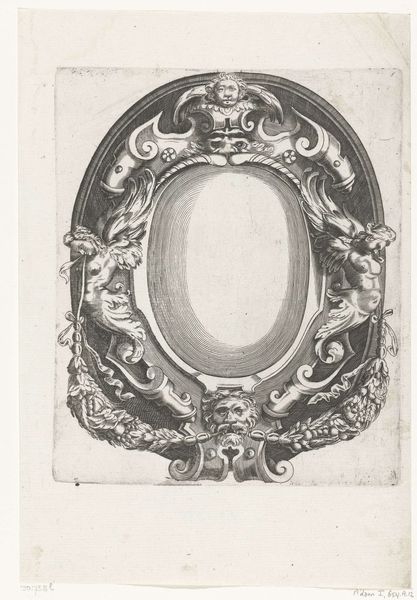
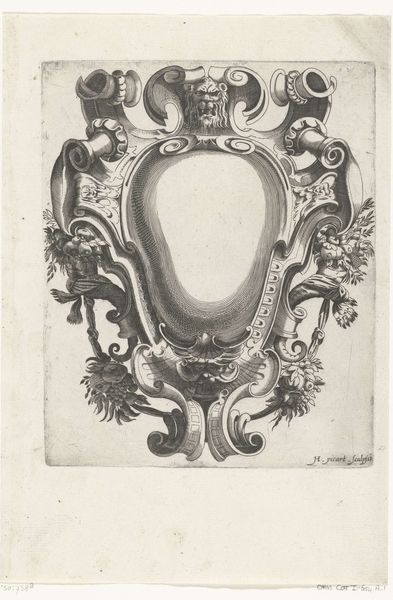
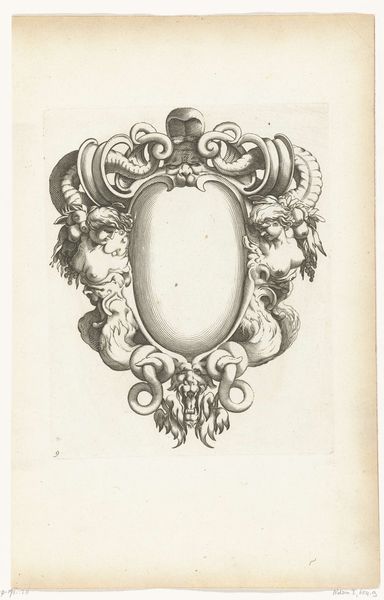
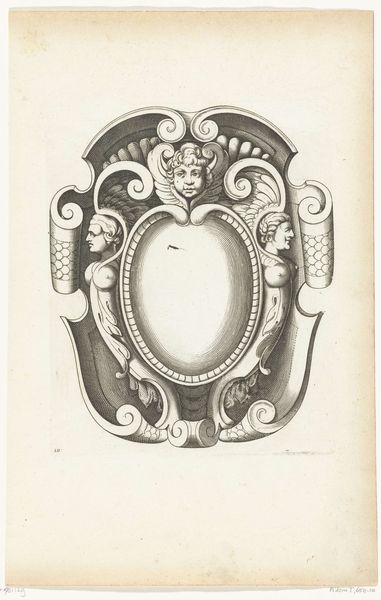
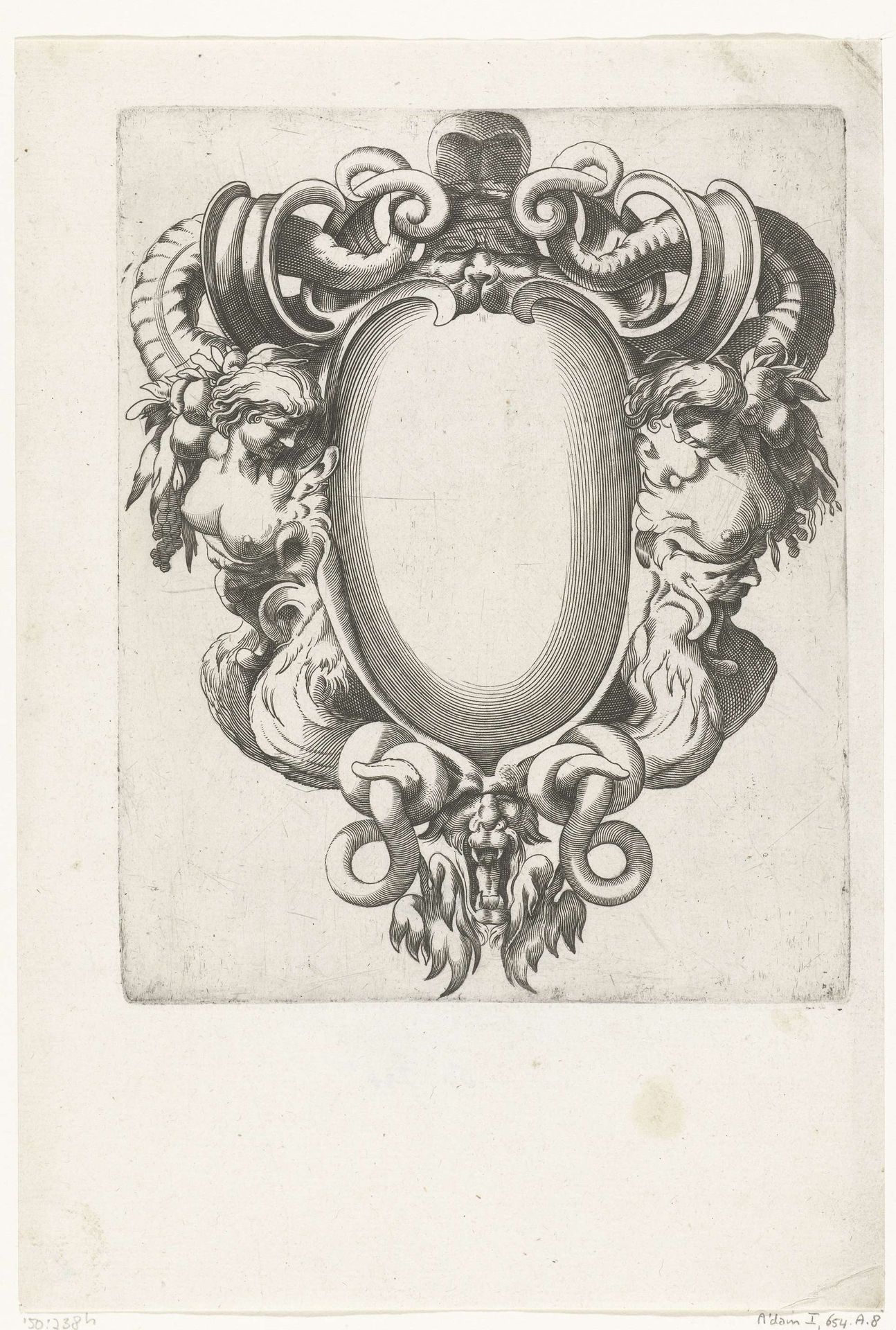
This print, titled "Cartouche met twee nereïden", was made by H. Picart using an etching technique. At its core, the image encapsulates the 17th-century fascination with ornate designs, reflecting a period where artistic expression was deeply intertwined with social status. The cartouche, adorned with mythical sea nymphs known as Nereids and grotesque masks, speaks volumes about the cultural values of the time. Originating in the Netherlands, this era was marked by burgeoning trade and a wealthy merchant class eager to display their affluence through decorative arts. Institutions such as the Guilds played a key role in shaping artistic production, ensuring quality and adherence to established styles. This cartouche, with its elaborate ornamentation, subtly reinforces existing social hierarchies, catering to the tastes of the elite. Understanding this artwork requires us to delve into the historical archives, examining patronage records and guild regulations. Only then can we fully appreciate its role in shaping the visual culture.