About this artwork
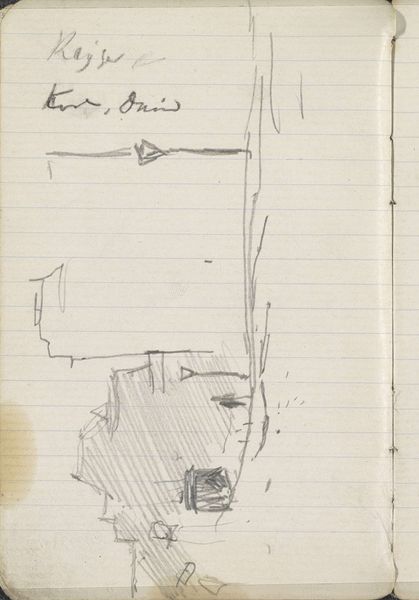
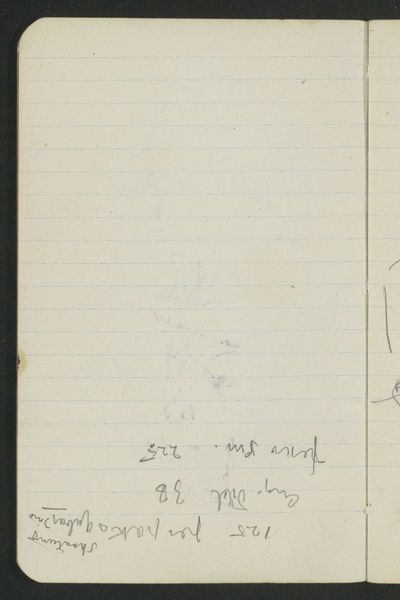
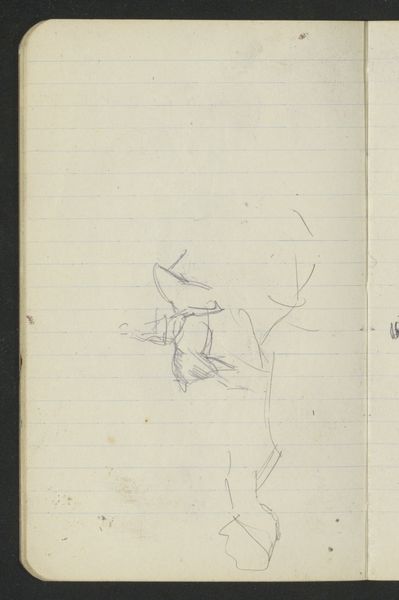
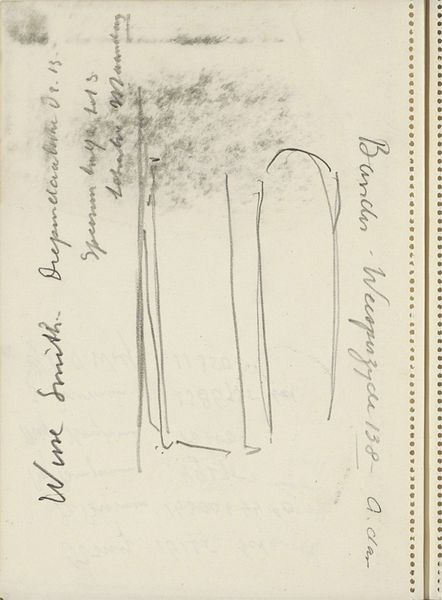
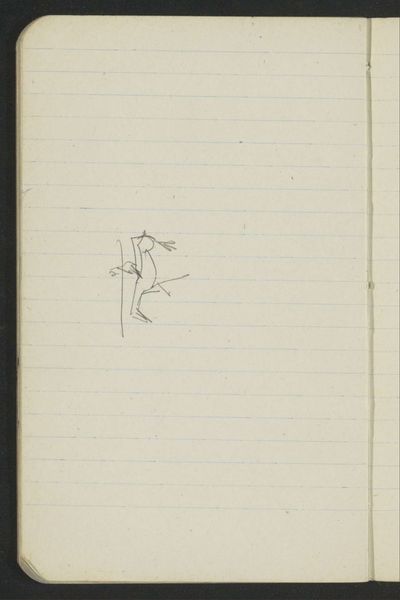
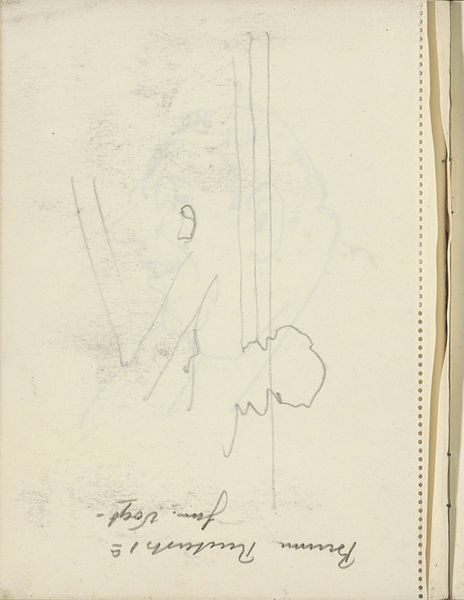
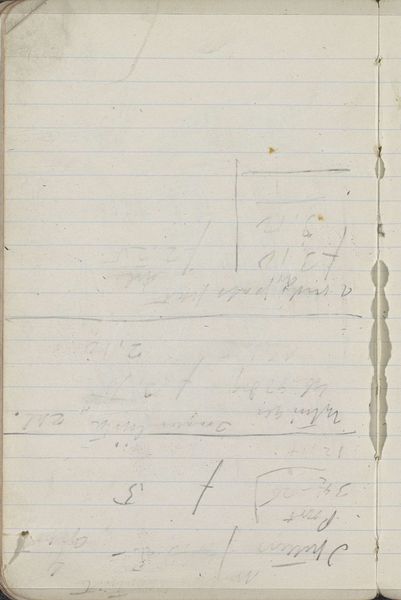
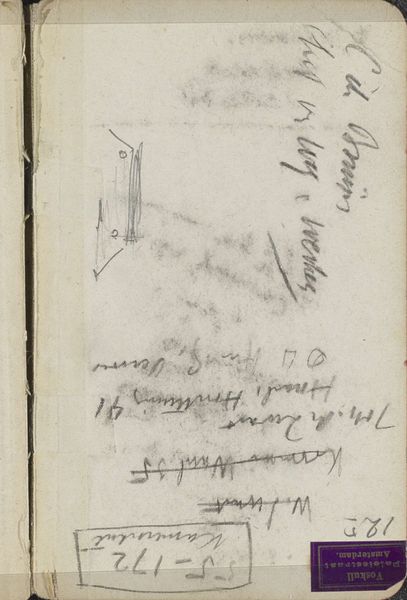
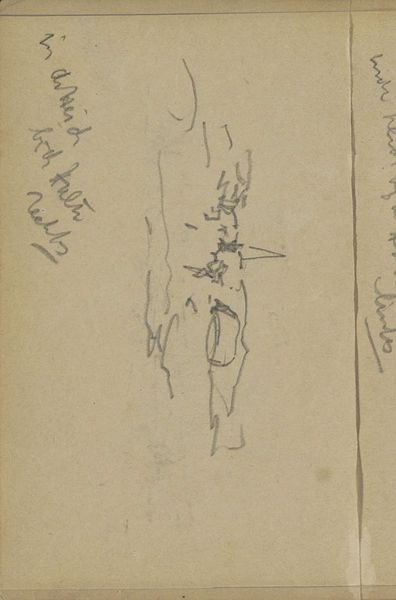
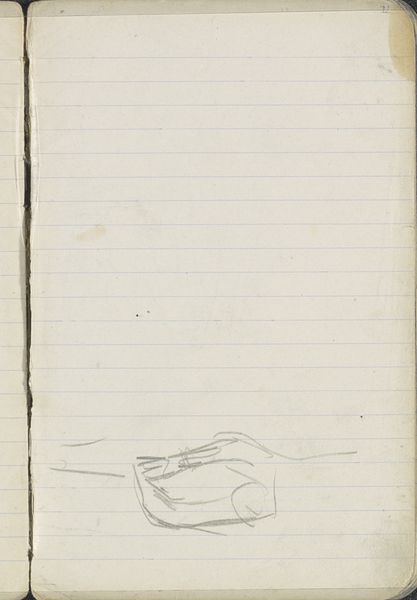
This drawing, possibly of a horse's leg, was created by George Hendrik Breitner. Note the apparent simplicity of the sketch, rendered in pencil on lined paper, seemingly torn from a notebook. The page's lines create an underlying grid that contrasts with the freehand lines capturing the essence of the subject. The sketch is striking in its economy, a demonstration of Breitner's technical skill. He distills the form to its most essential lines, rendering the leg with quick strokes that emphasize shape and structure over detail. Here, the composition is sparse, isolating the subject within the blank space of the paper. This contrasts with the density of Breitner's paintings. The visible lines of the notebook paper are as much a part of the piece as the drawing itself. They remind us of the everyday context from which art emerges. This piece invites ongoing interpretation, not as a definitive statement, but as part of an artistic process.
Studie, mogelijk van een paardenbeen
1896 - 1901

George Hendrik Breitner
1857 - 1923Location
RijksmuseumArtwork details
- Location
- Rijksmuseum
- Copyright
- Rijks Museum: Open Domain
Comments
Share your thoughts
About this artwork
This drawing, possibly of a horse's leg, was created by George Hendrik Breitner. Note the apparent simplicity of the sketch, rendered in pencil on lined paper, seemingly torn from a notebook. The page's lines create an underlying grid that contrasts with the freehand lines capturing the essence of the subject. The sketch is striking in its economy, a demonstration of Breitner's technical skill. He distills the form to its most essential lines, rendering the leg with quick strokes that emphasize shape and structure over detail. Here, the composition is sparse, isolating the subject within the blank space of the paper. This contrasts with the density of Breitner's paintings. The visible lines of the notebook paper are as much a part of the piece as the drawing itself. They remind us of the everyday context from which art emerges. This piece invites ongoing interpretation, not as a definitive statement, but as part of an artistic process.
Comments
Share your thoughts