1702 - 1731
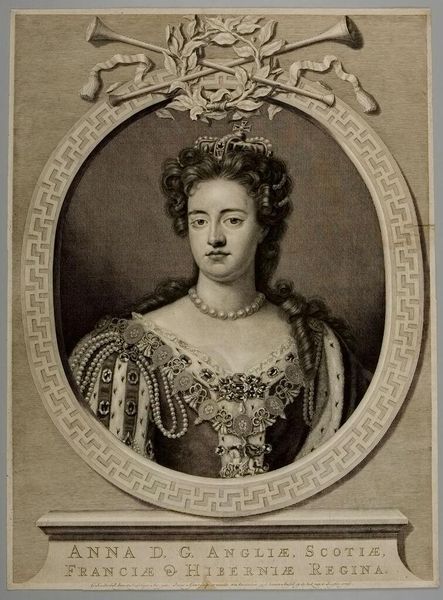
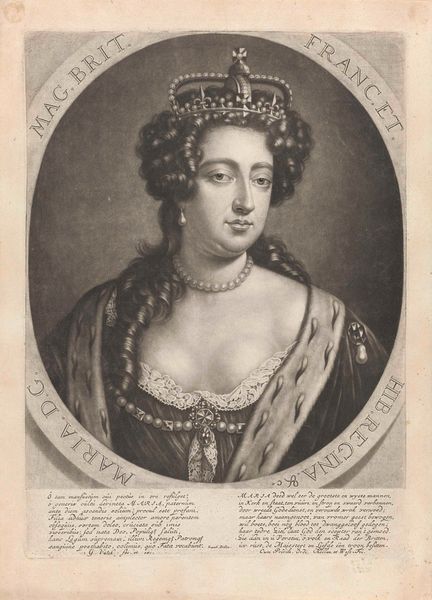
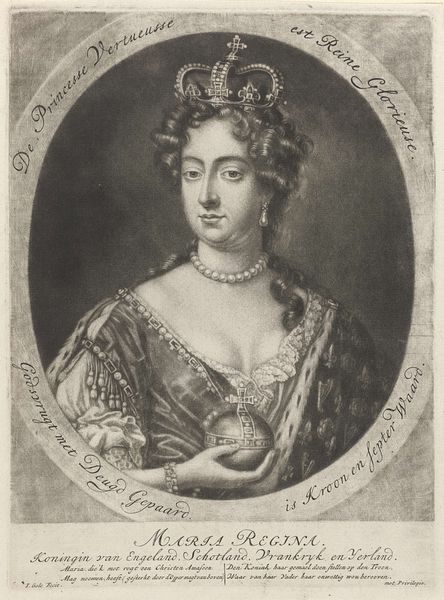
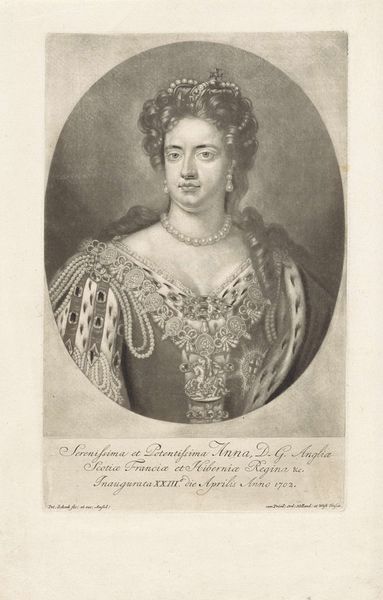
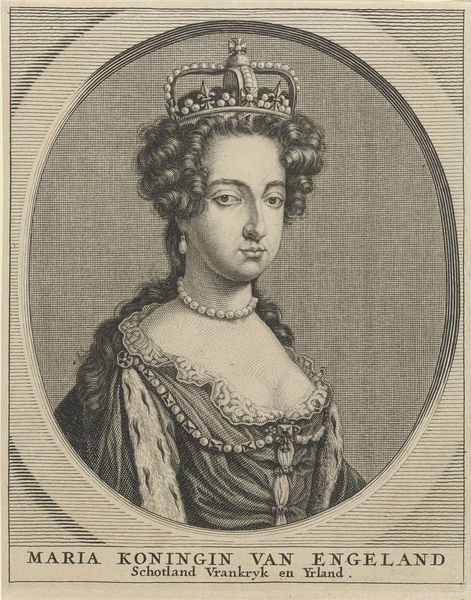
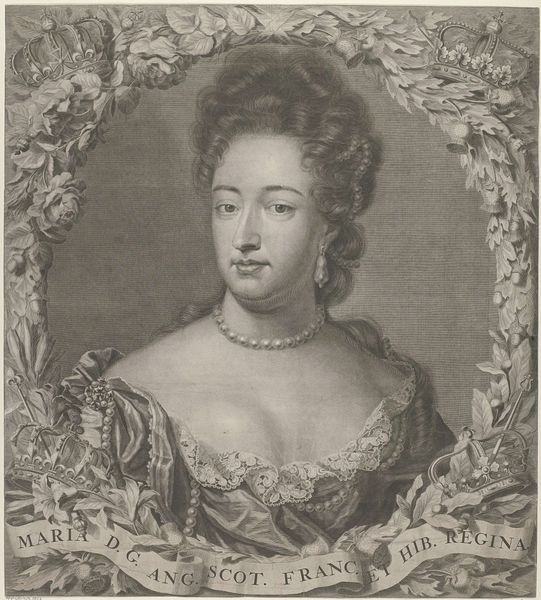
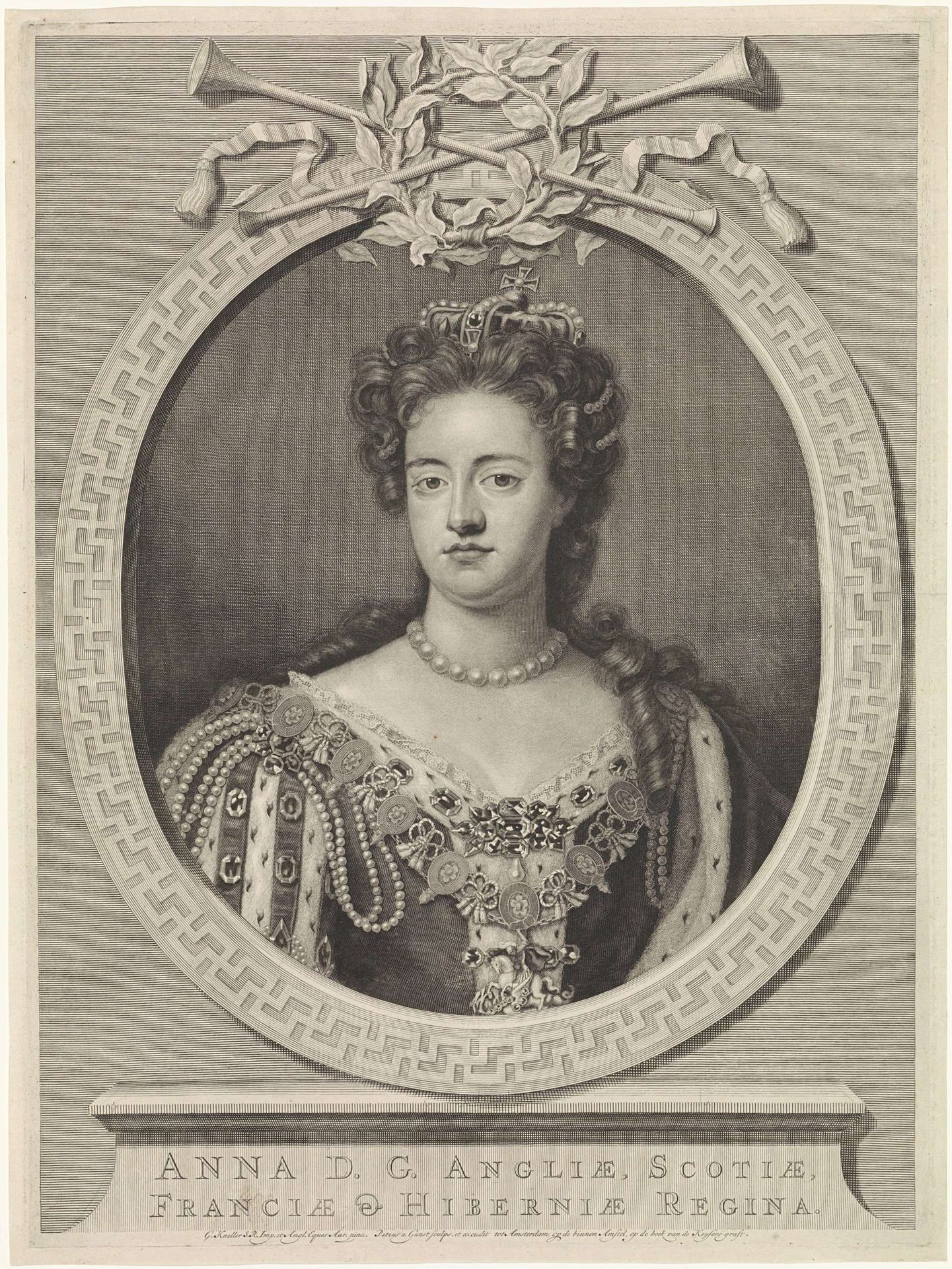
Portret van koningin Anna I van Engeland

Pieter van Gunst
1659 - 1724Location
RijksmuseumListen to curator's interpretation
Curatorial notes
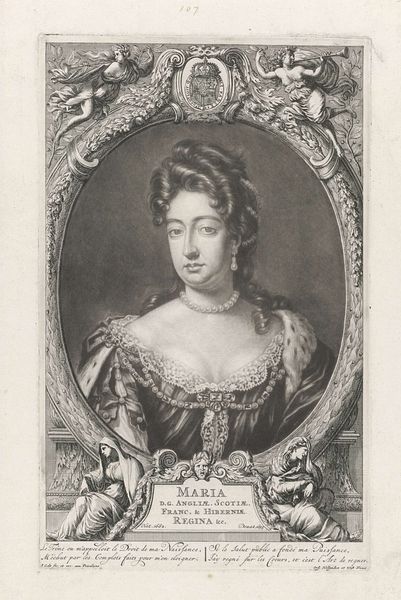
This is Pieter van Gunst’s engraving of Queen Anne I of England. Consider the visual language surrounding her image. The most dominant symbols are the crown atop her head and the trumpets and wreath above the frame. The crown, of course, signifies royal authority. The trumpets, traditionally associated with fanfare and announcements, combined with the wreath symbolizing victory, jointly broadcast her triumph and reign. Think back to Roman emperors adorned with laurel wreaths, a tradition that continues to echo through centuries. Interestingly, the frame itself is decorated with a Greek key pattern, a motif found in ancient architecture and textiles. This pattern, with its continuous, winding line, may subconsciously evoke ideas of eternity, perhaps of the timelessness of the monarchy. The image is psychologically compelling. This carefully constructed image seeks to project power and stability. These symbols create a portrait deeply embedded in historical consciousness, linking Anne to a chain of rulers and empires throughout time.