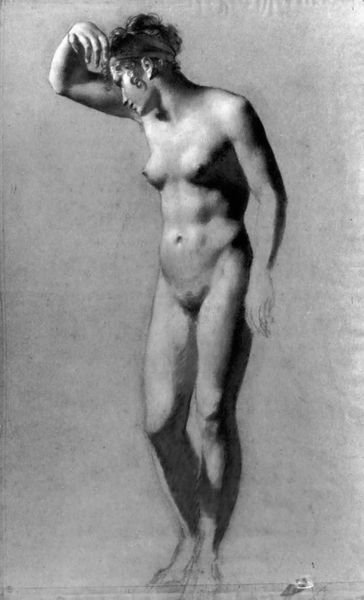
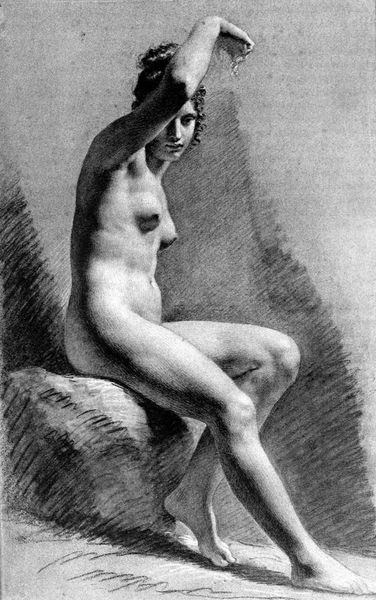
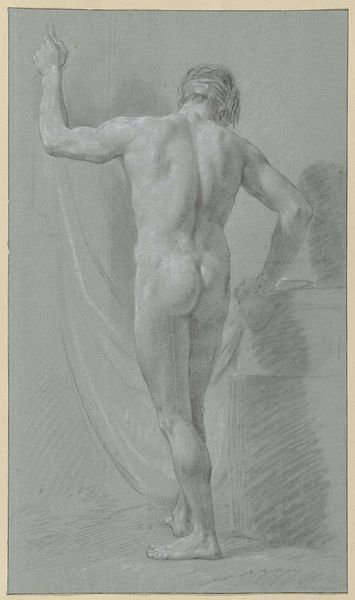
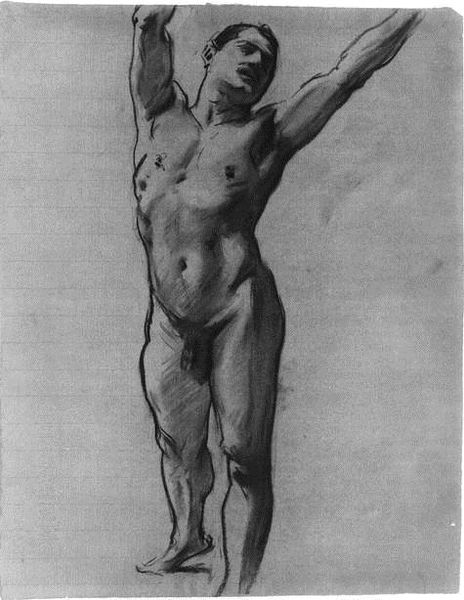
drawing, dry-media, charcoal
drawing
neoclacissism
charcoal drawing
figuration
form
dry-media
male portrait
portrait drawing
charcoal
nude
male-nude
Copyright: Public domain
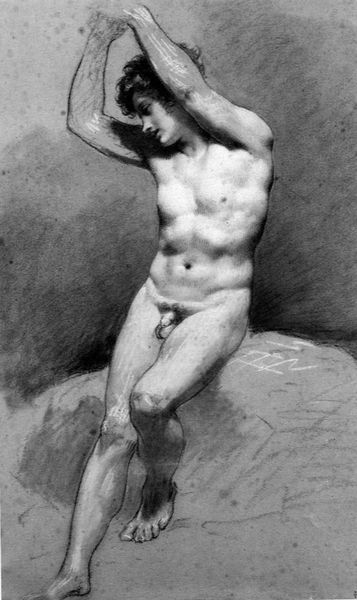
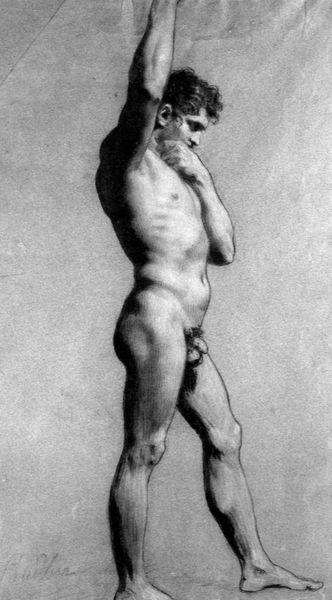
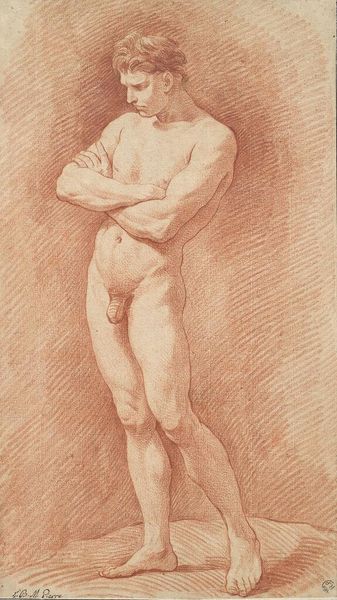
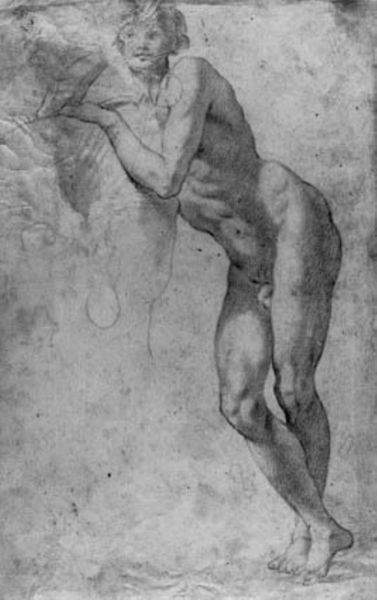
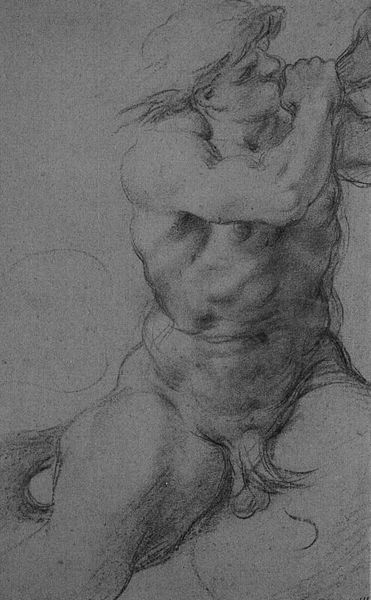
Pierre-Paul Prud’hon made this sketch of a male nude in graphite, sometime between the late 1700’s and early 1800’s. Prud’hon lived through the French Revolution, and later became known for his allegorical paintings which glorified Napoleon’s regime. In this drawing, the model’s averted gaze and the shadow across his eyes could suggest both the artist’s and the model’s complex positions in society during a time of political and social upheaval. The way he grasps his wrists hints at a sense of internal conflict, or perhaps physical or emotional constraint. What does it mean for the artist and the model to create an image which invites a viewer to look, when the figure is unable to meet their gaze? Prud’hon's male nude diverges from earlier heroic depictions, showing a more vulnerable and human side. This shift towards more realistic and emotionally accessible figures reflects broader cultural changes.
Comments
No comments
Be the first to comment and join the conversation on the ultimate creative platform.
 React
React Comment