

1634
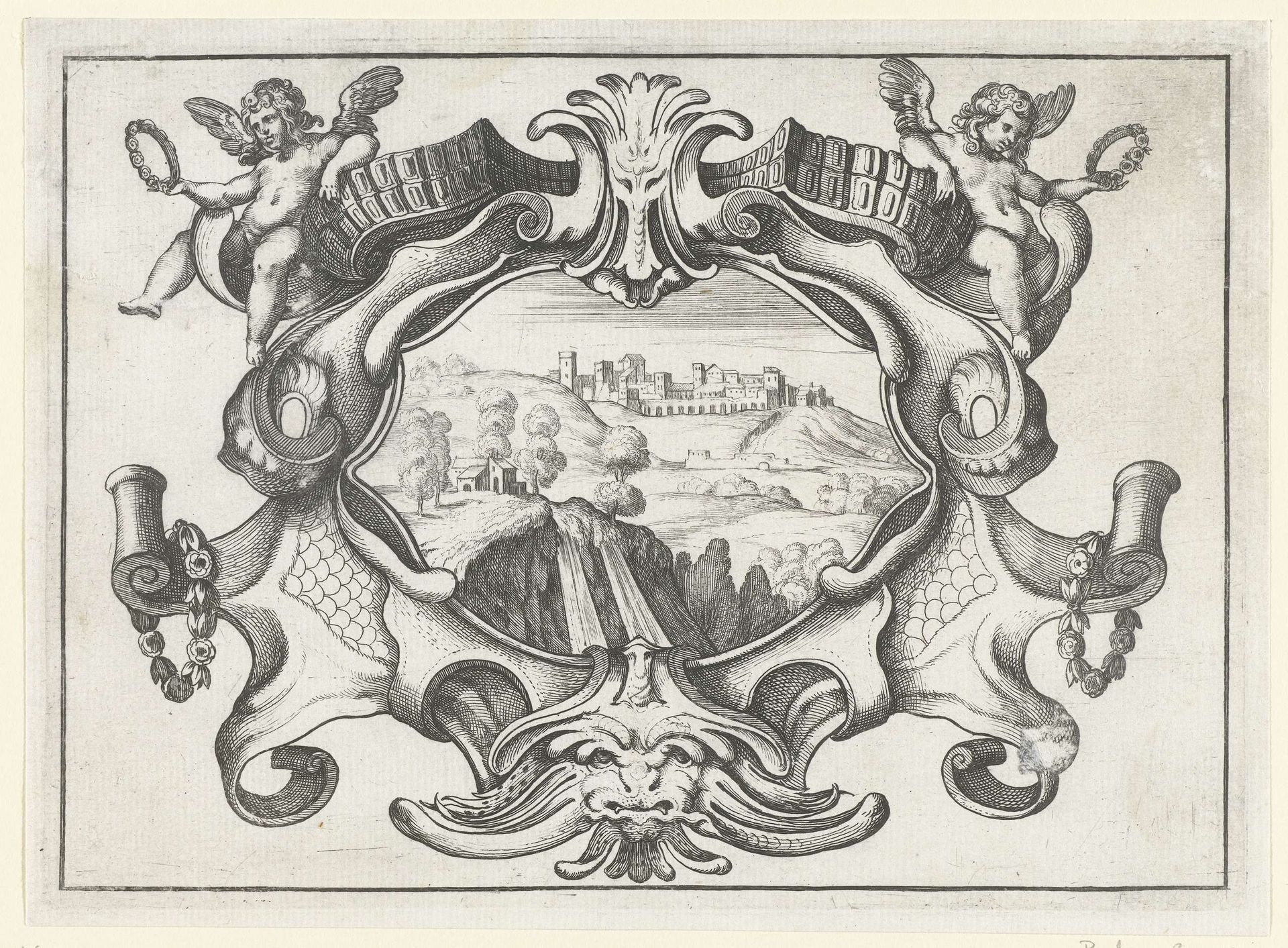
Cartouche met putti op consoles

Listen to curator's interpretation
Curatorial notes
Daniel Rabel created this print called "Cartouche with putti on consoles" sometime in the early 17th century. It features an elaborate frame with winged putti holding wreaths. These figures, associated with the classical tradition, flank a landscape view. This sort of print gives us insight into the world of artistic patronage in France at the time. Rabel was a court artist and designer for King Louis XIII. Prints like this served as models for tapestries, furniture, and interior decoration. Ornament became important for asserting status, and was a key component of royal display. The cartouche form itself would have framed a coat of arms, initials, or some other marker of aristocratic identity. Historians of prints and drawings consult collections of similar images to understand the circulation of visual motifs and the ways artists adapted and transformed them. The cultural meanings of ornament can only be understood through close attention to its social function.