Possibly 1677 - 1696
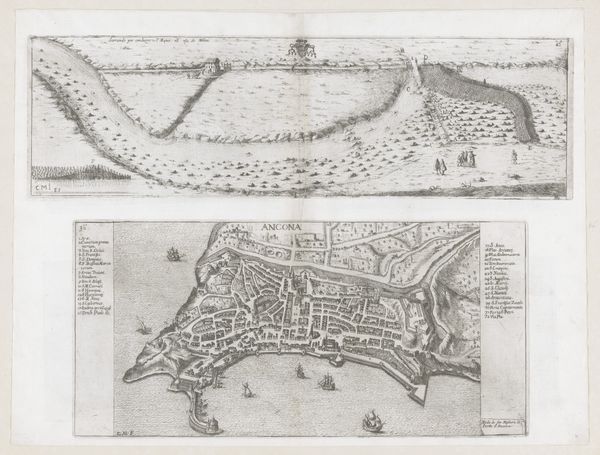
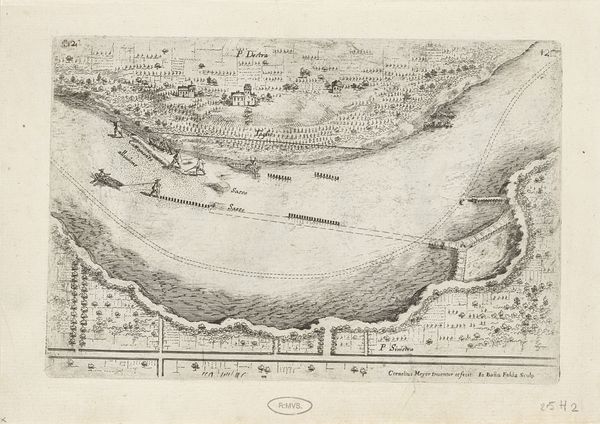
Bocht in de Tiber

Giovanni Battista Falda
1643 - 1678Location
RijksmuseumListen to curator's interpretation
Curatorial notes
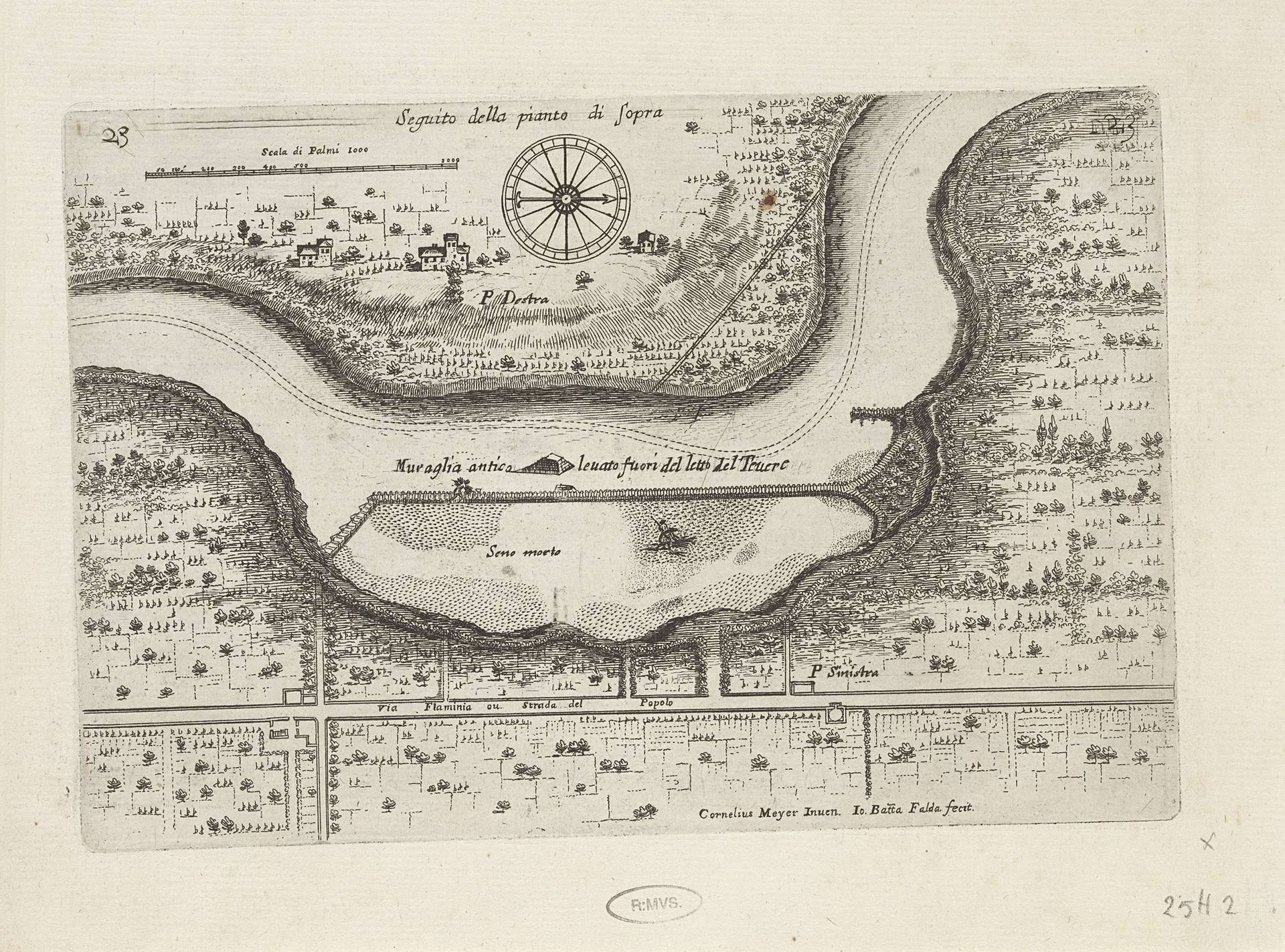
This is "Bocht in de Tiber," an engraving made by Giovanni Battista Falda around 1675. At first glance, it is a plan of the Tiber River, but look closer and you'll see a cartographic dance of symbolic expression. The river bends in a serpentine manner, echoing ancient symbols of cyclical renewal. Water, a fundamental element, represents not only physical sustenance but also the fluid nature of time and memory. See that compass rose? It doesn't merely point north; it evokes the human desire for direction amidst the currents of history. This symbol of orientation appears across cultures, from ancient mariners' charts to philosophical emblems, embodying our quest to navigate the unknown. The road, the Via Flaminia, is a connection to the past; an echo of a time where the road was the only form of binding people together. Consider how such maps, like collective dreams, shape our understanding of place and belonging. The symbols repeat, evolve, and remind us of the perpetual reshaping of meaning across time.