
Curatorial notes
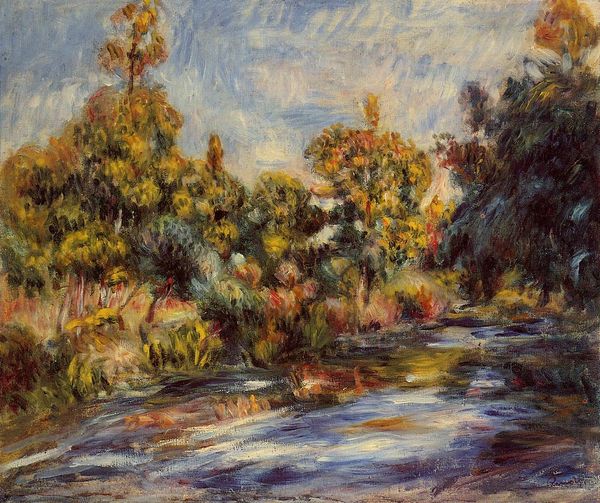
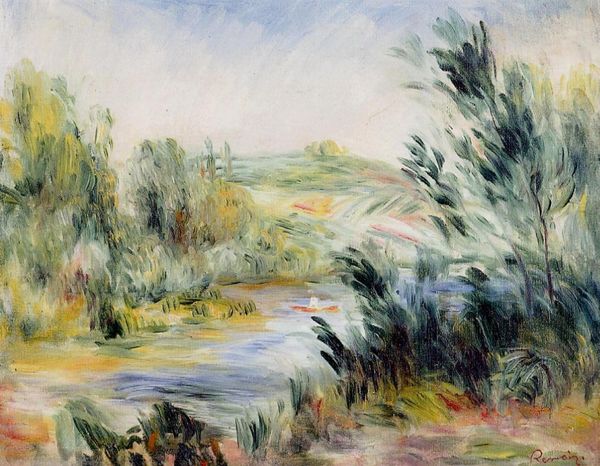
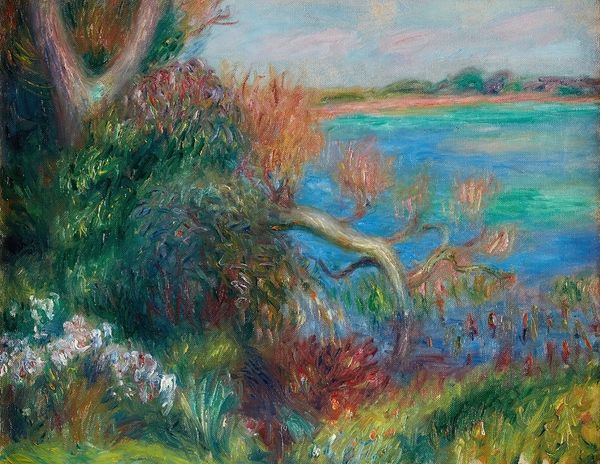
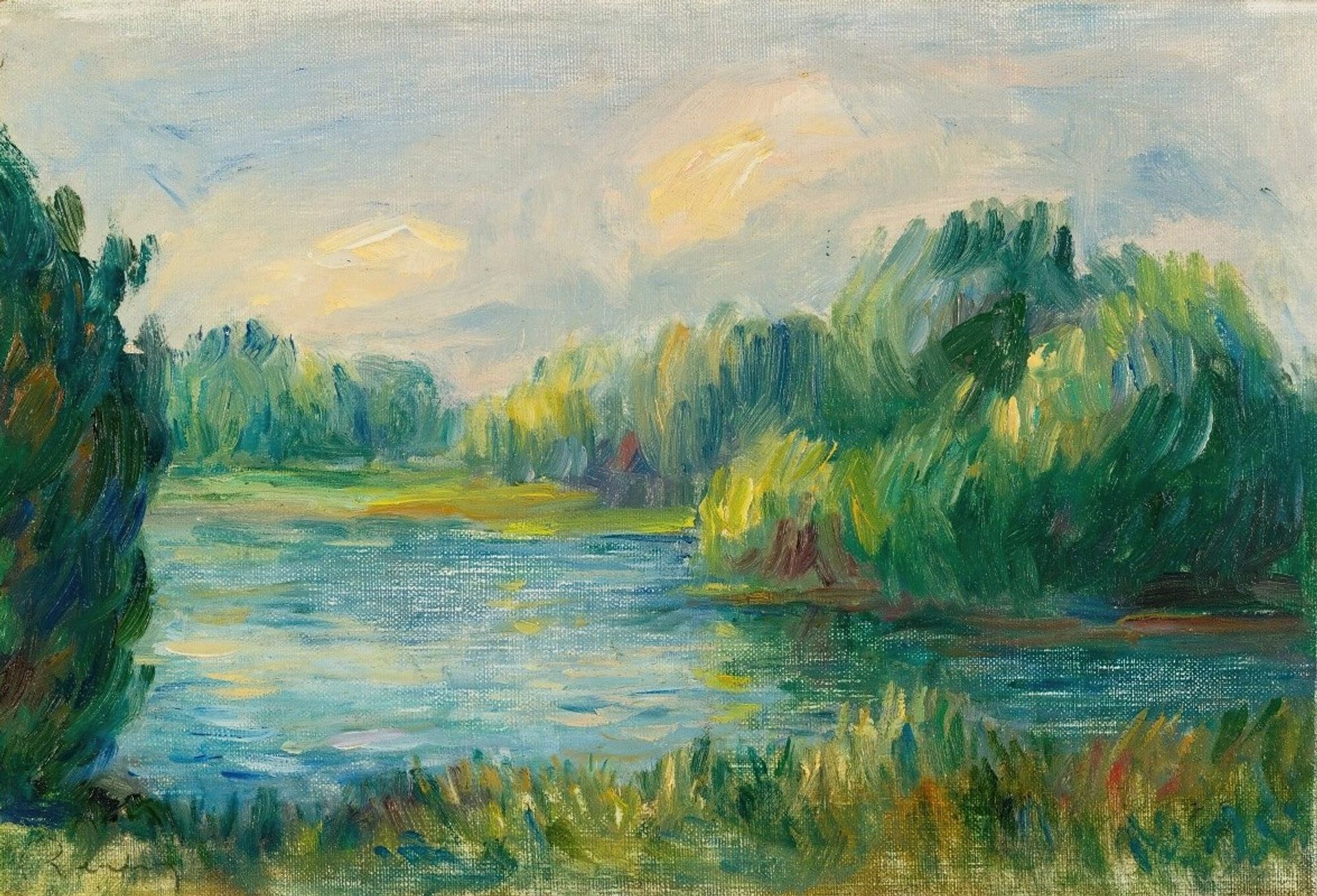
Editor: This is Pierre-Auguste Renoir’s “Bord De Rivière”, an oil painting, and from what I can gather, an Impressionist landscape. There’s such a serene quality to the water, but also this vibrancy in the brushstrokes. What stands out to you? Curator: For me, a painting like this is a portal into a specific historical context. Think about the rise of Impressionism in the late 19th century. It was a direct challenge to the rigid academic painting styles. These artists were breaking away, literally going *en plein air*, escaping the confines of the studio. Editor: How did that rebellion translate into the subject matter? Curator: Precisely! Renoir and his contemporaries weren’t just painting pretty landscapes; they were asserting a new way of seeing and a new relationship with nature. This "escape" wasn't accessible for many people; it underscores questions of class and leisure, even freedom. Who has the privilege to wander and observe nature freely? To paint it? What narratives are subtly excluded? Editor: That’s a perspective I hadn't considered. So it's not just about technique, but about questioning the power structures of the time? Curator: Absolutely! Look at the composition—the lack of distinct figures. The focus is on the sensory experience, the light, the movement of the water. In its own way, that’s a very radical statement. This challenges societal values related to how industrialisation has affected society in social classes and genders, doesn’t it? Editor: It's interesting how a seemingly tranquil scene can be so charged with meaning. Thank you for the additional information! Curator: It's paintings like these that continually remind us that art is never created in a vacuum; that the canvas may well also tell us who exactly gets to be inside the room to observe and comment on it.