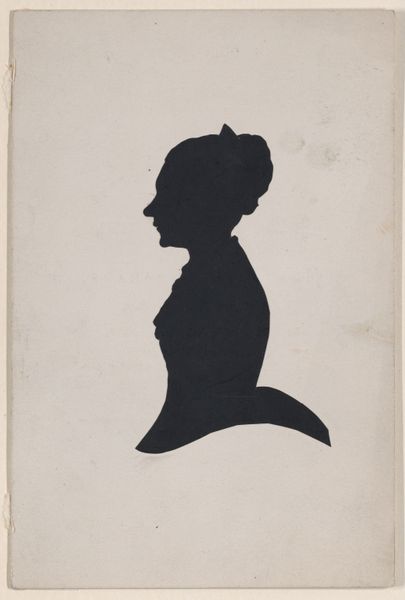
Dimensions: height 149 mm, width 105 mm
Copyright: Rijks Museum: Open Domain
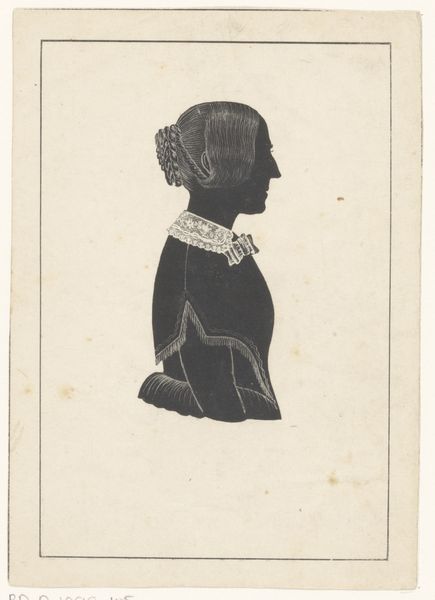
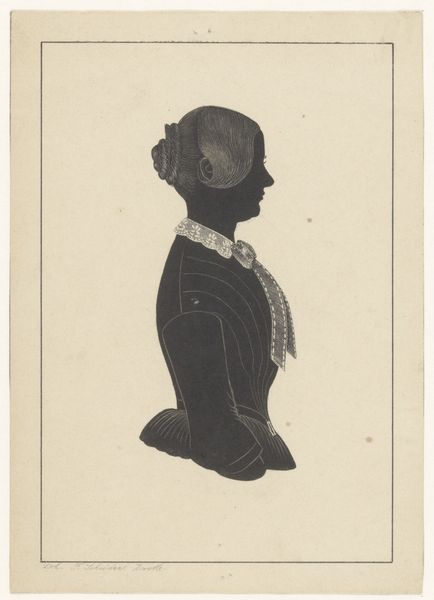
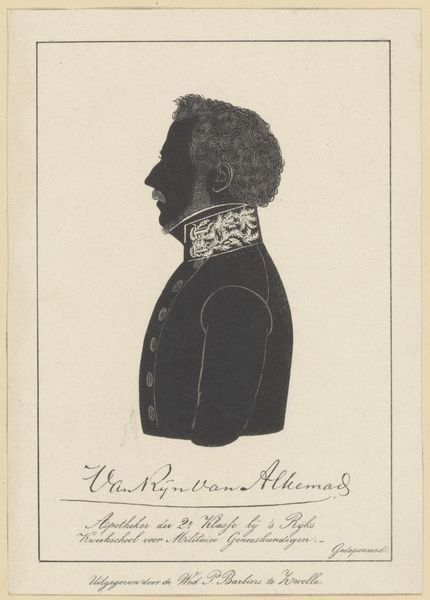
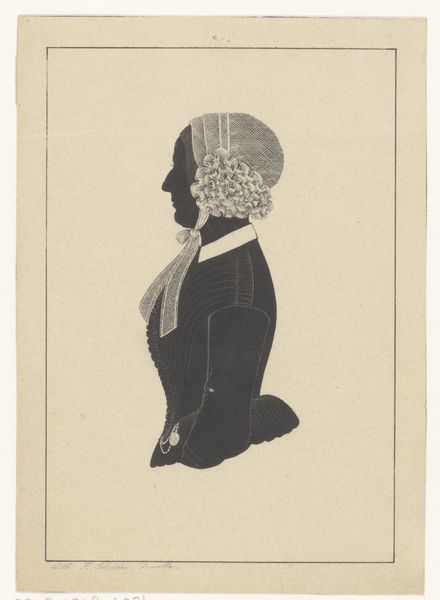
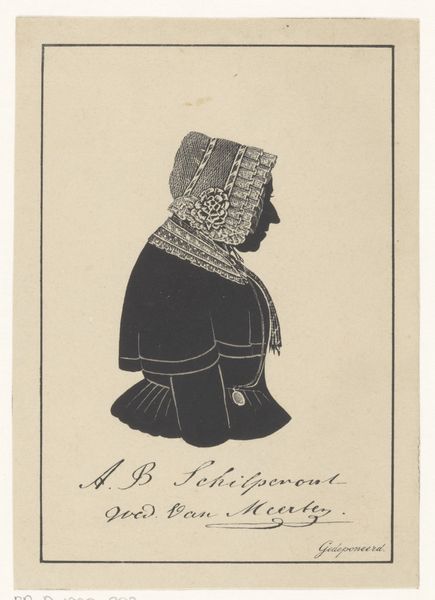
Editor: This is a silhouette portrait of J.L. Stramrood-Hartmann, created between 1848 and 1862 by Pieter (IV) Barbiers. It's rendered in ink on paper, and I'm immediately struck by the intricate detail achieved with such limited means. How would you interpret this piece? Curator: From a materialist perspective, let's consider the function of a silhouette in the mid-19th century. It’s not high art in the traditional sense, yet it represents a fascinating intersection of craft, labor, and social status. Silhouette portraits provided a relatively affordable means for people, often middle-class individuals like J.L. Stramrood-Hartmann, to possess a likeness of themselves or their loved ones. How does that challenge our understanding of portraiture at the time? Editor: It certainly democratizes it. But wasn't photography becoming more accessible around that period as well? Where does that leave silhouettes in the broader context of portrait making? Curator: Precisely! The rise of photography posed a challenge, but silhouettes offered unique advantages. Consider the skills involved – precision cutting, a degree of artistic interpretation in capturing likeness with so few details. And remember that ink and paper were becoming more readily available, facilitating broader artistic creation among diverse populations. The accessibility of materials democratized art-making. Would you say it gives us insights into gender or class? Editor: Definitely! This particular portrait, with its delicate lace and ribbon details rendered in ink, speaks to a certain level of refined craftsmanship but also perhaps the sitter's aspirations. So, it’s not just a likeness but also a statement? Curator: Exactly. Think about the social rituals around commissioning and displaying such an image. This wasn't merely a decorative object; it was a marker of social identity. Reflecting on the means of production, labor, and materials helps us read a portrait like this anew, don’t you agree? Editor: Yes, it highlights that this drawing does more than just show a person, it captures a whole world of making and consumption. Thank you!
Comments
No comments
Be the first to comment and join the conversation on the ultimate creative platform.
 React
React Comment