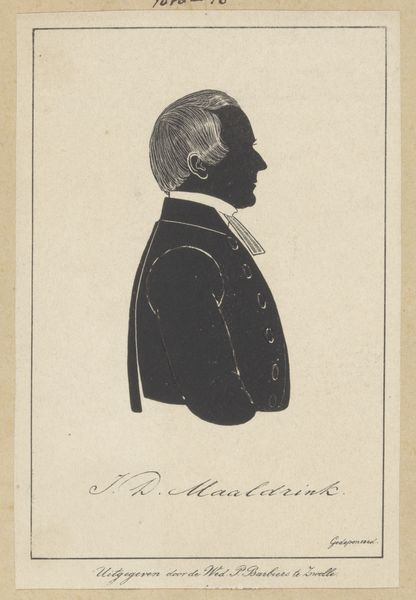
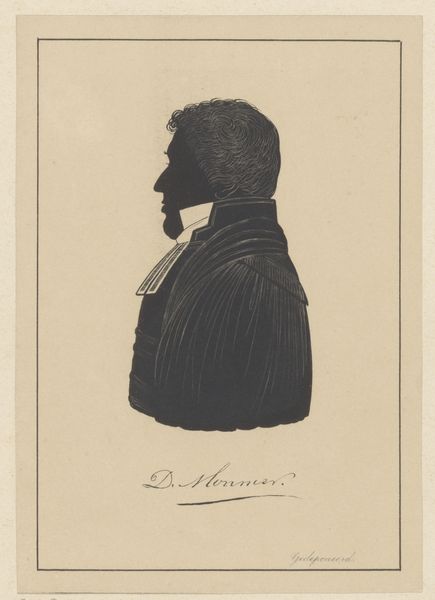
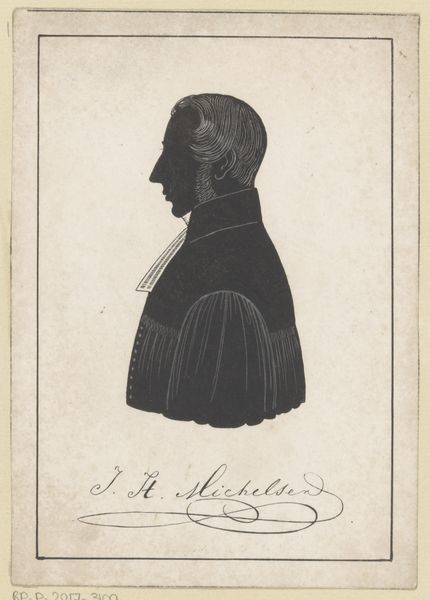
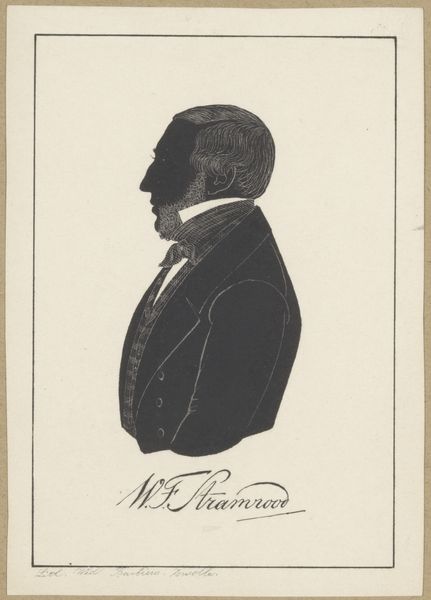
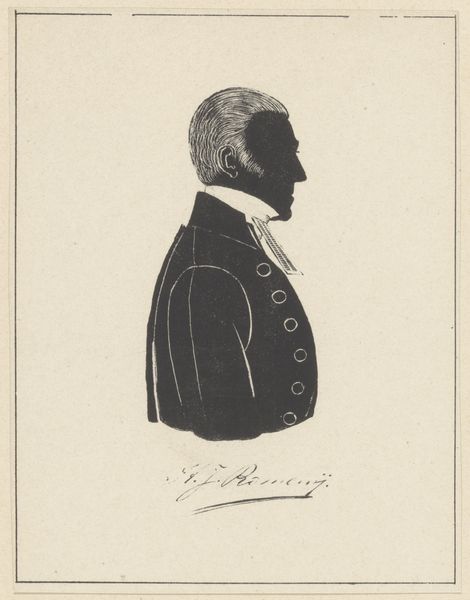
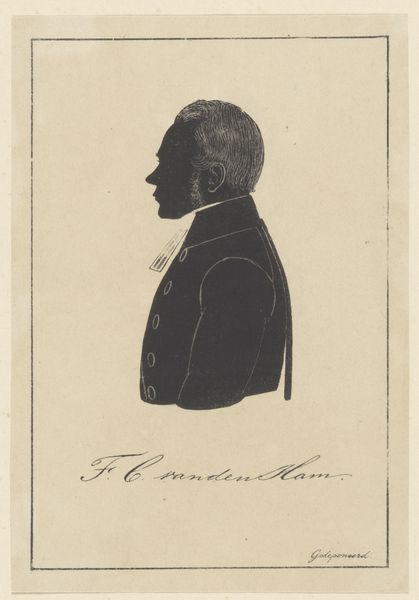
drawing, ink
#
portrait
#
drawing
#
old engraving style
#
caricature
#
figuration
#
historical photography
#
ink
Dimensions: height 153 mm, width 107 mm
Copyright: Rijks Museum: Open Domain
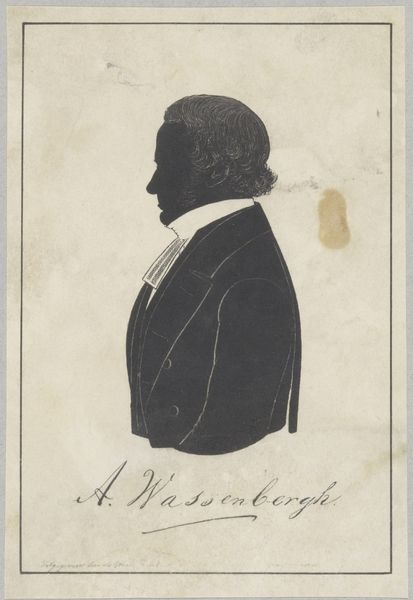
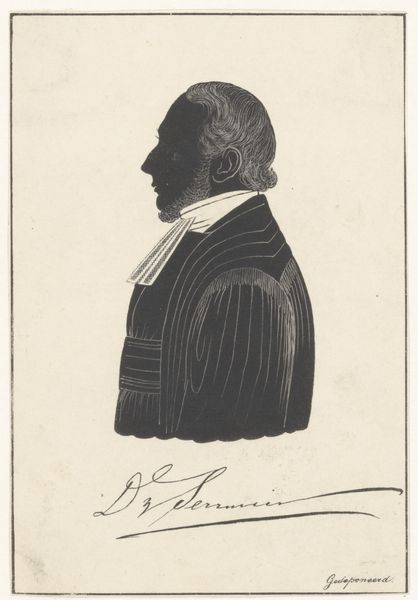
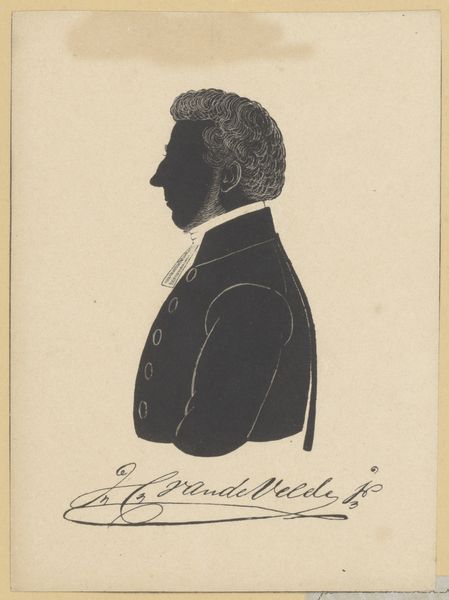
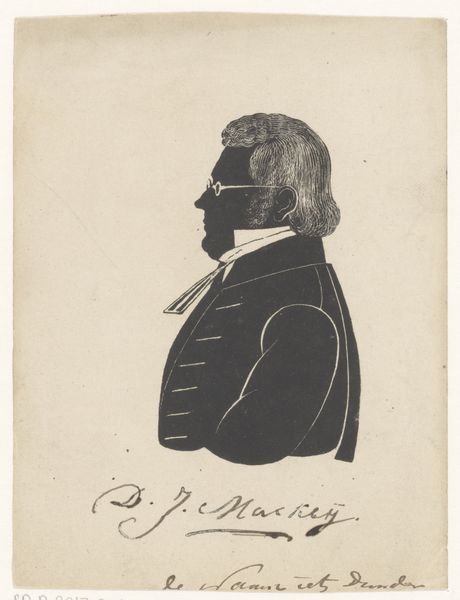
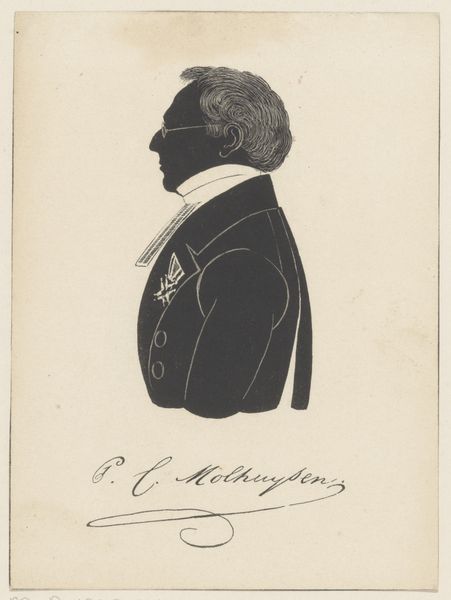
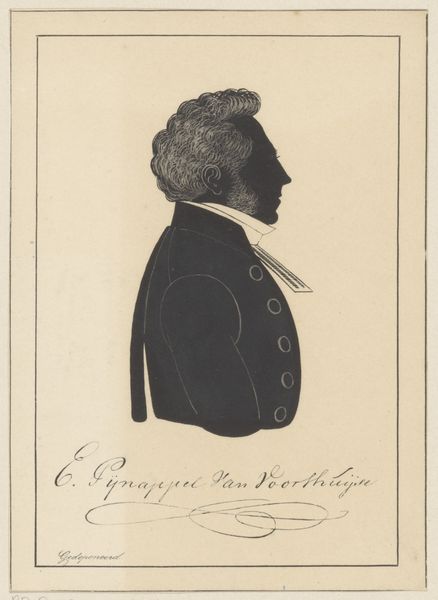
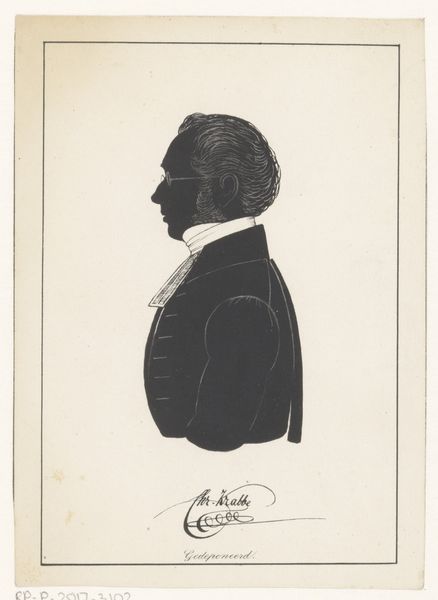
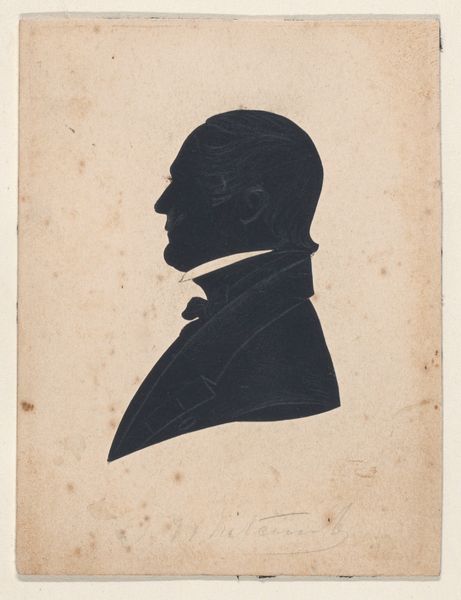
Pieter Barbiers IV created this silhouette portrait of Jean Baptiste Moquette, on paper, in the Netherlands, sometime in the early 19th century. Silhouette portraits were popular at this time, offering a relatively inexpensive way for individuals, often from the middle class, to have their likeness preserved. The clean, graphic style suited the Neoclassical tastes then in vogue, a style that looked back to the aesthetics of ancient Greece and Rome and their republican values. The sitter’s attire and the inscription “Gedeconcorde” suggest he was a clergyman, likely affiliated with a particular parish or movement within the Dutch Reformed Church. The Church played an important role in Dutch society, so this portrait hints at the sitter’s position within his community. Understanding this work fully requires delving into the religious and social history of the Netherlands during this period. By consulting archives and historical texts, we can better understand the context in which it was made.
Comments
No comments
Be the first to comment and join the conversation on the ultimate creative platform.
 Collect
 React
React Comment
More like this