1722 - 1776
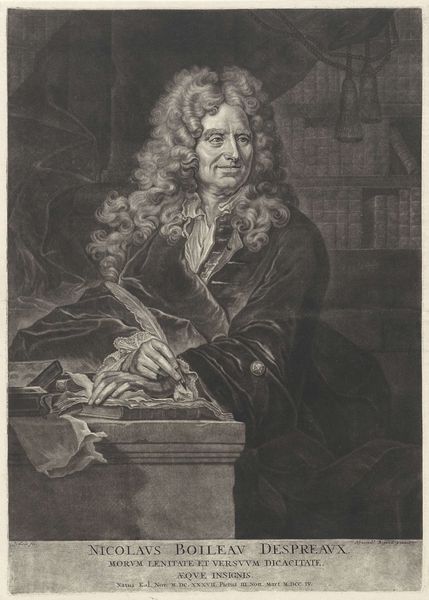
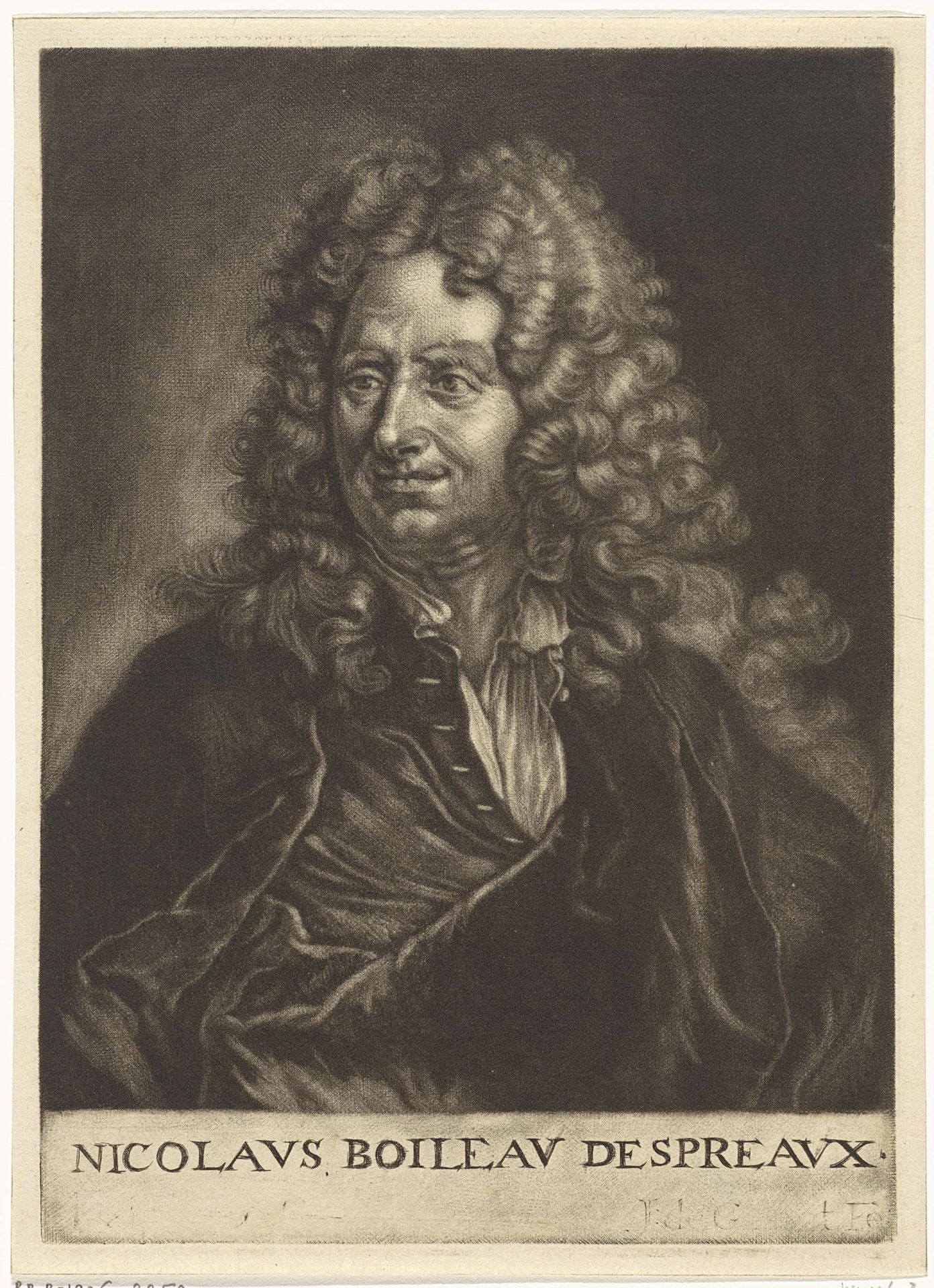
Portret van Nicolas Boileau-Despréaux

Johannes de (II) Groot
1689 - 1796Location
RijksmuseumListen to curator's interpretation
Curatorial notes
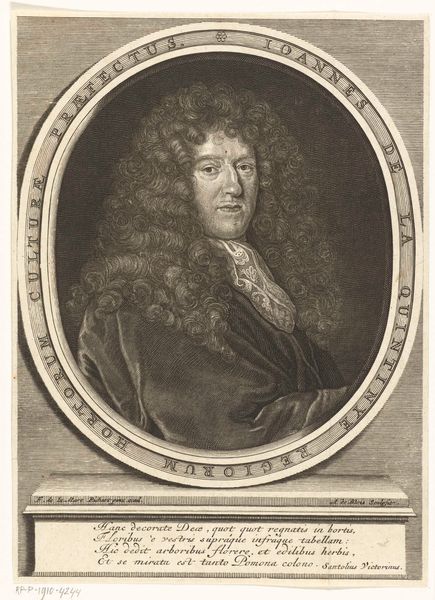
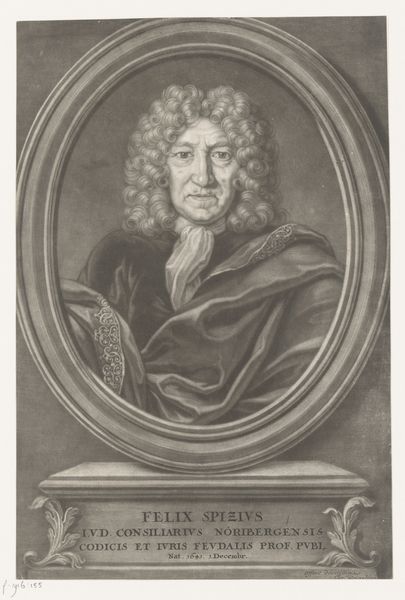
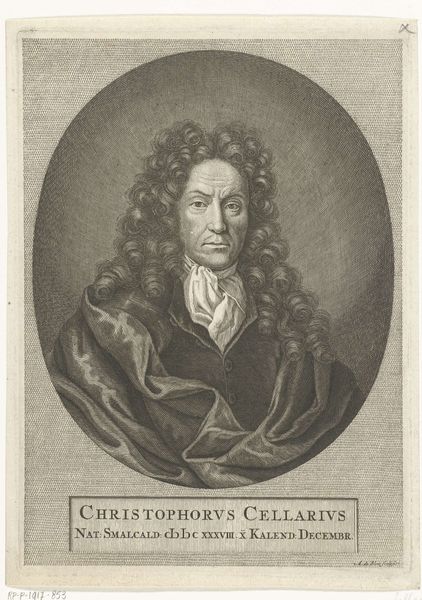
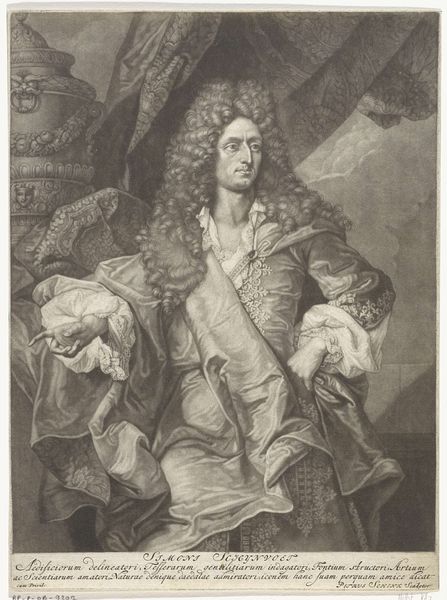
Johannes de Groot II created this portrait of Nicolas Boileau-Despréaux using etching. Observe Boileau’s flowing wig, a symbol of status and intellectual prowess in the 17th and 18th centuries. These wigs were not mere fashion statements; they visually represented membership in the elite circles of power, echoing the lion’s mane as a sign of authority. Think of how, even in ancient depictions of rulers, headdresses and hairstyles have always been potent visual cues. Consider, for instance, the elaborate hairstyles in ancient Egyptian portraiture, or even the tonsures of medieval clergy. Each is a marker, designed to signal specific roles and values within society. The wig, much like these earlier symbols, became a mask, projecting an image of sophistication and control. This isn't merely about fashion; it’s about how we use visual symbols to project power and embody cultural ideals. These symbols evolve, yet their underlying purpose remains surprisingly constant through time.