print, woodblock-print
# print
#
asian-art
#
ukiyo-e
#
figuration
#
woodblock-print
#
genre-painting
#
nude
#
erotic-art
Copyright: Public domain
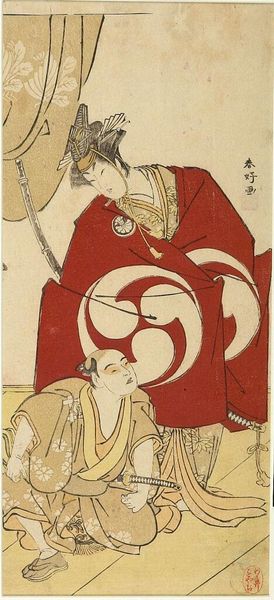
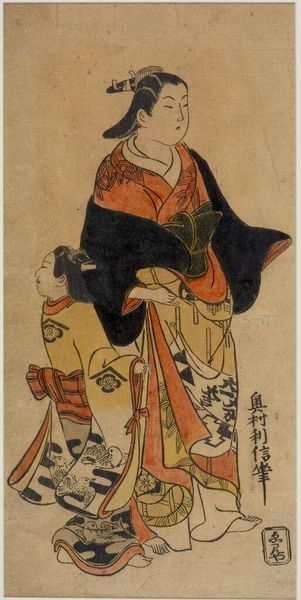
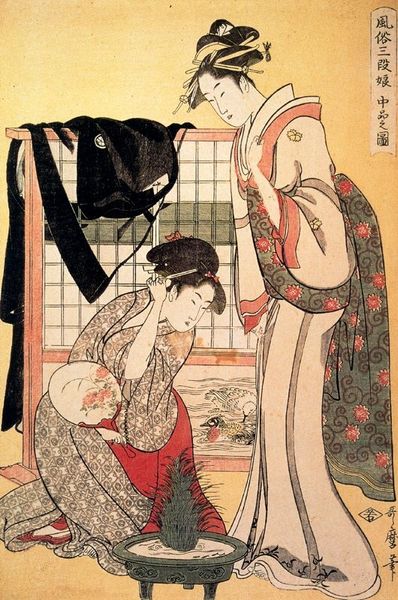
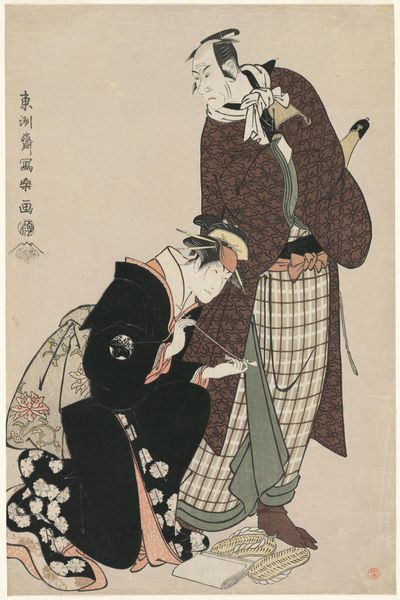
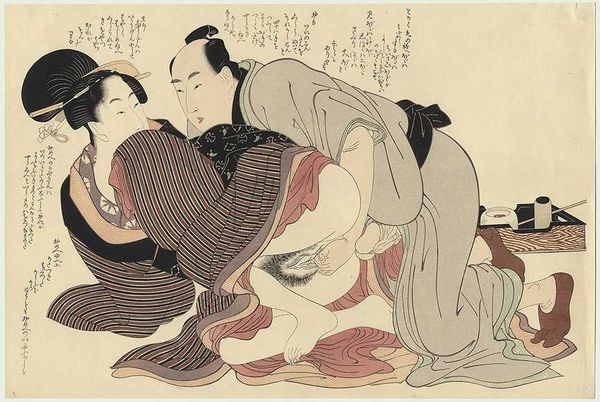
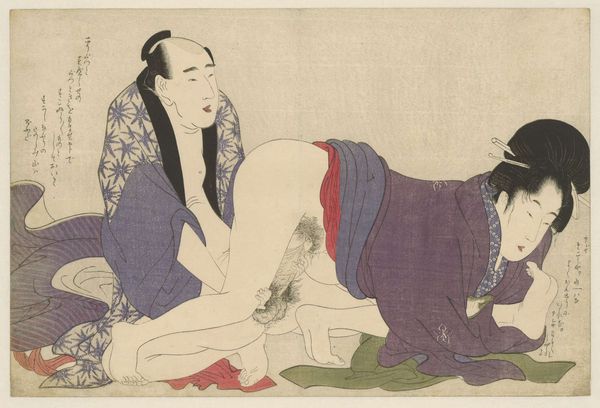
Editor: Here we have Kitagawa Utamaro's "Male Couple," a woodblock print from around 1802. It’s… surprisingly intimate. There's a raw, almost vulnerable energy to it. What strikes you when you look at this? Curator: It's fascinating to consider how this piece engages with the socio-political climate of its time. How does portraying a same-sex couple, even within the context of Ukiyo-e and its themes of pleasure, challenge or subvert conventional norms? Editor: That’s interesting! I hadn't thought of it that way. So it’s not just an image of intimacy, but a commentary? Curator: Precisely. We need to think about whose gaze this is created for, too. Were these prints circulated within specific social spheres, potentially offering a coded space for exploring desires and identities outside the rigid structures of the time? Does the erotic content democratize access to bodies considered taboo? Editor: That makes me consider the subjects, are they of the same class, what can their clothes suggest, what about their haircuts? And what does their facial expression evoke about pleasure? Curator: Exactly. By engaging with feminist and queer theory, can we re-evaluate our modern interpretation, asking ourselves how assumptions about sexuality, power, and representation shift across centuries? Editor: I see! Looking at it now, I'm much more aware of the nuances—it is transgressive and subtly defiant. Curator: This reading is one possibility that can stimulate dialogue. And that is where the value of historical objects and interpretation lie! Editor: Absolutely! It's changed how I understand the artwork already. Thank you!
Comments
No comments
Be the first to comment and join the conversation on the ultimate creative platform.
 Collect
 React
React Comment
More like this