About this artwork
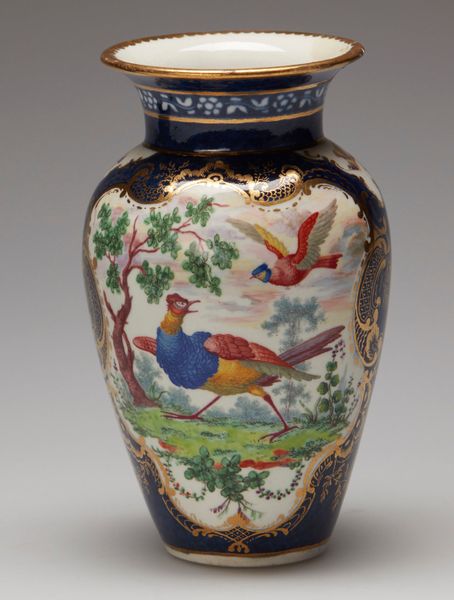
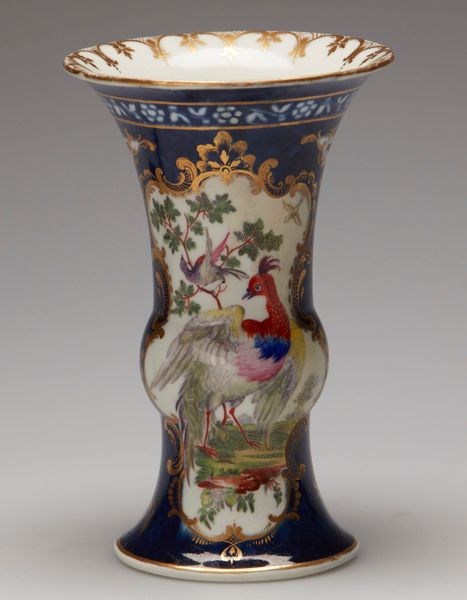
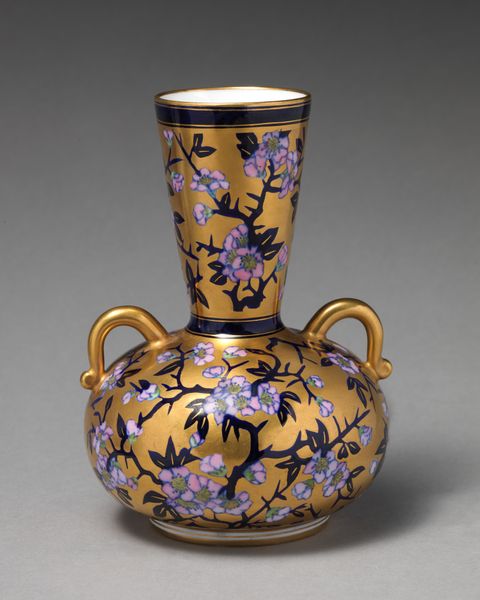
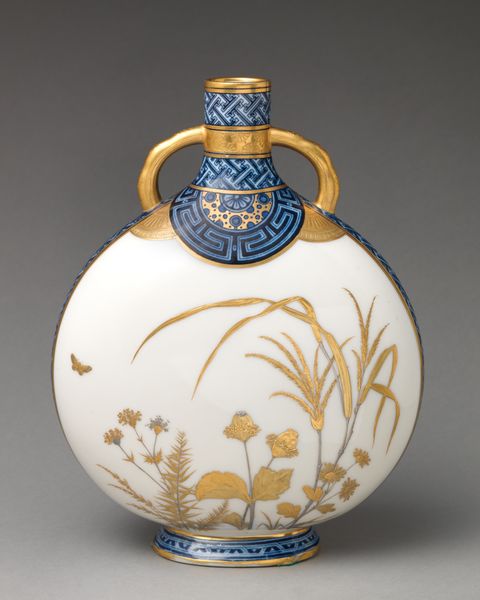
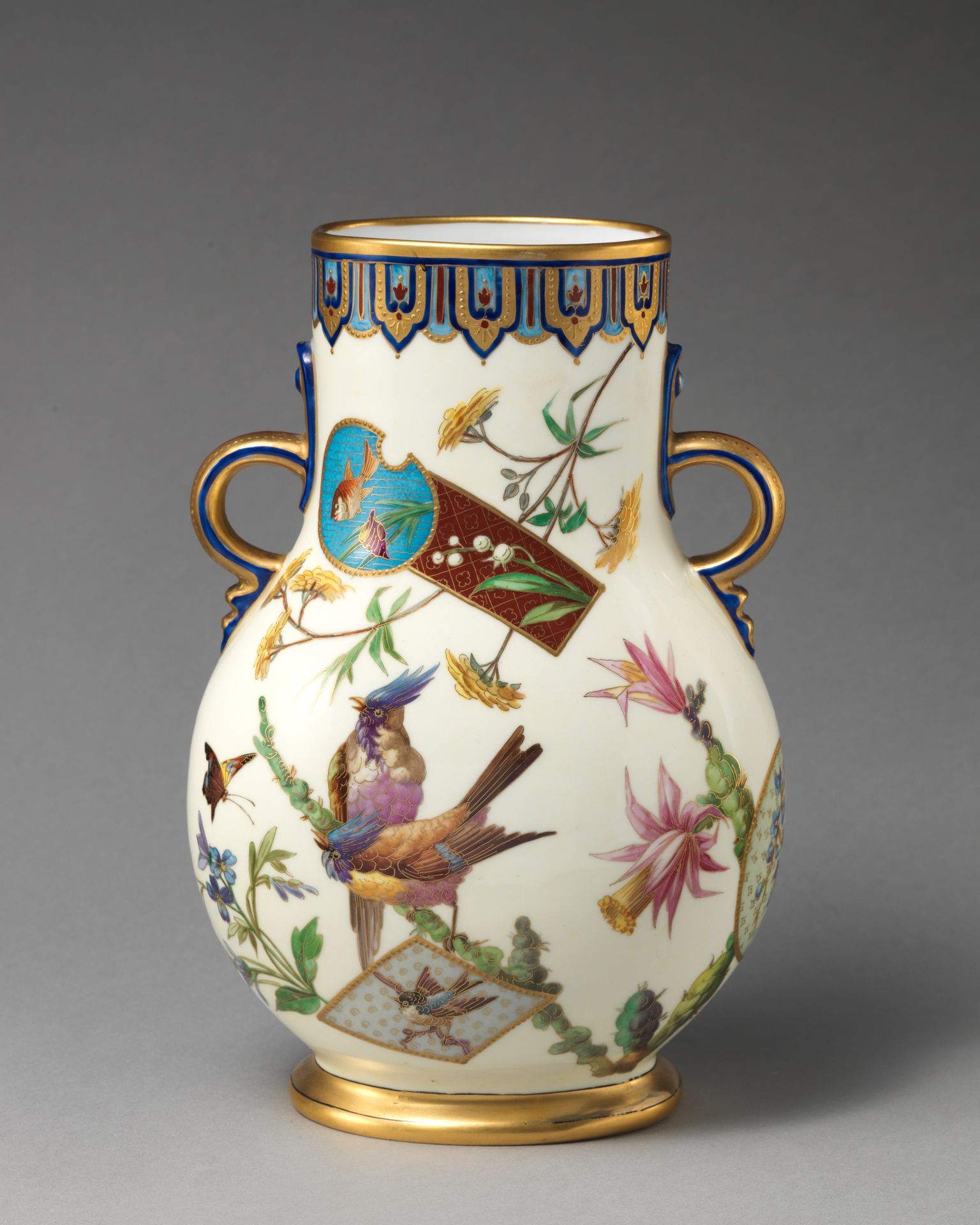
This vase, made by Minton(s), showcases the late 19th-century enthusiasm for Japanese design, known as Japonisme. The porcelain body was first cast in a mold, a process developed for industrial production. This allowed for complex forms to be replicated efficiently, though considerable handwork was still required. Notice the smoothly applied glaze, providing a pristine canvas for the painted decoration, which features stylized birds and geometric patterns in vibrant colors. Gilding outlines the rim and base, adding a touch of luxury. Minton was at the forefront of ceramic innovation, adapting traditional techniques to suit a rapidly changing, consumer-driven world. The labor-intensive decoration belies the mechanization involved in producing the vase itself, a reflection of Victorian society's complex relationship with craft and industry. Ultimately, the vase represents a fusion of art and manufacturing, intended for a market eager to display its taste and wealth. It challenges the conventional hierarchy of art and craft, prompting us to consider the social and economic forces behind its creation.
Vase with Aesthetic Japonisme birds
1879
Artwork details
- Medium
- ceramic, porcelain
- Dimensions
- confirmed: 8 1/2 × 5 3/4 × 4 in. (21.6 × 14.6 × 10.2 cm)
- Location
- Metropolitan Museum of Art, New York, NY
- Copyright
- Public Domain
Tags
Comments
Share your thoughts
About this artwork
This vase, made by Minton(s), showcases the late 19th-century enthusiasm for Japanese design, known as Japonisme. The porcelain body was first cast in a mold, a process developed for industrial production. This allowed for complex forms to be replicated efficiently, though considerable handwork was still required. Notice the smoothly applied glaze, providing a pristine canvas for the painted decoration, which features stylized birds and geometric patterns in vibrant colors. Gilding outlines the rim and base, adding a touch of luxury. Minton was at the forefront of ceramic innovation, adapting traditional techniques to suit a rapidly changing, consumer-driven world. The labor-intensive decoration belies the mechanization involved in producing the vase itself, a reflection of Victorian society's complex relationship with craft and industry. Ultimately, the vase represents a fusion of art and manufacturing, intended for a market eager to display its taste and wealth. It challenges the conventional hierarchy of art and craft, prompting us to consider the social and economic forces behind its creation.
Comments
Share your thoughts