About this artwork
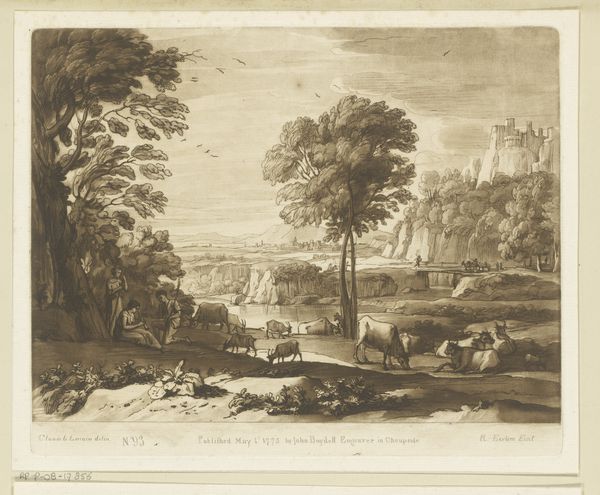
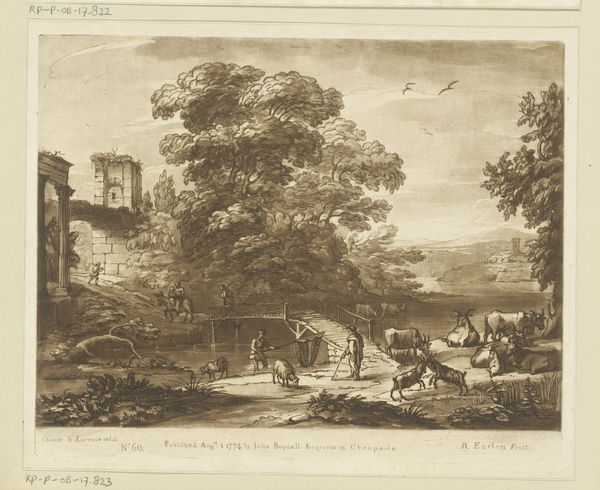
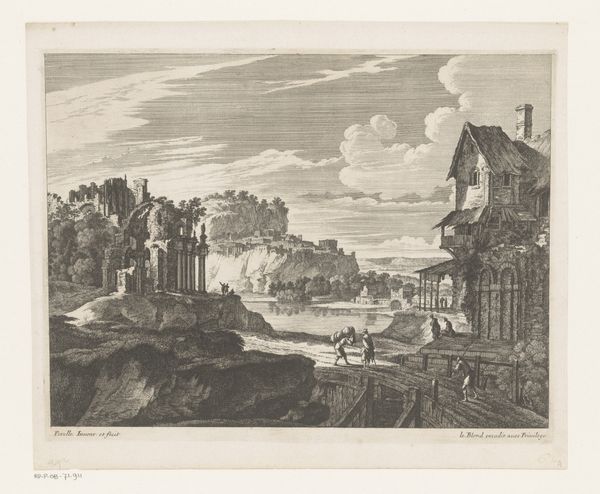
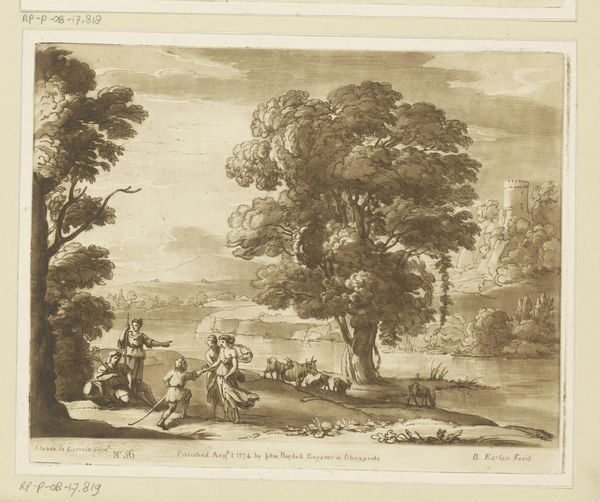
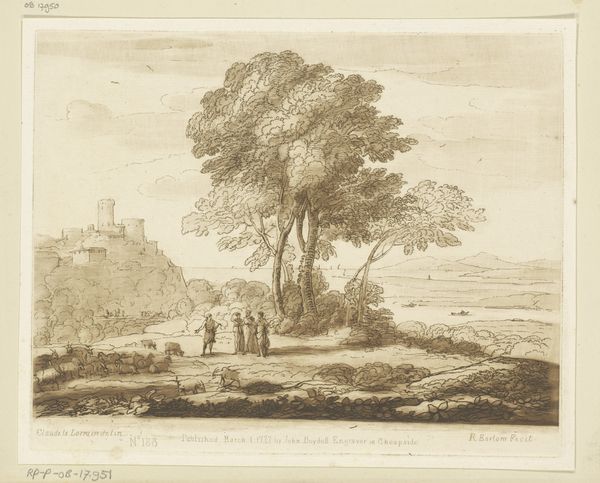
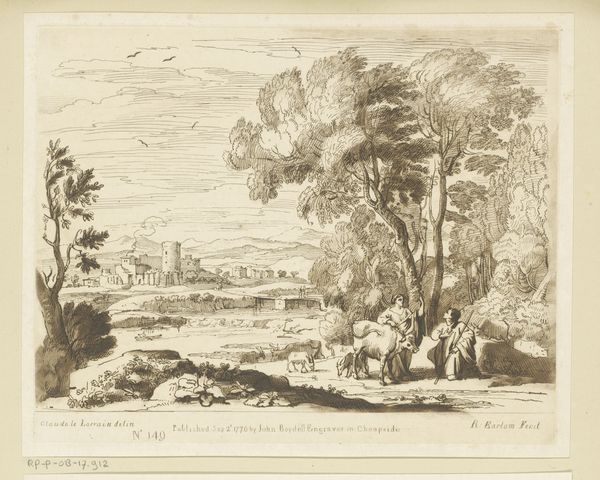
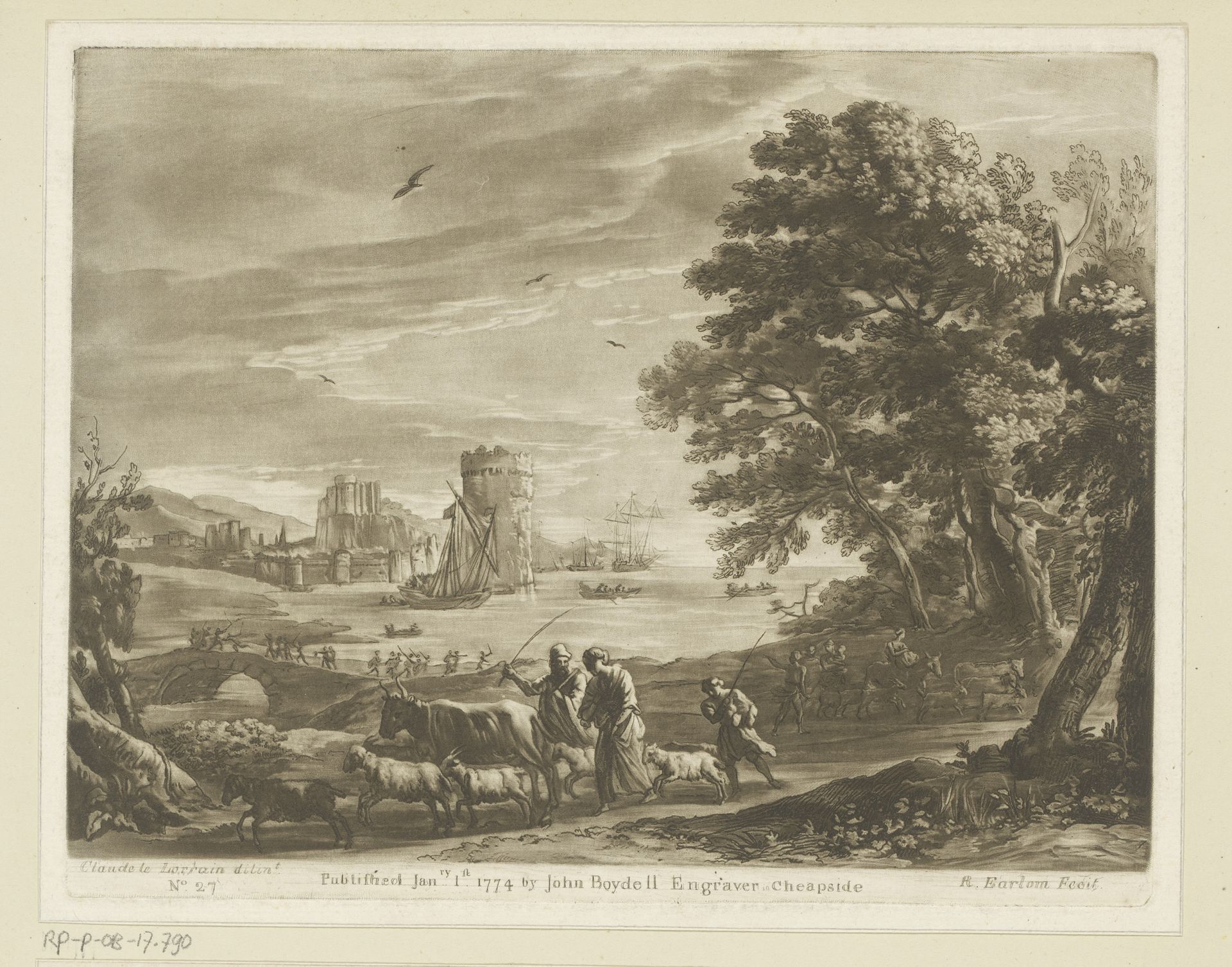
Richard Earlom created this etching, "Coastal Landscape with Cattle Herders and Fight on a Bridge," in 1774. The print reflects the pastoral aesthetic popular in 18th-century Europe, a time when the idealization of rural life served as a form of escapism from the grim realities of urbanization and industrialization. This work presents a landscape populated by idealized figures – shepherds and their flocks – set against a serene backdrop. Yet, even here, tensions simmer: a fight breaks out on a distant bridge, a stark contrast to the tranquil scene. The figures of the cattle herders appear as timeless archetypes, obscuring the labor and the socio-economic structures inherent in agricultural life. "Coastal Landscape" invites us to consider how idealized representations of labor and landscape often mask underlying social tensions. It serves as a reminder that even in the most picturesque scenes, power dynamics and conflict can be found lurking beneath the surface.
Kustlandschap met veedrijvers en gevecht op een brug Possibly 1774

Richard Earlom
1743 - 1822Location
RijksmuseumArtwork details
- Dimensions
- height 201 mm, width 255 mm
- Location
- Rijksmuseum
- Copyright
- Rijks Museum: Open Domain
Comments
No comments
About this artwork
Richard Earlom created this etching, "Coastal Landscape with Cattle Herders and Fight on a Bridge," in 1774. The print reflects the pastoral aesthetic popular in 18th-century Europe, a time when the idealization of rural life served as a form of escapism from the grim realities of urbanization and industrialization. This work presents a landscape populated by idealized figures – shepherds and their flocks – set against a serene backdrop. Yet, even here, tensions simmer: a fight breaks out on a distant bridge, a stark contrast to the tranquil scene. The figures of the cattle herders appear as timeless archetypes, obscuring the labor and the socio-economic structures inherent in agricultural life. "Coastal Landscape" invites us to consider how idealized representations of labor and landscape often mask underlying social tensions. It serves as a reminder that even in the most picturesque scenes, power dynamics and conflict can be found lurking beneath the surface.
Comments
No comments