1861 - 1870
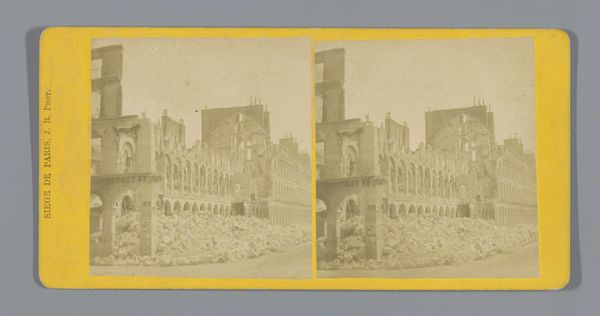
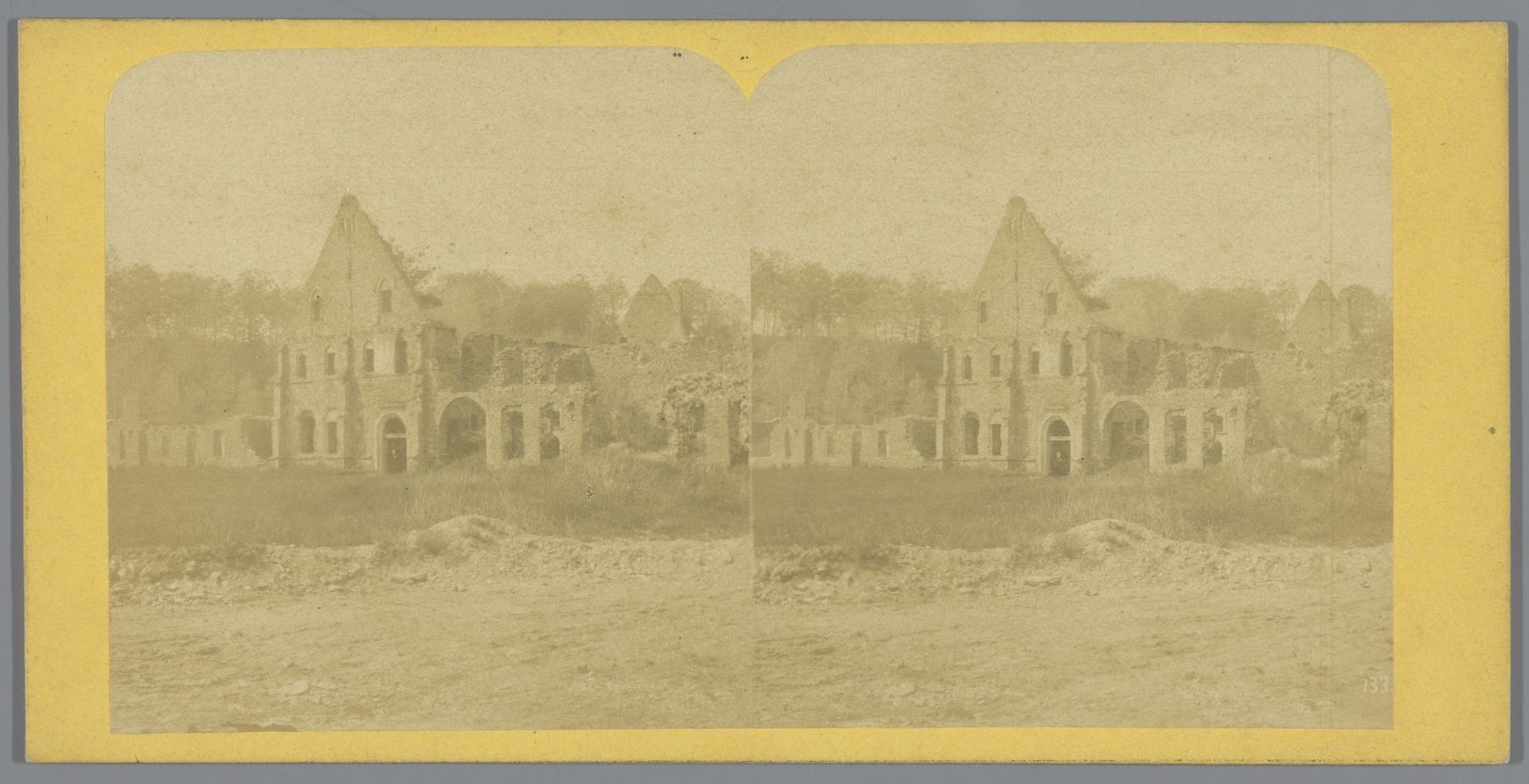
Ruïnes van de Abdij van Villers in Villers-la-Ville

Listen to curator's interpretation
Curatorial notes
Editor: So, here we have "Ruins of the Abbey of Villers in Villers-la-Ville," a photograph, probably a print, made sometime in the 1860s. The sepia tone and crumbling architecture definitely give it a romantic, almost melancholy, vibe. What stands out to you? Curator: The image is steeped in the symbolism of ruin, decay, and the passage of time. Ruins, especially of religious structures like abbeys, were potent symbols of Romanticism, reflecting a fascination with the past and the transience of human endeavor. Do you notice how the light catches the remaining arches? Editor: Yes, it's quite dramatic. Almost theatrical, in a way. Curator: Precisely! Light, especially in such depictions, often symbolizes hope or resilience amidst destruction. The surviving structure evokes a sense of cultural memory. It speaks of what has been lost, yet suggests that something still endures. The psychological weight is in considering what those stones witnessed. Editor: That's interesting. So, it’s less about the literal decay and more about what it represents? Curator: It’s both, inseparable. The tangible ruin provides a concrete manifestation of abstract ideas – time, loss, memory. This was particularly appealing during a time of rapid social and technological change, when people looked back to a perhaps idealized past for stability or meaning. What narratives do you imagine unfolding here? Editor: I hadn't thought of it that way. Now I’m considering the people who lived and worked there. Thanks for pointing that out! Curator: These photographs remind us that even in fragments, the symbolic power of imagery persists, connecting us to the currents of human experience.