print, etching, engraving
narrative-art
etching
landscape
history-painting
northern-renaissance
engraving
watercolor
Dimensions: height 210 mm, width 280 mm
Copyright: Rijks Museum: Open Domain
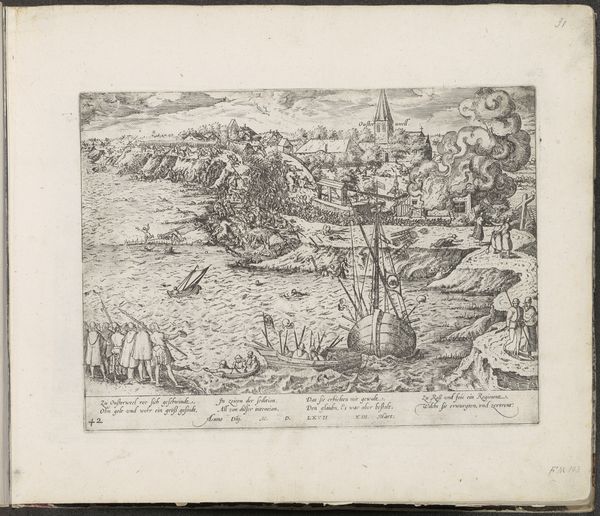
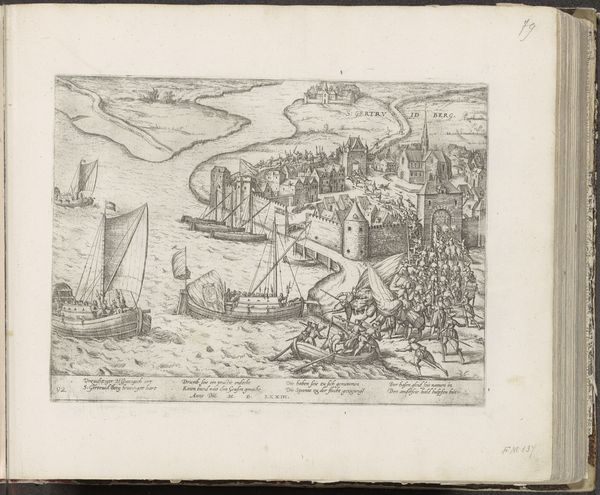
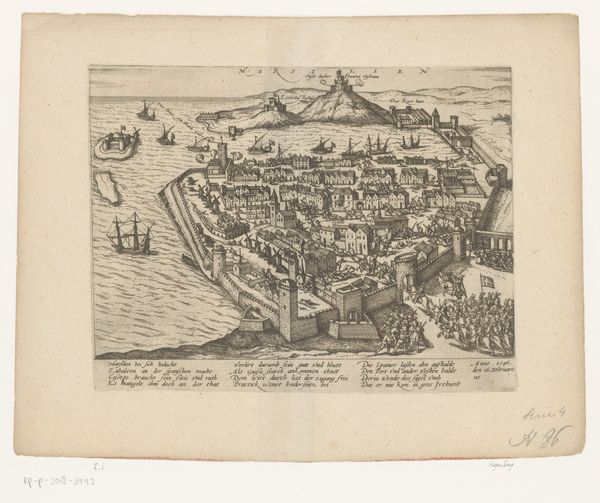
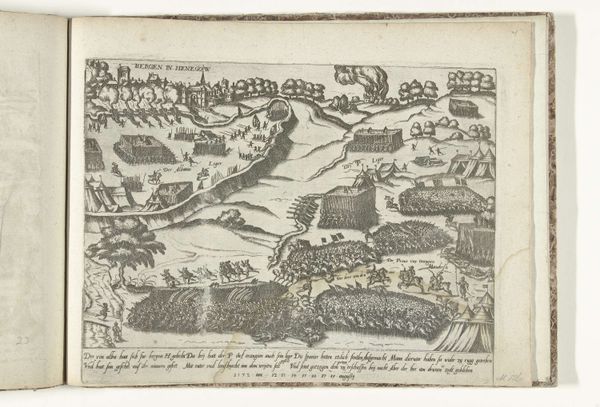
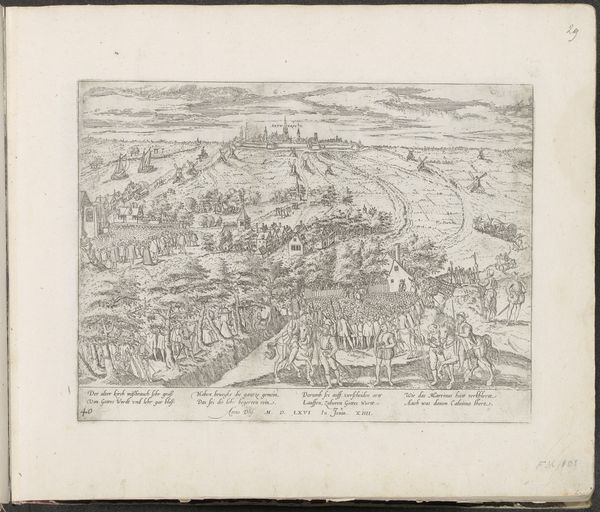
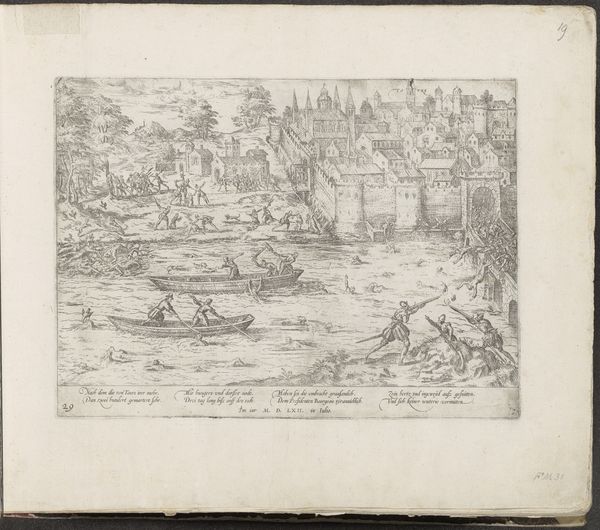
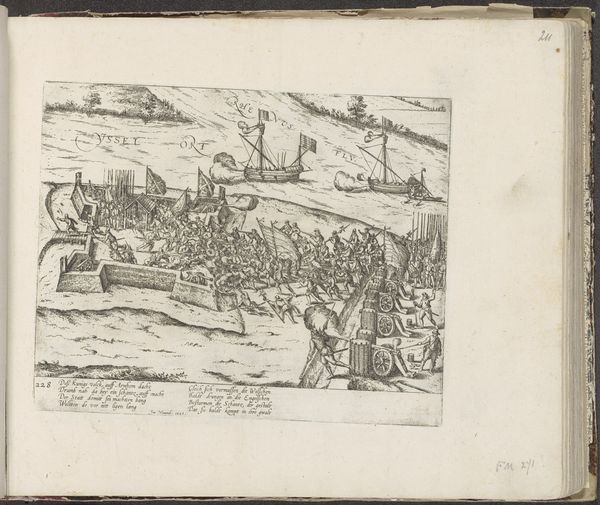
Curator: Before us hangs Frans Hogenberg's print, "The Battle of Oosterweel, 1567," created between 1567 and 1570. The Rijksmuseum holds this work, a rather dynamic etching and engraving with later additions of watercolor. Editor: My first impression is chaos, meticulously rendered. There's a kind of layered effect. Water in the foreground, battles unfolding in the middle, a burning city in the distance...all vying for my attention. It's like a panorama of panic. Curator: Indeed, Hogenberg's medium itself reflects a turbulent process. The etching and engraving are the base—craft techniques accessible to many. The washes of watercolor however, hint at something added. It shows us how narratives become enriched or reinterpreted over time, echoing the conflict's lasting effects. Editor: Agreed. If we analyze its composition closely, the receding lines drive our eyes deeper into the conflict. The use of line and detail suggests movement; figures thrashing and collapsing along the river banks are balanced by the solidity of architectural landmarks within the town's boundaries. These stark formal choices really communicate something significant about violence and societal upheaval. Curator: I think it reflects something about labor and materials, actually. It was created for a mass audience through the relative ease of printmaking to circulate this account. And this access mirrors wider availability of materials used in the battle itself – be it arms or ships. The print is another product circulating with its account of this military action and social order—all for the marketplace. Editor: Absolutely. The strategic viewpoints offered by the high-angled composition allows us to grasp the geographical placement of Oosterweel and grasp how conflict moved through the land. The artist's chosen perspectives create an all encompassing, unsettling observation that also allows interpretation of all aspects on the scene. The composition creates tension – we can sense that any place is in fact, no safe. Curator: What strikes me is the visual labor required to bring that view to life – the detailed renderings must have required extensive labor, which echoes the actual toil of warfare during a time of escalating colonial extraction by the Spanish armies, if we understand their project. Editor: These material and societal influences have, undeniably, affected its structure. Through the visual tension and receding narrative that frames it. Curator: True—it demonstrates not only about an instant but an arc of ongoing change for individuals in history Editor: Right; by considering its formal techniques or material conditions the historical meaning only gains importance, reflecting on history that changed the boundaries of what's known.
Comments
No comments
Be the first to comment and join the conversation on the ultimate creative platform.
 React
React Comment