About this artwork
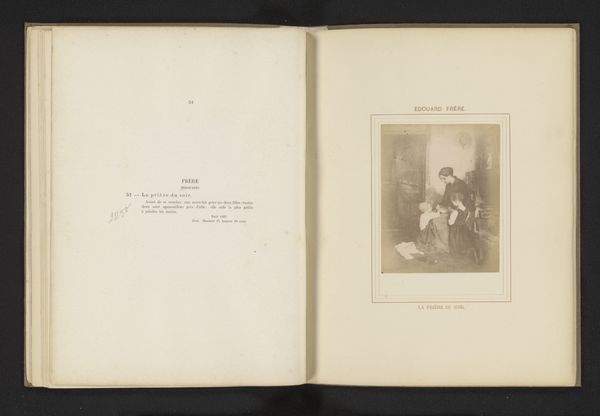
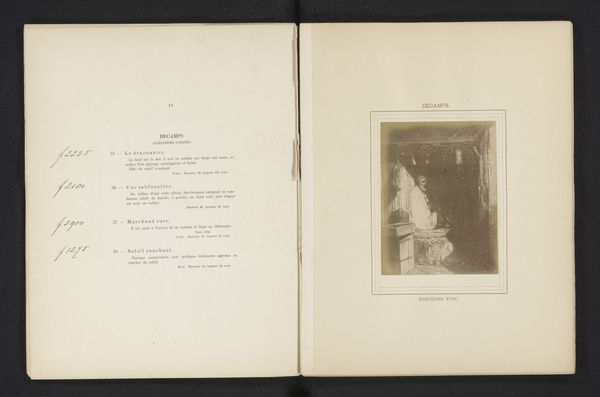
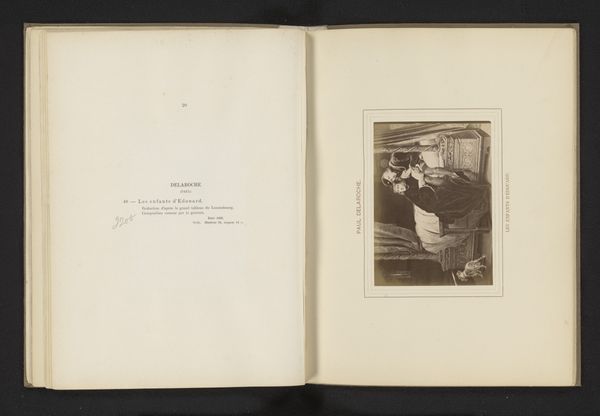
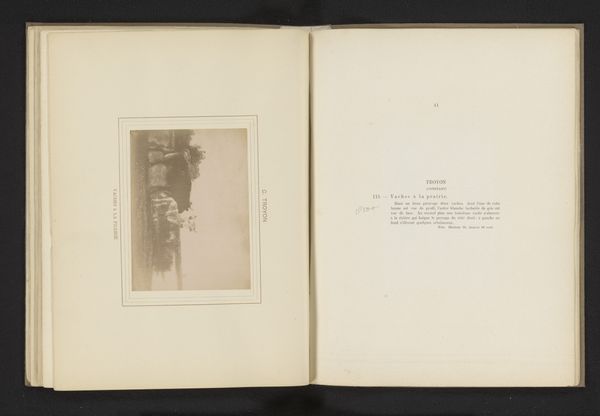
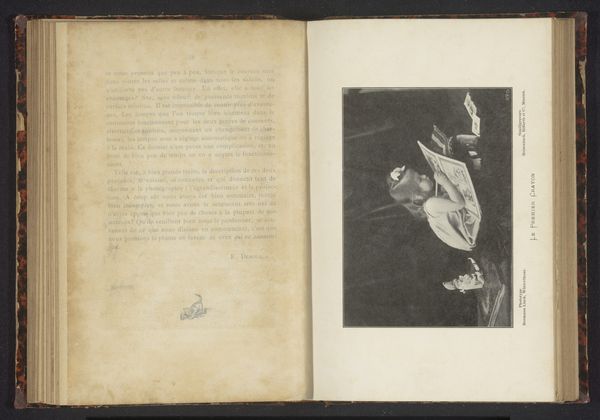
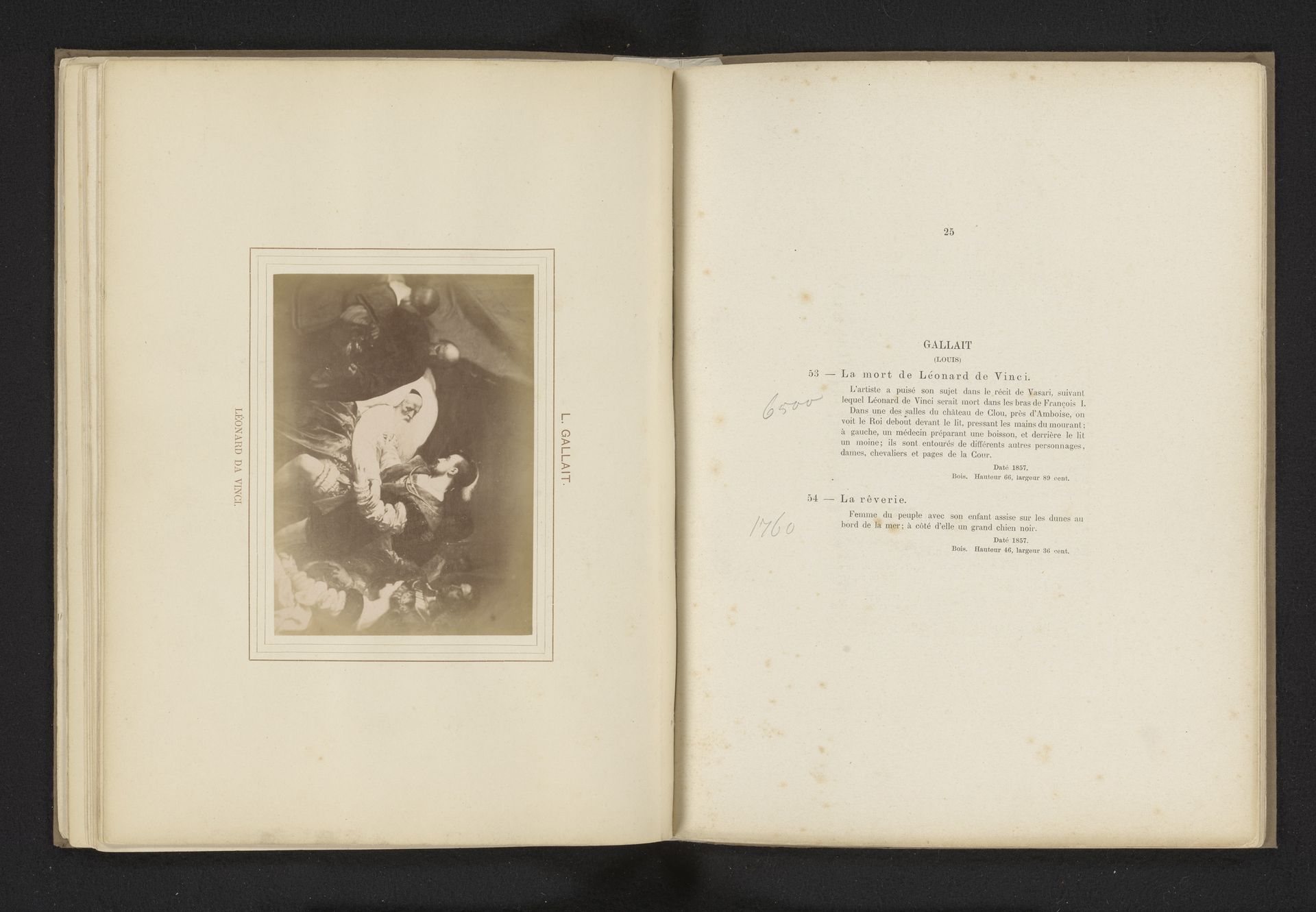
This is a photographic reproduction of Louis Gallait's painting *The Death of Leonardo Da Vinci*, found within the pages of a book held at the Rijksmuseum. Gallait, a 19th-century Belgian artist, chose as his subject the popular myth of Da Vinci dying in the arms of Francis I, King of France. The painting, and this reproduction, reflect a romanticized view of history, one that underscores the relationship between the artist and the patron, so essential to artistic success. But what does it mean to stage the death of a great artist as a moment of intimate connection with a powerful ruler? The image certainly speaks to the cultural value placed on artists like Da Vinci, even centuries after their death. It also raises questions about power, artistic legacy, and the stories we choose to tell about the past. As you consider the scene depicted here, think about how history is constructed and whose stories get told.
Fotoreproductie van het schilderij La mort de Léonard Da Vinci door Louis Gallait
before 1883

Anonymous
@anonymousLocation
RijksmuseumArtwork details
- Medium
- print, paper, photography
- Dimensions
- height 96 mm, width 134 mm
- Location
- Rijksmuseum
- Copyright
- Rijks Museum: Open Domain
Tags
Comments
Share your thoughts
About this artwork
This is a photographic reproduction of Louis Gallait's painting *The Death of Leonardo Da Vinci*, found within the pages of a book held at the Rijksmuseum. Gallait, a 19th-century Belgian artist, chose as his subject the popular myth of Da Vinci dying in the arms of Francis I, King of France. The painting, and this reproduction, reflect a romanticized view of history, one that underscores the relationship between the artist and the patron, so essential to artistic success. But what does it mean to stage the death of a great artist as a moment of intimate connection with a powerful ruler? The image certainly speaks to the cultural value placed on artists like Da Vinci, even centuries after their death. It also raises questions about power, artistic legacy, and the stories we choose to tell about the past. As you consider the scene depicted here, think about how history is constructed and whose stories get told.
Comments
Share your thoughts