![Untitled [seated nude holding her head with her left hand] by Richard Diebenkorn](https://d2w8kbdekdi1gv.cloudfront.net/eyJidWNrZXQiOiAiYXJ0ZXJhLWltYWdlcy1idWNrZXQiLCAia2V5IjogImFydHdvcmtzLzgwZmZkZGQ4LTIyZWMtNGJiZi04ODNhLWNiMjNlNmVhYWM2YS84MGZmZGRkOC0yMmVjLTRiYmYtODgzYS1jYjIzZTZlYWFjNmFfZnVsbC5qcGciLCAiZWRpdHMiOiB7InJlc2l6ZSI6IHsid2lkdGgiOiAxOTIwLCAiaGVpZ2h0IjogMTkyMCwgImZpdCI6ICJpbnNpZGUifX19)
About this artwork
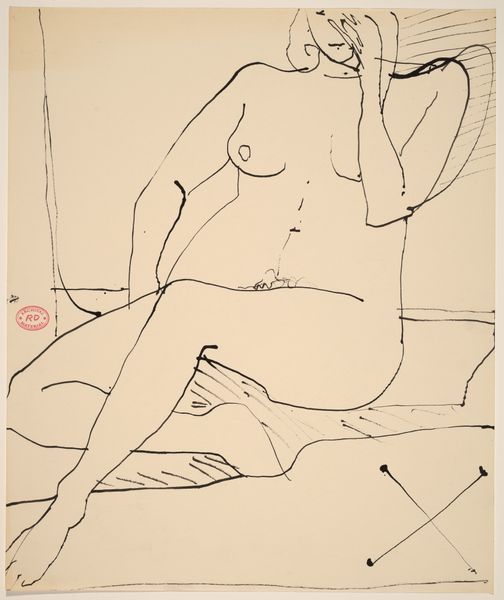
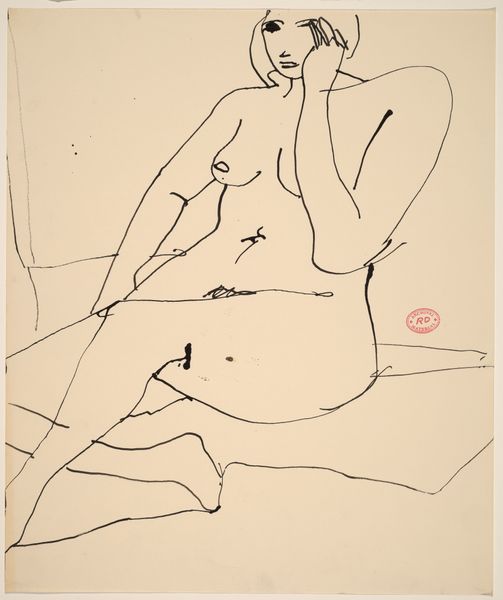
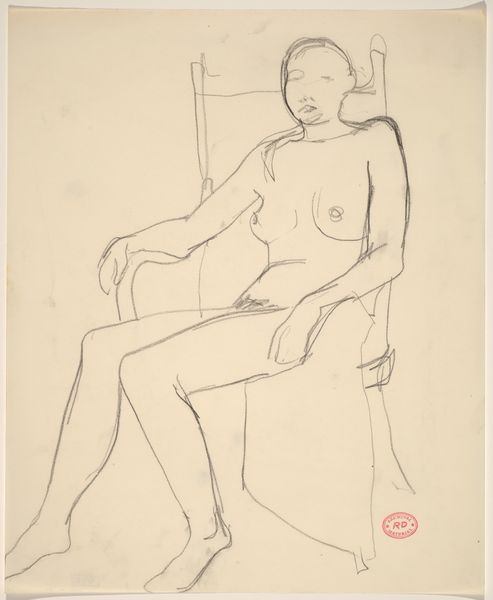
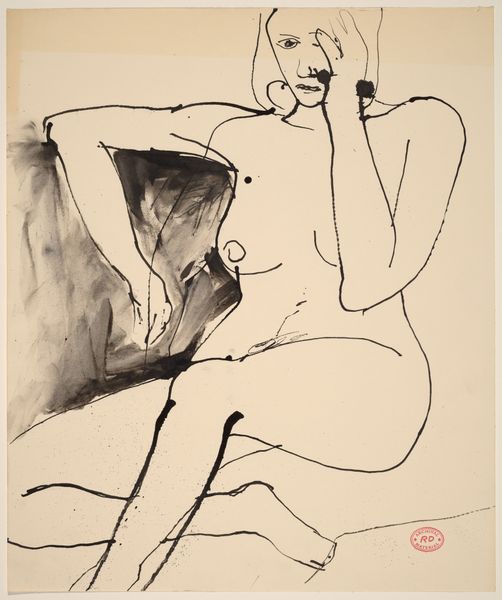
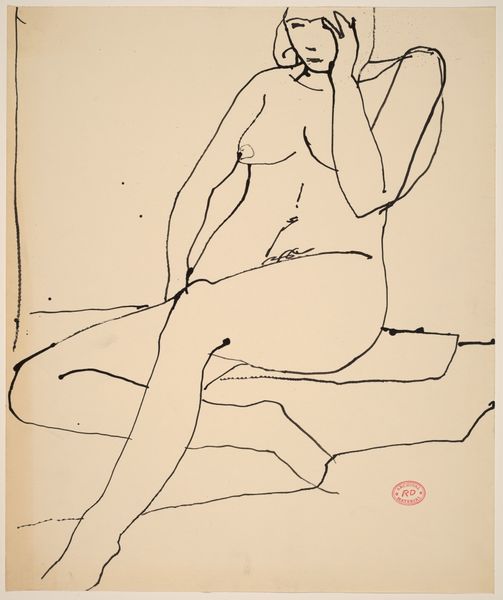
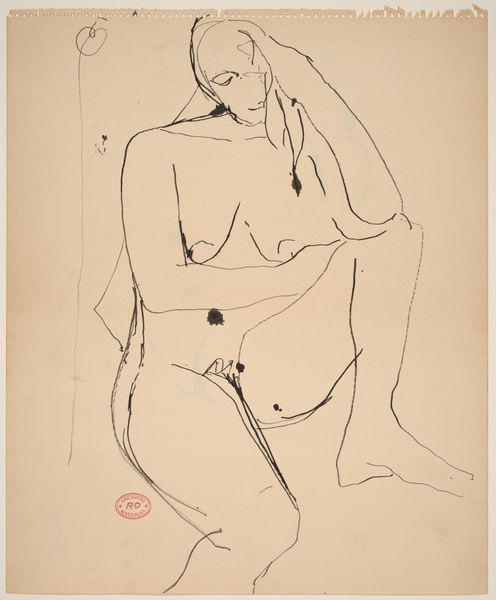
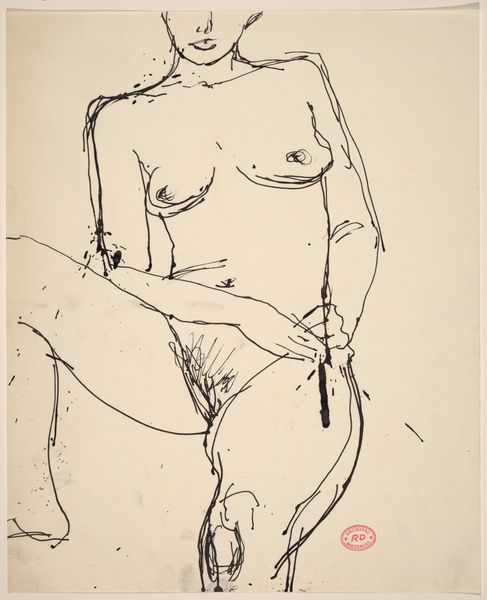
Richard Diebenkorn made this undated ink drawing of a seated nude, lost in thought, on paper. It’s amazing how he captures a sense of volume and weight with such economical means; this feels like artmaking as a process of reduction, cutting back to the essential lines needed to convey the pose. Looking at the drawing, I’m really drawn to the contrast between the fluid, almost languid curves of the figure and the sharp, angular lines of the background, like a room or a piece of furniture. Notice the way the ink pools and thickens in certain areas, like the spot on her stomach, creating a sense of depth and shadow. It's like he's not just drawing what he sees, but also the space around it. Diebenkorn's ability to create a sense of intimacy and immediacy with such minimal means reminds me of Matisse. Both artists share a similar interest in the relationship between line, color, and form, and in the power of simple gestures to convey complex emotions. Ultimately, this drawing is a reminder that art is not about perfection or precision, but about the beauty of the imperfect and the power of suggestion.
Untitled [seated nude holding her head with her left hand] 1955 - 1967


Artwork details
- Medium
- drawing, ink
- Dimensions
- overall: 45.4 x 38.1 cm (17 7/8 x 15 in.)
- Copyright
- National Gallery of Art: CC0 1.0
Tags
portrait
drawing
ink drawing
pen sketch
pencil sketch
figuration
bay-area-figurative-movement
ink
line
nude
Comments
No comments
About this artwork
Richard Diebenkorn made this undated ink drawing of a seated nude, lost in thought, on paper. It’s amazing how he captures a sense of volume and weight with such economical means; this feels like artmaking as a process of reduction, cutting back to the essential lines needed to convey the pose. Looking at the drawing, I’m really drawn to the contrast between the fluid, almost languid curves of the figure and the sharp, angular lines of the background, like a room or a piece of furniture. Notice the way the ink pools and thickens in certain areas, like the spot on her stomach, creating a sense of depth and shadow. It's like he's not just drawing what he sees, but also the space around it. Diebenkorn's ability to create a sense of intimacy and immediacy with such minimal means reminds me of Matisse. Both artists share a similar interest in the relationship between line, color, and form, and in the power of simple gestures to convey complex emotions. Ultimately, this drawing is a reminder that art is not about perfection or precision, but about the beauty of the imperfect and the power of suggestion.
Comments
No comments